Support our educational content for free when you purchase through links on our site. Learn more
Remote Postpartum Corrective Exercise: Train Safely at Home 🤱

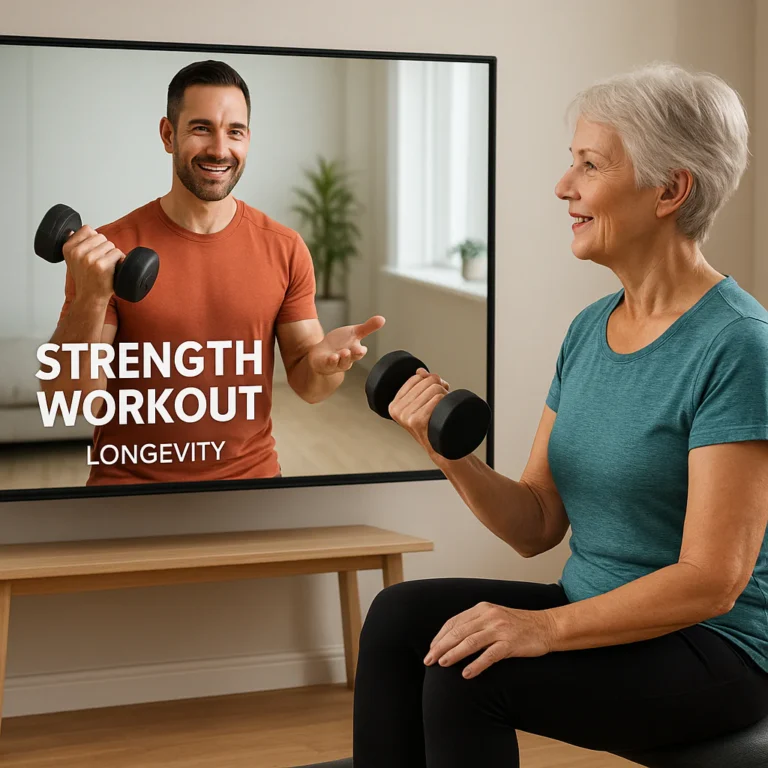
Remote postpartum corrective exercise can be a convenient way to rebuild strength at home—provided your program is tailored to your recovery, symptoms, and goals. Choose a qualified coach who knows when to adapt your workout and when to refer you to a pelvic health physical therapist or healthcare provider.
At Virtual Personal Trainers™, we’ve seen how a short, thoughtfully coached session can fit into new-parent life better than a perfect workout plan that never survives the nap schedule. The right remote support can help you practice movement for real-life tasks, from lifting your baby to getting off the floor, without treating your body like a project with a countdown timer.
But “corrective exercise” should not mean that every postpartum body needs the same fix. Your birth and healing experience matter, and symptoms such as pain, leakage, or pelvic pressure deserve attention rather than a pep talk to push through.
Key Takeaways
- Choose personalized coaching: Your exercise plan should reflect your recovery, symptoms, experience, and goals.
- Return gradually: A postpartum checkup is valuable, but readiness for running, heavy lifting, or impact may require more specific guidance.
- Treat symptoms as useful feedback: Pain, leakage, or pelvic heaviness are reasons to modify activity and consider professional assessment.
- Pelvic floor care isn’t always about squeezing: Some people need strength; others may need relaxation, coordination, or a pelvic health evaluation.
- Look beyond weight loss: Better daily function, confidence, strength, and comfortable movement are meaningful progress.
- Know the limits of remote care: Online coaching can support exercise and accountability, but it cannot replace an in-person clinical assessment when one is needed.
Table of Contents
- ⚡️ Quick Tips and Facts
- 🤱 Remote Postpartum Corrective Exercise: What It Is and Who It Helps
- 📚 How Postpartum Exercise and Pelvic Health Guidance Have Evolved
- 🩺 Postpartum Recovery, Medical Clearance, and When to Get Help
- Postpartum warning signs that need prompt medical attention
- When to consult a pelvic floor physical therapist
- 🔍 What a Remote Postpartum Corrective Exercise Program Can Address
- Diastasis recti and abdominal wall recovery
- Pelvic floor weakness, tension, and coordination
- C-section and perineal recovery considerations
- Back, hip, and pelvic girdle discomfort
- Bladder leakage, pelvic pressure, and prolapse symptoms
- 🧭 A Whole-Body Approach to Postpartum Strength and Movement
- Breathing, pressure management, and core coordination
- Pelvic floor relaxation and strengthening
- Posture, mobility, and everyday lifting mechanics
- Progressive strength, impact, and return to running
- 💻 How Remote Postpartum Exercise Coaching Works
- Live virtual sessions, recorded classes, and hybrid care
- Online assessment, personalization, and progress tracking
- What you need at home for virtual workouts
- Privacy, accessibility, and making sessions work with a baby
- ✅ How to Choose a Safe, Evidence-Informed Online Program
- Credentials: pelvic health physical therapists and qualified trainers
- Questions to ask before signing up
- Red flags in postpartum fitness claims
- Remote coaching versus in-person pelvic floor care
- 🏋️ Postpartum Exercise Programs, Education, and Resources to Explore
- Pelvic floor and core education, including PCES
- Pelvis Pro and pelvic health resources
- Core Exercise Solutions and evidence-informed education
- Virtual personal training and whole-body postpartum support
- 🎥 Postpartum Exercise Videos: How to Use Them Safely
- 🆓 Free Postpartum Fitness and Pelvic Health Resources
- 🗓️ Building a Realistic Postpartum Exercise Plan
- Gentle movement in the early recovery period
- Gradually rebuilding strength and endurance
- Adapting workouts for sleep, feeding, and energy changes
- How to modify exercise when symptoms flare
- 🚫 Common Postpartum Exercise Mistakes and Myths
- 📈 Tracking Progress Beyond Weight Loss
- 🔗 Recommended Links
- ❓ FAQ
- When can I start postpartum corrective exercise remotely?
- Can online exercise help with diastasis recti?
- Can I do pelvic floor exercises if my pelvic floor feels tight?
- Is remote coaching appropriate after a C-section?
- Can I return to running or lifting through virtual coaching?
- How do I know whether an online postpartum program is qualified?
- 📖 Reference Links
⚡️ Quick Tips and Facts
Remote postpartum corrective exercise can bring expert guidance to your living room, between feeds, naps, and the mysterious disappearance of clean leggings. Done well, it is personalized movement coaching, not a generic “get your body back” workout playlist. If you’re looking for individualized guidance, our remote personal trainer service explains how virtual coaching can fit your goals and schedule.
| Quick fact | What it means for you |
|---|---|
| Recovery is individual | Birth type, healing, symptoms, sleep, prior activity, and medical history all affect the right starting point. |
| “Six weeks” isn’t an automatic fitness clearance | A postpartum checkup is useful, but readiness for impact, heavy lifting, or symptom-provoking exercise may need a more specific assessment. See ACOG’s postpartum care guidance. |
| Pelvic floor muscles need coordination, not just squeezing | Some people need strength; others need relaxation, mobility, or better timing. A pelvic health professional can help determine which. |
| Remote support can improve access | Video coaching may help you exercise at home and receive adjustments, but it cannot replace an in-person examination when one is clinically needed. |
| Symptoms are feedback | Leakage, heaviness, pain, or abdominal doming are reasons to modify the activity and consider professional assessment—not a challenge to push through. |
| Everyday tasks count | Carrying a baby, getting up from the floor, and lifting a stroller are functional training opportunities. |
Our quick-start checklist:
- ✅ Follow your clinician’s advice about wound healing, complications, and return to activity.
- ✅ Start with comfortable breathing and easy movement; build only when symptoms stay settled.
- ✅ Choose a coach who asks about your birth, recovery, goals, and symptoms before assigning workouts.
- ❌ Don’t assume every postpartum body needs Kegels, crunches, or the same “diastasis fix.”
- ❌ Don’t use a fitness app or video as a substitute for urgent medical care.
For broader recovery and movement guidance, browse our Health and Wellness Tips and Fitness Motivation collections. One question should guide everything that follows: How do we make exercise useful without asking a healing body to prove anything?
🤱 Remote Postpartum Corrective Exercise: What It Is and Who It Helps
Remote postpartum corrective exercise is individualized coaching delivered through live video, exercise apps, secure messaging, recorded demonstrations, or a combination of these. The word corrective should mean adapting movement to your current needs and building capacity progressively. It should not mean that your body is broken and needs “fixing.”
A qualified program may help you:
- Rebuild strength for daily activities and sport.
- Practice breathing and trunk-pressure coordination.
- Improve confidence with lifting, carrying, and getting up from the floor.
- Modify exercise around abdominal, pelvic floor, hip, or back symptoms.
- Follow a progressive plan when childcare, distance, or appointment availability makes in-person care difficult.
Postpartum exercise is not one-size-fits-all. ACOG recommends a gradual return to physical activity after pregnancy, with timing guided by the individual’s delivery and medical circumstances. Its physical activity and exercise guidance is a helpful starting point, not a personalized clearance for every workout.
Who may benefit?
Remote coaching can suit you if you:
- Want to return to general strength training with a sensible progression.
- Need flexible sessions that can fit around newborn care.
- Have a clinician’s plan and want help following it between appointments.
- Live far from a pelvic health clinic or have limited access to childcare.
- Want technique feedback and accountability without commuting.
If you have persistent pain, urinary or bowel symptoms, pelvic heaviness, wound concerns, or a complex medical history, consider starting with an obstetric clinician or pelvic health physical therapist. A fitness coach can complement clinical care, but should not diagnose or treat medical conditions beyond their credentials.
What “corrective” should—and should not—promise
| A useful program promises | Be cautious if a program promises |
|---|---|
| Individual modifications and gradual progression | A guaranteed “flat stomach” or “closed gap” |
| Symptom-aware training and referral when appropriate | A universal timeline for every birth |
| Functional strength and confidence | That all leakage is normal or unavoidable |
| Clear coaching boundaries and credentials | Diagnosis through a quiz alone |
| Collaboration with clinicians when needed | A cure for prolapse, diastasis, or pain from workouts alone |
📚 How Postpartum Exercise and Pelvic Health Guidance Have Evolved
Postpartum exercise advice has gradually moved beyond “rest for six weeks, then resume everything” toward ongoing, individualized postpartum care. ACOG describes postpartum care as an ongoing process, with contact soon after birth and a comprehensive visit no later than 12 weeks postpartum; see its Optimizing Postpartum Care guidance.
That shift matters because recovery does not follow a neat calendar. A parent recovering from an uncomplicated vaginal birth may have different needs from someone recovering from a C-section, severe tearing, infection, high blood pressure, or pelvic floor symptoms. Even two people with similar birth experiences can progress differently.
From paper handouts to supervised digital support
Remote exercise tools have expanded from printed instructions and prerecorded videos to live telehealth, app-based programs, video feedback, and clinician messaging. These formats can make follow-through easier, but technology is only as useful as the assessment and supervision behind it.
A review of digital postpartum support should ask:
- Does a clinician or qualified coach adjust the plan based on symptoms?
- Can you ask questions and receive a timely response?
- Are exercises progressed for your ability, rather than delivered as a fixed challenge?
- Is there a clear route to in-person assessment if symptoms warrant it?
The American Physical Therapy Association’s pelvic health resources describe physical therapy’s role in pelvic floor assessment and care. Remote coaching can extend access and continuity, while hands-on examination may still be necessary for some concerns.
🩺 Postpartum Recovery, Medical Clearance, and When to Get Help
Your birth and recovery history shape your exercise plan. Before increasing intensity, share relevant details with your healthcare provider and coach: birth type, complications, pain, bleeding changes, wound healing, pelvic symptoms, prior injuries, and current activity tolerance.
Medical clearance is not the same thing as a complete return-to-sport assessment. A routine checkup may address recovery and contraception, for example, while a progressive assessment for running or heavy lifting may need additional discussion and testing.
Postpartum warning signs that need prompt medical attention
Seek urgent medical advice for concerning symptoms such as chest pain, difficulty breathing, fainting, severe headache, heavy bleeding, fever, severe abdominal pain, or one-sided leg pain or swelling. The CDC’s Hear Her warning signs explain urgent maternal symptoms during pregnancy and in the year after delivery.
For exercise specifically, stop the session and contact your clinician if you notice:
- New or worsening bleeding associated with activity.
- Increasing pain at an incision, tear, or other injury site.
- Dizziness, unusual shortness of breath, or feeling unwell.
- A new bulge, pressure, or heaviness in the vagina.
- Repeated urine or bowel leakage during exercise.
- A noticeable increase in abdominal doming that you cannot manage with a modification.
Not every symptom is an emergency. But “I’ll just train through it” is not a clinical plan.
When to consult a pelvic floor physical therapist
Consider an assessment by a pelvic health physical therapist if you have urinary leakage, bowel symptoms, pelvic pressure, painful sex, persistent pelvic or low-back pain, difficulty relaxing the pelvic floor, or concerns about abdominal separation. The Academy of Pelvic Health Physical Therapy offers information about pelvic health practice and finding qualified care.
A therapist can assess more than muscle strength. They may evaluate breathing, coordination, mobility, activity tolerance, symptom triggers, and how your body responds to daily tasks. Ask your healthcare provider about referral requirements and local telehealth options.
🔍 What a Remote Postpartum Corrective Exercise Program Can Address
A remote trainer can help you improve movement skills and gradually rebuild fitness. A pelvic health physical therapist can assess and treat pelvic floor conditions within their scope. Sometimes those roles overlap in a coordinated team; sometimes they need to remain distinct.
| Concern | What coaching may support | When clinical assessment is especially useful |
|---|---|---|
| Abdominal separation | Trunk strength, breathing, lifting strategies, progressive loading | Pain, a prominent bulge, hernia concerns, or uncertainty about symptoms |
| Pelvic floor symptoms | Symptom-aware modifications and general movement progression | Leakage, pelvic pressure, bowel symptoms, pain, or difficulty relaxing |
| C-section recovery | Gradual return to functional strength, following medical advice | Wound concerns, increasing scar pain, infection signs, or restricted healing |
| Back or pelvic girdle pain | Movement modifications and general strength programming | Severe, persistent, worsening, or radiating pain |
| Return to sport | Progressive conditioning and impact preparation | Symptoms with impact or a need for clinical readiness assessment |
Diastasis recti and abdominal wall recovery
Diastasis recti refers to separation and changes in the connective tissue between the abdominal muscles. The distance between the muscles is only one part of the picture. Function, tension, symptoms, and the demands of your activities matter too.
A finger-width self-check cannot diagnose the full problem or tell you which exercise is safe. If you have pain, a persistent bulge, suspected hernia, or concerns about abdominal function, seek advice from a qualified clinician. Core Exercise Solutions discusses why assessment can look beyond a simple “gap measurement” in its article on measuring diastasis.
An exercise coach may help you practice breathing, trunk control, and gradually more demanding movements. The right progression depends on your symptoms and ability—not a rule that every person must avoid all abdominal exercise.
Pelvic floor weakness, tension, and coordination
The pelvic floor is a group of muscles that supports pelvic organs and contributes to bladder and bowel control, sexual function, and pressure management. Some postpartum bodies benefit from strengthening. Others need to restore relaxation, movement, or coordination before adding repeated contractions.
That is why “just do Kegels” is incomplete advice. If contractions cause pain, pressure, urgency, or difficulty releasing, pause and ask a pelvic health professional for guidance. The NHS pelvic floor exercise guidance explains basic pelvic floor exercises, but individual symptoms can call for individualized assessment.
C-section and perineal recovery considerations
A C-section is abdominal surgery. Recovery includes incision healing and a gradual return to activities that load the trunk. After vaginal birth, perineal tears, stitches, or other tissue trauma may also influence comfort and activity progression.
For either birth type:
- Follow your medical team’s instructions about wound care and activity.
- Start with movements that feel comfortable and do not aggravate symptoms.
- Build from daily tasks to planned strength work, then to higher-impact activity as appropriate.
- Ask for help if scar pain, wound changes, or pelvic symptoms persist or worsen.
Core Exercise Solutions offers a phase-by-phase guide to abdominal exercise after C-section. Use educational articles to prepare questions, not to override your own clinician’s advice.
Back, hip, and pelvic girdle discomfort
Feding positions, carrying a baby, prolonged sitting, and interrupted sleep can leave the back and hips feeling like they’ve been assigned a surprise second job. Exercise coaching can help you explore comfortable positions, build general strength, and practice lifting mechanics.
However, ongoing or severe pain deserves clinical attention. A coach should ask what worsens or eases symptoms and modify accordingly—not label everything “weak glutes” and prescribe clamshells forever.
Bladder leakage, pelvic pressure, and prolapse symptoms
Leaking with coughing, lifting, or jumping is common, but common does not mean you have to accept it without help. Pelvic pressure, a bulging sensation, or a feeling of heaviness also deserves attention, especially if it appears or worsens during activity.
A pelvic health physical therapist can help assess symptoms and plan care. A trainer can modify loading and support general conditioning within their qualifications. If symptoms arise during a workout, stop or reduce the provoking movement and contact a clinician rather than using a tighter waistband as a treatment plan.
🧭 A Whole-Body Approach to Postpartum Strength and Movement
A useful postpartum plan looks at the whole person: breathing, trunk movement, hips, strength, sleep, feeding positions, daily lifting, and the activities you want to return to. Core Exercise Solutions describes its approach as “a holistic approach to the human body backed by cutting-edge research and applied through practical assessments and exercises.” That is a helpful principle, though no single course or method replaces individualized care.
In a Community Memorial Hospital video, physical therapist Jennifer Lindquist discusses a “head-toe” approach and functional movements for everyday tasks such as feeding, diaper changes, and laundry. Her practical point is one we often see in coaching: the goal isn’t to win a crunch contest. It’s to make life feel more manageable.
Breathing, pressure management, and core coordination
Breathing changes how your trunk and pelvic floor respond to effort. Instead of holding your breath through every lift, try to breathe steadily and coordinate the exhale with the harder part of an effort when that feels comfortable.
A simple practice, if your clinician has not advised otherwise:
- Sit or lie in a comfortable position.
- Breathe gently into the ribs and abdomen without forcing a huge inhale.
- Let the breath out slowly, noticing whether the abdomen and pelvic floor respond naturally.
- Repeat for a few breaths, without squeezing hard or bracing maximally.
- Apply the same easy breathing to a light task such as standing from a chair.
This is awareness practice, not a diagnostic test. If it causes pain, pressure, dizziness, or distress, stop and ask your clinician for an alternative.
Pelvic floor relaxation and strengthening
Think of pelvic floor training as learning a coordinated movement—not pressing a button labeled “tighten.” Depending on your assessment, practice may involve a gentle lift, a full release, timed contraction, endurance, or functional coordination with lifting.
A clinician may cue:
- A comfortable, non-forced contraction.
- A complete release between repetitions.
- Breathing without bearing down.
- Coordination with a cough, lift, or other daily task.
Avoid doing large volumes of contractions because a generic video says more is better. The right dose depends on your symptoms and ability to relax as well as contract.
Posture, mobility, and everyday lifting mechanics
There is no single perfect postpartum posture. Comfort, movement variety, and strength matter more than holding yourself rigidly upright while your baby performs a 40-minute contact nap.
Try these practical adjustments:
- Bring the baby closer before lifting rather than reaching with arms extended.
- Use a stable stance and let your hips and legs help with heavier tasks.
- Change feeding positions and support your arms when possible.
- Practice floor-to-stand transitions when you have time and a safe setup.
- Take brief movement breaks if one position becomes uncomfortable.
These are options, not rules. If a movement increases pain or pelvic symptoms, modify it and seek professional guidance.
Progressive strength, impact, and return to running
Running, jumping, and heavy lifting impose more demand than gentle mobility or short walks. A sound plan builds capacity progressively and monitors how you feel during exercise and later that day.
A coach may use a progression such as:
| Stage | Example focus | Progress when… |
|---|---|---|
| Re-entry | Comfortable breathing, walking, simple daily movements | Symptoms remain settled and recovery is going well |
| Foundation | Basic strength, balance, and functional lifting | You can complete the work without pain or pelvic symptoms |
| Greater load | Heavier resistance, longer sessions, more demanding patterns | You recover well and maintain good movement control |
| Impact and sport | Run-walk intervals, jumping, sport-specific drills | Your clinician or qualified coach agrees you are ready, with symptoms monitored |
There is no universal inter-recti distance or calendar date that independently clears everyone for running. Readiness is better considered alongside symptoms, strength, function, and recovery. For general postpartum activity advice, see ACOG’s exercise guidance.
💻 How Remote Postpartum Exercise Coaching Works
Virtual coaching may be one-to-one on a live video call, a clinician-prescribed exercise plan, a structured online course, or a hybrid of these. The key difference between a supportive service and a video library is whether someone checks how the plan is working for you and adjusts it.
Live virtual sessions, recorded classes, and hybrid care
| Format | Advantages | Limitations |
|---|---|---|
| Live one-to-one session | Real-time coaching, questions, and exercise changes | Depends on internet, camera setup, and coach availability |
| Recorded class | Flexible; pause, replay, or fit a short session around baby care | Limited personal feedback and symptom monitoring |
| App-based program | Exercise reminders, logs, and demonstrations | Quality varies; fixed plans may not suit complex symptoms |
| Hybrid care | Can combine in-person assessment with remote follow-up | Requires coordination and access to both services |
A 2023 systematic review of telerehabilitation in postpartum care may offer relevant context, but research findings depend on the condition, program, and level of supervision studied. Be cautious about translating one study into a blanket promise that every app equals in-person treatment. The APTA telehealth resources discuss telehealth practice considerations more broadly.
Online assessment, personalization, and progress tracking
A thoughtful first session should ask about your goals and current health—not just your preferred workout music. Expect questions about:
- Birth and recovery history, including complications.
- Current medical advice and any restrictions.
- Pain, bleeding changes, leakage, pressure, or other symptoms.
- Previous exercise experience and what you want to return to.
- Available equipment, space, childcare, and schedule.
- How you feel during and after daily activities.
Progress may be tracked with a workout log, symptom notes, perceived effort, or changes in functional tasks. A coach should explain what they can assess remotely and what requires in-person care.
What you need at home for virtual workouts
Usually, less than you think. A stable chair, enough floor space, a phone or computer, and a reliable internet connection may be all you need to begin. Add resistance bands or light weights only if your program calls for them.
- Set the device where your coach can see your movement.
- Wear clothing that lets you move comfortably; there is no need to expose your abdomen on camera.
- Keep water nearby and clear the area of toys, pets, and rogue baby socks.
- Tell your coach if you cannot safely do a movement in your space.
Privacy, accessibility, and making sessions work with a baby
Virtual sessions can reduce commuting and make it easier to keep your baby nearby. Jennifer Lindquist’s perspective in the featured hospital video reflects this reality: she encourages parents to bring children to sessions when needed. Still, a baby’s nap schedule is more “creative suggestion” than calendar appointment.
Ask the provider about privacy, data handling, captioning, language access, and whether sessions can be rescheduled or paused. For broader app and platform reviews, explore our Fitness App Reviews and Fitness Industry News.
✅ How to Choose a Safe, Evidence-Informed Online Program
A polished website does not prove clinical expertise. Look for transparent qualifications, a clear scope of practice, a gradual curriculum, and access to individualized feedback.
Credentials: pelvic health physical therapists and qualified trainers
In the United States, physical therapists are licensed by state boards. Pelvic health specialization may involve additional training and experience. Personal trainers may hold recognized certifications, but a general training credential does not authorize diagnosis or pelvic floor treatment.
Ask the provider:
- What credentials and postpartum-specific training do you hold?
- Do you refer to a pelvic health physical therapist when symptoms need clinical assessment?
- How do you adapt exercise after C-section, perineal trauma, or complications?
- How do you monitor pain, leakage, or pelvic pressure?
- What happens if a movement makes symptoms worse?
The APTA Pelvic Health Physical Therapy Academy and ChoosePT pelvic floor guide can help explain the physical therapy role.
Questions to ask before signing up
Use this checklist before paying for a course or coaching package:
- Is there a personalized intake? A program should ask about your history, goals, and symptoms.
- Who provides the coaching? Verify credentials and relevant experience.
- How are exercises modified? Look for options and clear progression criteria.
- Can I contact a professional? A video library alone may not provide needed feedback.
- What is outside the service’s scope? Responsible providers state their limits.
- How is my information protected? Ask about recording, messaging, and data storage.
- What happens if I have symptoms? You should receive a clear recommendation for modification or clinical referral.
Red flags in postpartum fitness claims
Be wary of claims that:
- Promise to “close” every diastasis or eliminate all symptoms.
- Say every person should perform the same pelvic floor routine.
- Encourage you to push through leakage, pain, or heaviness.
- Use a deadline to pressure you into intense exercise.
- Sell a diagnosis based only on a quiz or photo.
- Treat a trainer’s certificate as equivalent to a licensed clinician’s assessment.
Remote coaching versus in-person pelvic floor care
Remote coaching can be effective for education, exercise progression, accountability, and follow-up when the plan is appropriate. In-person care may be more suitable when you need a physical examination, hands-on treatment, wound assessment, or a detailed evaluation of pelvic floor function.
A hybrid model can be practical: an in-person clinical assessment followed by remote exercise support, with referrals back to the clinician if symptoms change. The right choice is the one that fits your health needs—not the one with the most impressive app interface.
🏋️ Postpartum Exercise Programs, Education, and Resources to Explore
Programs differ in who they serve and what they provide. Some teach clinicians; some offer consumer exercise plans; others provide movement coaching. Check whether the service is intended for health professionals or parents before enrolling.
| Resource | Intended audience | Potential use | Keep in mind |
|---|---|---|---|
| Core Exercise Solutions PCES | Movement and health professionals | Professional education on pregnancy and postpartum exercise | Training does not replace licensure or individualized clinical judgment |
| Pelvis Pro | Pelvic health professionals and patients, depending on resource | Pelvic health education and support tools | Verify the specific service and its provider credentials |
| Rehabilitate Your Core by Nordic Fit Mama | Postpartum participants | Structured online exercise program | Research results for one program do not guarantee identical outcomes for every user |
| Virtual personal training | Individual clients | General strength, movement, and accountability | Choose a trainer who refers out for symptoms beyond their scope |
Pelvic floor and core education, including PCES
Core Exercise Solutions offers the Pregnancy and Postpartum Corrective Exercise Specialist (PCES) course for professionals. Its materials cover pregnancy and postpartum adaptations, pelvic floor concerns, diastasis recti, and exercise progression. The PCES course information is useful for checking the syllabus and intended audience.
A course certificate is not the same as a clinical license. If you are choosing a provider for symptoms, verify their professional credentials and ask how they coordinate with your medical team.
Pelvis Pro and pelvic health resources
Pelvic health platforms and education services can help people learn about symptoms, care options, and exercises. Look for clear authorship, citations, privacy information, and advice to seek clinician assessment when appropriate. Start with the Pelvis Pro official site and confirm what services are currently available in your region.
Core Exercise Solutions and evidence-informed education
Core Exercise Solutions provides professional education and free articles on topics such as breathing, pelvic floor coordination, C-section recovery, and diastasis assessment. Its approach emphasizes how breathing, hip function, and trunk movement can work together; review its pregnancy and postpartum resources and C-section exercise guide.
These resources can help you understand useful questions to ask a clinician. They are educational, not a substitute for a personalized examination or medical care.
Virtual personal training and whole-body postpartum support
A virtual personal trainer may help with general strength, mobility, and return-to-fitness goals. At Virtual Personal Trainers™, we recommend choosing a coach who:
- Works within their training credentials.
- Welcomes clinician guidance and referrals.
- Adapts sessions to energy, space, and childcare constraints.
- Does not promise to diagnose or “fix” pelvic floor disorders.
- Tracks function, strength, and confidence—not just body size.
Browse our remote personal trainer information and health and wellness articles for more on virtual support.
🎥 Postpartum Exercise Videos: How to Use Them Safely
Videos are convenient—and a well-edited demonstration can still be wrong for your symptoms. Use them as an educational tool, not as a substitute for individualized assessment when you have pain, leakage, pelvic pressure, or questions about wound healing.
Before following a video:
- Check who created it and what qualifications they have.
- Confirm it is intended for your stage and situation.
- Watch the entire demonstration before trying it.
- Start with an easy version and stop if symptoms appear.
- Look for clear modifications and advice on when to seek care.
- Ask a qualified clinician or coach to review the movement if you are unsure.
The first video’s physical therapist, Jennifer Lindquist of Community Memorial Hospital, highlights a head-toe approach that includes breathing, posture, core function, and everyday tasks. She says, “We treat their body as a whole so that it will help them through this time period and on throughout their life.” The video also emphasizes flexible sessions for new parents, including bringing children along when needed. Those are useful ideas, but a video cannot assess your individual healing or diagnose symptoms. You can revisit the segment here: featured video.
🆓 Free Postpartum Fitness and Pelvic Health Resources
Free resources can be a helpful starting point, especially if you want to learn vocabulary before talking with a clinician. Choose sources that identify their authors, explain limitations, and link to reputable evidence.
- ACOG: Exercise after pregnancy and postpartum care guidance.
- CDC: Urgent maternal warning signs.
- ChoosePT: Pelvic floor dysfunction and physical therapy.
- Core Exercise Solutions: Articles on C-section recovery and diastasis assessment.
- NHS: Pelvic floor exercise basics.
Free information is valuable, but it cannot observe your movement, ask follow-up questions, or respond to your changing symptoms. If you’re exploring apps, our Fitness App Reviews can help you compare features with a critical eye.
🗓️ Building a Realistic Postpartum Exercise Plan
A good plan should fit your recovery and your actual life. That may mean a 10-minute session while the baby naps—or three separate five-minute movement breaks because the nap ended before the warm-up did.
Gentle movement in the early recovery period
Follow your clinician’s advice, especially after complications or surgery. If you are medically stable and have not been advised to restrict movement, you may be able to begin with comfortable everyday movement, easy breathing, and short walks as tolerated. ACOG’s exercise after pregnancy guidance supports a gradual return rather than a race to a preset workout schedule.
Start by noticing:
- Does this movement feel comfortable?
- Do symptoms change during or after it?
- Can I recover from it without feeling significantly worse?
- Do I feel steady and safe?
If the answer is no, scale down or pause and ask for guidance.
Gradually rebuilding strength and endurance
Use a simple progression: repeat, then build. First, find an exercise level you can perform comfortably. Next, repeat it across sessions. Only then consider adding duration, repetitions, resistance, or complexity—one change at a time.
A trainer might structure a week around:
- Gentle movement or walks as tolerated.
- Two short strength sessions, if cleared and appropriate.
- Rest or recovery days as needed.
- Everyday functional practice, such as lifting a light object with comfortable technique.
This is an example, not a prescription. Your clinician’s instructions and your symptoms take priority.
Adapting workouts for sleep, feeding, and energy changes
Postpartum schedules are unpredictable, and energy can fluctuate. Instead of treating a missed workout as failure, make a “minimum effective session” option:
- Full version: planned strength session.
- Short version: one or two exercises and a brief walk.
- Recovery version: comfortable mobility or rest.
Keep water nearby, choose feeding-friendly positions when needed, and let your coach know when sleep or symptoms change. For encouragement that does not involve yelling “no excuses” at an exhausted parent, check our Fitness Motivation articles.
How to modify exercise when symptoms flare
If pain, leakage, heaviness, or abdominal doming appears:
- Stop or reduce the movement that brought it on.
- Try a smaller range, lighter load, slower pace, or supported position only if symptoms settle.
- Note what happened and when.
- Avoid repeating the same aggravating effort just to “test” it.
- Contact a pelvic health professional or healthcare provider if symptoms persist, recur, or worsen.
A symptom flare is information. It is not a scorecard on your effort.
🚫 Common Postpartum Exercise Mistakes and Myths
| Myth or mistake | A more useful perspective |
|---|---|
| “Everyone is ready at six weeks.” | Recovery and readiness vary; ask about your goals and symptoms specifically. |
| “Every postpartum person should do Kegels.” | Some need strengthening, others relaxation or coordination, and some need assessment first. |
| “Diastasis means I must avoid all core work.” | Exercise can be progressed based on function, symptoms, and guidance. |
| “Leakage is normal, so ignore it.” | Leakage is common, but it can be assessed and treated. |
| “A YouTube workout can diagnose my condition.” | Videos demonstrate movement; they cannot provide a full clinical assessment. |
| “If I’m not sore, the workout didn’t count.” | Soreness is not a reliable measure of a useful or safe session. |
| “Postpartum fitness is mainly about weight loss.” | Strength, comfort, confidence, daily function, and wellbeing are meaningful outcomes too. |
The biggest trap is treating a single rule as a universal truth. A fixed timeline may be useful for planning a conversation, but it cannot account for every birth, complication, symptom, or personal goal.
📈 Tracking Progress Beyond Weight Loss
Progress may look like carrying your baby with less discomfort, walking farther, getting up from the floor more confidently, or completing a workout without symptoms. Those are real wins, even if they don’t show up on a scale.
Track a few useful measures:
- Function: Which daily tasks feel easier?
- Symptoms: Are pain, leakage, or pressure improving, stable, or worsening?
- Capacity: Can you do more work at the same effort?
- Recovery: How do you feel later that day and the next morning?
- Confidence: Are you more comfortable moving and making adjustments?
- Consistency: Can you find a sustainable rhythm that fits family life?
If a measure worsens, that is a cue to reassess the plan—not to punish yourself with more exercise. For coaching ideas and ongoing wellness guidance, visit Virtual Personal Trainers™ Health and Wellness Tips.