Support our educational content for free when you purchase through links on our site. Learn more
Future Personal Trainer: 12 Trends Shaping Fitness 🤖

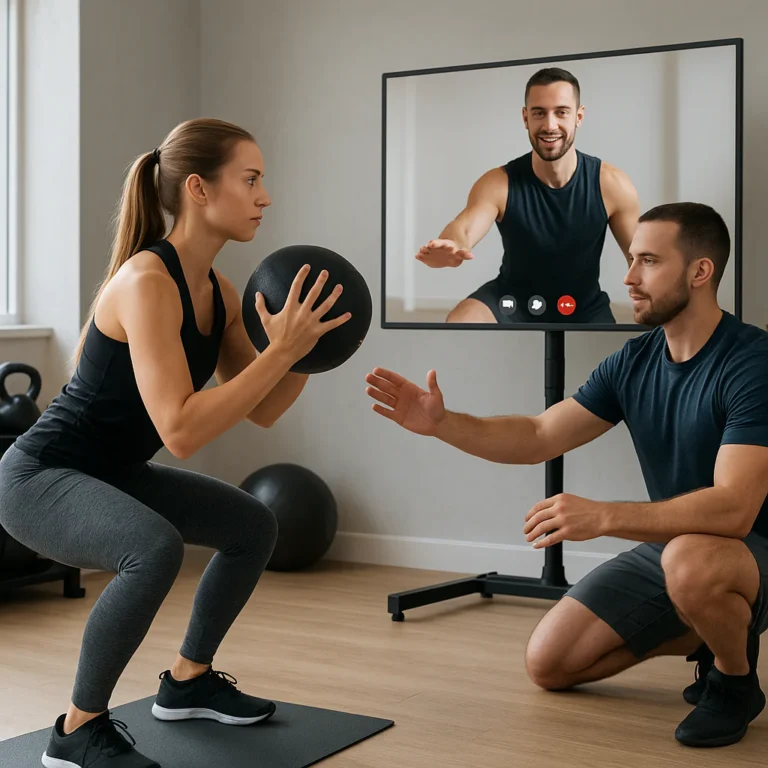
The future personal trainer will combine qualified human coaching with adaptive apps, wearable data, video feedback, and accountability that fits your real life. Our recommendation is simple: choose a coach-led virtual or hybrid service where technology supports decisions, rather than an app that blindly tells everyone to do the same burpees.
That distinction matters. A digital workout library can show you hundreds of exercises, but it cannot know that your knee started aching after a long flight, your sleep was terrible, or your “quick session” must happen beside a hotel bed.
We have seen this repeatedly at Virtual Personal Trainers™. One client arrived expecting a perfect six-day program; after discussing work travel, childcare, and a history of shoulder irritation, the smarter plan became three adaptable strength sessions with short hotel-room alternatives. Less glamorous on paper—far more useful in real life.
Services such as Future demonstrate where coaching is heading: a dedicated trainer, customized workouts, messaging, progress tracking, and wearable integration in one digital experience. Still, AI and data have limits. The best future trainer remains human enough to listen, qualified enough to coach safely, and digitally skilled enough to adapt quickly.
Key Takeaways
- Human coaching plus technology is the strongest future model. AI can organize data and suggest workouts, but trainers provide judgment, empathy, accountability, and safety awareness.
- Virtual personal training can be genuinely personalized. Look for programming based on your goals, experience, schedule, equipment, preferences, and injury history.
- Wearables are useful signals, not medical devices. Apple Watch, Garmin, Fitbit, Oura, and similar trackers can reveal trends, but they should not dictate every training decision.
- Hybrid training offers an excellent compromise. Occasional in-person technique support combined with flexible online coaching can suit clients who want both convenience and supervision.
- A future-ready trainer supports the whole person. Strength, cardiovascular fitness, mobility, sleep, recovery, stress, and sustainable habits all belong in the conversation.
- Technology cannot replace clinical care. Persistent pain, serious symptoms, and complex rehabilitation needs require qualified healthcare professionals.
- The right service depends on your needs. Independent exercisers may thrive with virtual coaching, while complete beginners may benefit from more frequent live, in-person guidance.
- The best plan is the one you can repeat. A flexible 25-minute workout completed consistently beats an elaborate program abandoned after one busy week.
Table of Contents
-
🕰️ The Evolution of Personal Training: From Gym Floor to Digital Fitness
-
The Difference Between a Personal Trainer and a Digital Fitness App
-
🚀 12 Defining Trends Shaping the Future of Personal Training
-
⌚ Wearable Technology, Smart Equipment, and Connected Fitness
-
How Apple Watch, Fitbit, Garmin, WHOP, and Oura Support Coaching
-
When a Trainer Should Refer You to a Doctor or Physical Therapist
-
🩹 Injury Prevention, Corrective Exercise, and Safer Training
-
Adaptive Exercise for Older Adults and People With Disabilities
-
🎯 Motivation, Accountability, and Long-Term Exercise Adherence
-
Virtual Communities, Coaching Messages, and Progress Check-Ins
-
Experience With Your Goals, Schedule, Equipment, and Injury Record
-
📱 The Future Personal Training Experience: From First Assessment to Progress Review
-
📊 Measuring Results in the Next Generation of Fitness Coaching
-
Working in Gyms, Studios, Healthcare, Corporations, and Online Coaching
-
Hotels, Residential Communities, and On-Demand Fitness Services
-
Walking, Cycling, Outdoor Training, and Active Transportation
-
❓ Frequently Asked Questions About the Future Personal Trainer
-
Are Virtual Personal Trainers as Effective as In-Person Coaches?
-
How Much Human Contact Will Future Fitness Coaching Include?
-
Is Wearable Fitness Data Accurate Enough for Training Decisions?
-
✅ Future Personal Trainer: Benefits, Limitations, and Best Practices
-
🏁 Conclusion: The Future Personal Trainer Is Human, Digital, and Highly Personal
Quick Tips and Facts About the Future Personal Trainer
The future personal trainer is not simply a chatbot that counts reps while you sweat. The strongest model combines a qualified human coach, adaptive programming, wearable data, video guidance, and accountability that fits your actual life.
For clients considering training virtually with personal trainers, here are the essentials:
- ✅ Human coaching still matters. Services such as Future pair you with a dedicated trainer who adjusts workouts around your goals, schedule, equipment, travel, and training history.
- ✅ Virtual coaching can be highly personalized. A good coach does more than send a PDF. They review your feedback, modify exercises, monitor consistency, and communicate regularly.
- ✅ AI is useful, but not infallible. Artificial intelligence can organize data and suggest progressions, but it cannot reliably assess every pain complaint, emotional barrier, or movement nuance.
- ✅ Wearables are helpful—not magical. Apple Watch, Garmin, Fitbit, and Oura can provide useful trends in activity, heart rate, sleep, and recovery, but these metrics should support—not dictate—training decisions.
- ❌ Virtual training is not ideal for everyone. Complete beginners, people with complex injuries, or clients who need constant hands-on form correction may benefit more from in-person supervision.
- ✅ The best program is the one you can repeat. A 25-minute hotel-room workout you complete beats an elaborate 90-minute plan that gathers dust beside your resistance bands.
- ✅ Personalization starts with useful questions. Your trainer should ask about goals, experience, schedule, available equipment, preferences, health history, and barriers.
- ✅ Progress means more than weight loss. Strength, stamina, mobility, sleep, confidence, pain-free movement, and consistency all count.
Our team at Virtual Personal Trainers™ has seen the same pattern repeatedly: clients rarely fail because they lack exercise information. They struggle because the plan does not fit Tuesday evening, a sore shoulder, a work trip, or a chaotic family schedule.
That is why hybrid personal training is gaining attention. Our guide to Hybrid Personal Training: The Best of Both Worlds 🏋️ explains how online coaching and occasional face-to-face sessions can complement one another.
What the Future of Personal Training Looks Like at a Glance
| Feature | Traditional gym-only model | Future-ready virtual model | Our professional view |
|---|---|---|---|
| Workout plan | Often repeated or template-based | Adjusted to goals, equipment, and feedback | Personalization wins |
| Trainer contact | Limited to booked sessions | Messaging, check-ins, video, and app updates | Frequency can improve adherence |
| Form guidance | Strong during live sessions | Video demonstrations and submitted clips | Live supervision remains superior |
| Progress tracking | Trainer notes or memory | Digital logs, wearable data, performance trends | Useful when interpreted carefully |
| Schedule | Fixed appointments | Flexible workouts and rescheduling | Better for unpredictable lives |
| Accountability | In-person presence | Notifications, check-ins, coach relationship | Different, not automatically better |
| Equipment | Usually gym-dependent | Home, gym, hotel, or bodyweight options | Flexible programming is essential |
| Best fit | Clients needing close supervision | Independent exercisers wanting structure | Match the model to the client |
The intriguing question is this: will technology make personal trainers less important, or finally allow great trainers to coach more intelligently? The answer becomes clearer as we examine what these systems can—and cannot—do.
The Biggest Shift: From Workout Instructor to Health Coach
The future trainer is increasingly a behavior-change specialist, not merely someone who demonstrates squats.
That does not mean personal trainers should diagnose disease, prescribe medication, or pretend to be registered dietitians. It means they help clients connect exercise with:
- Sleep and recovery
- Daily movement
- Stress management
- Sustainable nutrition habits
- Confidence and self-efficacy
- Work, family, and travel demands
- Long-term health goals
The World Health Organization’s physical activity guidelines emphasize regular aerobic activity, muscle strengthening, and reducing sedentary time. A future-ready trainer translates those broad recommendations into an achievable weekly plan.
For example, “exercise more” is not a program. A coach might turn it into:
- Two full-body strength sessions using adjustable dumbells.
- Three 20-minute brisk walks after lunch.
- Five minutes of mobility before bed.
- One optional weekend hike.
- A Sunday review to adjust the following week.
That plan is not glamorous. It is practical, measurable, and much more likely to survive real life.
How to Prepare for the Next Generation of Fitness Coaching
Before choosing an app or coach, collect the information that makes personalization possible:
- Your primary goal and secondary goals
- Current training experience
- Previous injuries and current symptoms
- Available equipment
- Typical weekly schedule
- Preferred exercise styles
- Exercises you dislike or cannot perform
- Sleep and recovery patterns
- Medical clearance requirements
- How you prefer to receive accountability
A future trainer should not be impressed by vague ambition. They should be able to turn your answers into a clear plan with progressions, alternatives, and safety boundaries.
Quick test: if a coach can create your “personalized” program without asking about your equipment, schedule, and limitations, the personalization may be wearing a very convincing costume. 🎭
The Evolution of Personal Training: From Gym Floor to Digital Fitness
Personal training began with direct observation: a coach watched you move, selected exercises, counted repetitions, and offered feedback. Digital fitness added recorded classes, workout libraries, tracking dashboards, and automated reminders.
Now the industry is blending the two.
The modern client may:
- Complete a workout on an iPhone.
- Follow a coach’s audio cues through an Apple Watch.
- Upload a form video.
- Receive a revised plan after a poor night’s sleep.
- Track strength progression in an app.
- Discuss soreness with a human trainer through messaging.
That blend is the foundation of virtual personal training.
How Personal Training Has Changed Over the Decades
| Era | Dominant model | Strength | Limitation |
|---|---|---|---|
| Early personal training | One-to-one gym instruction | Direct supervision | Limited flexibility and reach |
| Commercial gym expansion | Membership-based floor coaching | More access to trainers | Attention could be brief or inconsistent |
| DVD and video era | Pre-recorded programs | Convenient and affordable | Minimal personalization |
| App and streaming era | On-demand workouts and classes | Variety and scalability | Accountability often depends on the user |
| Virtual coaching era | Human trainer plus digital platform | Personalization and flexibility | Less continuous live form correction |
| Emerging future model | Human expertise plus AI, wearables, and connected equipment | Adaptive, data-informed coaching | Privacy, cost, quality-control, and overeliance risks |
The American College of Sports Medicine continues to stress the value of individualized exercise planning, while technology companies focus on convenience and engagement. These are not opposing goals. They simply need to be combined responsibly.
Why Technology Is Reshaping Fitness Coaching
Technology solves several long-standing problems:
- Memory: The app records sets, repetitions, weights, and completion.
- Access: A client can train at home, in a hotel, or at a local gym.
- Communication: Questions do not have to wait until the next appointment.
- Adaptation: A trainer can replace an exercise when equipment or energy changes.
- Feedback: Trends become easier to spot across weeks and months.
- Motivation: Reminders and check-ins reduce the number of decisions required.
The CDC recommends adults include both aerobic activity and muscle-strengthening work. A digital coach can schedule both, remind you, and record your completion. It cannot, however, know from a dashboard alone whether your “tight hip” is ordinary post-workout stiffness or a symptom requiring clinical attention.
That distinction separates helpful coaching technology from reckless automation.
The Rise of Online, Hybrid, and On-Demand Personal Training
The industry now offers several distinct models:
| Training model | How it works | Ideal for | Main drawback |
|---|---|---|---|
| In-person personal training | Live sessions at a gym, studio, or home | Beginners needing close supervision | Fixed location and schedule |
| Online coaching | Program delivered digitally with messaging and periodic reviews | Independent clients seeking structure | Less immediate technique correction |
| Live video training | Trainer coaches in real time through video | Clients wanting remote supervision | Camera angle and internet quality matter |
| App-based human coaching | App combines workouts, tracking, and trainer communication | Clients wanting an all-in-one system | May not provide continuous live coaching |
| On-demand classes | Pre-recorded or live group sessions | Clients motivated by energy and variety | Limited individualization |
| Hybrid training | In-person assessments plus remote programming | Clients wanting flexibility and periodic hands-on feedback | Requires coordination and access to both formats |
The first relevant featured video highlights this distinction particularly well: Future is presented as a service built around a dedicated coach who adapts workouts to equipment, schedule, preferences, and life changes. The video also contrasts Future with Peloton, whose high-energy classes can be excellent for community motivation but are generally less individualized.
The takeaway is not “one platform beats all others.” It is choose the coaching relationship that solves your specific problem.
What Is a Future Personal Trainer?
A future personal trainer is a fitness professional who combines exercise science, communication, behavior coaching, and digital tools to deliver individualized support across changing environments.
The phrase can mean two things:
- A forward-looking professional: a trainer prepared for AI, wearables, virtual coaching, and evolving client expectations.
- A trainer using a service called Future: a coach delivering individualized programs through the Future app.
Those meanings overlap, but they are not identical. One describes a professional model; the other describes a specific commercial platform.
The Modern Definition of a Future-Ready Fitness Coach
A future-ready coach should be able to:
- Assess your goals and training history.
- Build a progressive program.
- Offer exercise substitutions.
- Account for equipment and schedule.
- Explain why exercises are included.
- Monitor adherence without shaming.
- Identify when a client needs medical or clinical referral.
- Use digital records intelligently.
- Communicate clearly through text, voice, and video.
- Continue learning as evidence and technology develop.
Credentials still matter. Organizations such as the National Academy of Sports Medicine, American Council on Exercise, and National Strength and Conditioning Association provide education and certification pathways, although certification alone does not guarantee coaching quality.
A trainer can own every certification under the sun and still be poor at listening. Another may have fewer flashy badges but demonstrate excellent judgment, empathy, and programming skill. Verify both competence and coaching behavior.
Human Expertise Plus Artificial Intelligence
AI can help a trainer:
- Organize client data.
- Flag missed sessions.
- Suggest exercise alternatives.
- Generate draft progressions.
- Summarize feedback.
- Personalize reminders.
- Identify patterns in training volume.
The trainer remains responsible for checking those suggestions.
Imagine an AI system recommending more overhead pressing because your strength numbers have plateaued. A human coach may discover that your shoulder has been painful for two weeks, your sleep has deteriorated, and you are already performing pressing work in another sport. The algorithm sees a number. The coach sees a person.
That is why the best future model is not AI versus trainer. It is AI assisting a trainer who remains accountable for decisions.
Personalized Training Beyond Generic Workout Plans
A genuinely personalized plan changes when your context changes.
| Client situation | Generic response | Personalized response |
|---|---|---|
| Hotel with no weights | “Complete your usual workout” | Bodyweight circuit with slower tempo and unilateral movements |
| Sore knee | “Push through” | Discuss symptoms, modify loading, and refer when appropriate |
| Missed two sessions | “Start over” | Rebuild the week without punishment |
| New strength milestone | Add random intensity | Progress volume, load, or complexity according to readiness |
| Poor sleep | Follow the same demanding session | Adjust intensity while preserving the habit |
| New equipment | Repeat old exercises | Teach safe use and integrate it purposefully |
This is the difference between content delivery and coaching.
The Difference Between a Personal Trainer and a Digital Fitness App
A digital fitness app may offer:
- Video demonstrations
- Timers
- Exercise libraries
- Workout schedules
- Music or audio cues
- Tracking dashboards
- Automated recommendations
A personal trainer adds:
- Context
- Accountability
- Interpretation
- Emotional intelligence
- Individualized progression
- Safety judgment
- Adaptation based on conversation
Some platforms combine both. Future’s App Store listing describes a dedicated trainer, custom programming, progress tracking, video demonstrations, voice cues, and Apple Watch integration. You can review the official listing for Future Pro: Personal Training on the Apple App Store.
The app is the delivery system. The coach is the relationship. Confusing the two is how people end up paying for a beautifully designed library they never open.
12 Defining Trends Shaping the Future of Personal Training
Fitness coaching is changing quickly, but not every trend deserves a standing ovation. Some tools genuinely improve coaching; others mainly add flashing graphics to ordinary exercise.
1. AI-Powered Workout Programming
AI systems can use goals, training history, availability, and logged performance to create draft programs. They may also adjust volume when sessions are missed.
Benefits:
- Fast program generation
- Convenient exercise substitutions
- Scalable support
- Personalized reminders
- Rapid organization of complex data
Risks:
- Poor interpretation of pain
- Inappropriate progressions
- Confident but incorrect advice
- Lack of clinical judgment
- Overemphasis on measurable data
The National Institutes of Health has published research and discussion around AI applications in healthcare, but fitness recommendations should not be treated as medical diagnosis.
2. Wearable Fitness Data and Real-Time Feedback
Wearables can track movement, heart rate, estimated energy expenditure, sleep, and training trends. The FDA distinguishes general wellness products from medical devices, a distinction consumers should understand.
A wearable may tell your heart rate rose during intervals. It does not automatically tell you whether the interval was appropriate for your current condition.
3. Virtual Reality and Augmented Reality Workouts
VR and AR may make repetitive exercise more immersive. Boxing games, guided environments, and interactive movement challenges can make training feel less like training.
Potential applications include:
- Balance practice
- Technique overlays
- Virtual group workouts
- Immersive cardio
- Rehabilitation support under professional supervision
The limitation is obvious: wearing a headset while lifting heavy weights is not our favorite recipe for spatial awareness.
4. Hybrid Personal Training and Telefitness
Hybrid coaching combines in-person assessments or technique sessions with remote programming and messaging.
This model can offer:
- Hands-on instruction when needed
- Flexibility between appointments
- Better continuity during travel
- Lower dependence on fixed sessions
- More frequent communication
Our internal Fitness Industry News coverage follows this shift because hybrid models may be one of the most practical bridges between traditional and digital coaching.
5. Biometrics, Health Tracking, and Predictive Coaching
Heart-rate variability, resting heart rate, sleep duration, respiratory rate, and training load may help inform recovery decisions.
Use these metrics as signals, not verdicts. If your watch says you slept well but you feel exhausted, the human experience deserves attention too.
6. Recovery, Sleep, and Stress Management Coaching
The future trainer increasingly considers the recovery environment:
- Sleep routine
- Work stress
- Travel
- Hydration
- Rest days
- Total weekly load
- Mental readiness
The American Academy of Sleep Medicine provides evidence-based sleep guidance. Trainers can support healthy habits but should not diagnose sleep disorders.
7. Inclusive Fitness for Every Body and Ability
Inclusive coaching adapts exercises to:
- Disability
- Age
- Pregnancy and postpartum needs
- Chronic conditions
- Cultural preferences
- Body size
- Exercise history
- Neurodiversity
A future-ready trainer asks, “How can we make this movement work for you?” rather than “Why can’t you do it the standard way?”
8. Sustainable and Environmentally Conscious Fitness
Home workouts, walking programs, outdoor training, and durable equipment can reduce dependence on large facilities and constant gadget replacement.
Sustainability does not require a bamboo kettlebell. It may simply mean choosing equipment you will use for years.
9. Community-Based and Social Fitness Experiences
Some clients thrive through community; others prefer private coaching. Platforms such as Peloton, Strava, and Nike Run Club create social layers that can encourage consistency.
The key is matching motivation style:
- Private accountability: direct coach relationship
- Group energy: classes and leaderboards
- Quiet autonomy: self-guided training
- Friendly competition: challenges and shared metrics
10. Gamification, Digital Rewards, and Motivation Systems
Badges, streaks, points, and progress summaries can encourage behavior. They can also make a missed session feel like a moral failure.
Use gamification as a nudge, not a source of guilt. A broken streak does not erase your fitness.
11. Precision Nutrition and Lifestyle Guidance
Trainers may help clients improve meal planning, hydration, protein intake, and routine. Their advice must remain within scope.
For evidence-based nutrition guidance, consult resources from the Academy of Nutrition and Dietics. A personal trainer should refer complex medical nutrition needs to a registered dietitian.
12. Continuous Education and Evidence-Based Coaching
The future trainer must keep learning about:
- Exercise science
- Digital privacy
- AI limitations
- Inclusive coaching
- Injury prevention
- Behavior change
- Wearable interpretation
- Communication technology
The best professionals will be lifelong students, not walking advertisements for yesterday’s fitness fad.
Artificial Intelligence in Personal Training
AI is already influencing program design, customer support, exercise recommendations, and fitness tracking. It is powerful, fast, and occasionally spectacularly wrong—rather like a very confident intern who has read a lot but has never met your knees.
How AI Creates Adaptive Workout Plans
A typical AI-supported system may process:
- Your stated goal.
- Training experience.
- Available days.
- Equipment.
- Logged performance.
- Exercise preferences.
- Missed sessions.
- Reported soreness.
- Wearable data.
- Recent progress.
It may then suggest:
- Exercise selection
- Sets and repetitions
- Rest periods
- Weekly frequency
- Progression targets
- Substitutions
- Recovery days
A human trainer should review the output before it becomes your plan.
Can AI Replace a Human Personal Trainer?
Not completely.
AI can replicate portions of programming and tracking. It cannot reliably replicate:
- Trust built over time
- Nuanced conversation
- Recognition of fear or embarrassment
- Practical judgment during uncertainty
- Ethical responsibility
- Physical observation in a shared space
- Appropriate referral decisions
A 2024 review in The Lancet Digital Health and broader medical AI literature show why algorithmic tools require validation, oversight, and transparency. Fitness technology may have lower stakes than clinical diagnosis, but a bad recommendation can still aggravate pain or encourage unsafe training.
The Best Uses of AI for Fitness Professionals and Clients
We recommend using AI for:
- Drafting workout variations
- Summarizing training logs
- Identifying missed-session patterns
- Creating travel alternatives
- Generating client reminders
- Organizing exercise libraries
- Translating basic instructions
- Supporting administrative tasks
We do not recommend relying on AI alone for:
- Diagnosing pain
- Interpreting serious symptoms
- Managing complex medical conditions
- Replacing physical assessments
- Prescribing clinical nutrition
- Determining whether an injury is safe to train through
AI Limitations, Hallucinations, and Safety Concerns
AI can produce answer that sounds authoritative but contains errors. Watch for:
- No citations
- Absolute guarantees
- “Burn fat instantly” claims
- A single plan offered to everyone
- Advice that ignores medication or injury
- Rapid increases in training load
- Recommendations based on inaccurate wearable data
Ask the system—or your trainer—to explain:
- Why this exercise was selected
- What the progression is
- What symptoms require stopping
- Which alternatives are available
- How the plan changes if life intervenes
Human Judgment, Empathy, and Accountability
The strongest coaching interaction may look surprisingly ordinary:
“You missed two workouts. What got in the way?”
That question can reveal a schedule conflict, anxiety about the gym, poor sleep, unrealistic programming, or simple exhaustion. An algorithm may label the event “nonadherence.” A human can investigate the reason and respond constructively.
This is why Future’s model emphasizes ongoing trainer communication rather than a questionnaire-generated program alone. A Men’s Health review of Future described direct communication with the coach as “the value that Future offers.”
Wearable Technology, Smart Equipment, and Connected Fitness
Wearables promise a clearer picture of your body. They deliver a picture, certainly. Whether it is high-definition truth is another matter.
How Apple Watch, Fitbit, Garmin, WHOP, and Oura Support Coaching
| Device or ecosystem | Useful data | Coaching value | Limitation |
|---|---|---|---|
| Apple Watch | Heart rate, activity, workouts, trends | Convenient integration and reminders | Calorie and recovery estimates are imperfect |
| Fitbit | Steps, heart rate, sleep, activity | Helpful habit tracking | Data quality varies by metric and user |
| Garmin | Training load, GPS, heart rate, recovery estimates | Strong for runners and endurance athletes | Can overwhelm new users with metrics |
| WHOP | Strain, recovery, sleep | Encourages recovery awareness | Requires thoughtful interpretation |
| Oura Ring | Sleep, readiness, resting metrics | Low-profile daily tracking | Not designed for detailed exercise logging |
| Fitbit Charge | Activity and sleep tracking | Simple wearable entry point | Not a substitute for coaching |
Future’s App Store materials describe Apple Watch integration and visual progress reports. That can be convenient for clients who want fewer devices and a single training record.
👉 CHECK PRICE on:
- Apple Watch: Amazon | Apple Official Website
- Garmin Fitness Watches: Amazon | Garmin Official Website
- Fitbit Trackers: Amazon | Fitbit Official Website
- WHOP: WHOP Official Website
- Oura Ring: Oura Official Website
Smart Mirrors, Connected Strength Machines, and Home Gyms
Connected equipment may offer:
- On-screen instruction
- Automatic resistance adjustment
- Form prompts
- Performance dashboards
- Live or recorded classes
- Trainer communication
Examples include Tonal, Tempo, Hydrow, and Peloton.
These systems are useful when they reduce friction. They become expensive furniture when they create complexity without improving consistency.
Heart Rate, HRV, Sleep, Steps, and Training Load
Here is how we suggest interpreting common metrics:
| Metric | What it may help indicate | How to use it |
|---|---|---|
| Heart rate | Intensity during cardio | Guide effort zones, not diagnose health |
| Resting heart rate | Long-term changes in recovery or fitness | Watch trends over time |
| HRV | Autonomic nervous system variation | Use as one recovery signal |
| Sleep duration | Recovery opportunity | Adjust expectations after poor sleep |
| Steps | Daily movement volume | Set practical activity targets |
| Training load | Recent exercise stress | Avoid abrupt spikes |
| Calories burned | Rough energy estimate | Do not treat as precise accounting |
The American Heart Association supports monitoring exercise intensity but emphasizes individual context. If you have cardiovascular symptoms, consult a medical professional rather than asking your watch for a second opinion.
Which Fitness Metrics Actually Matter?
For most clients, the most valuable metrics are:
- Sessions completed
- Strength or endurance progression
- Comfortable range of motion
- Perceived exertion
- Recovery between sessions
- Daily movement
- Sleep consistency
- Ability to perform desired activities
A 2% change in estimated calorie burn is rarely more meaningful than completing your third consecutive week of training.
Data Privacy and Health Information Protection
The Future App Store listing indicates data categories may include health and fitness, financial information, location, contact details, usage data, and diagnostics. Review the app’s privacy information before connecting additional devices.
The Federal Trade Commission offers guidance on health privacy and consumer data. Also check:
- What data the app collects
- Whether data is linked to your identity
- How long data is retained
- Whether data is shared with third parties
- How to delete your account
- Whether location tracking can be disabled
- Which integrations can access your records
Convenience is excellent. Surprise surveillance is not.
Personalized Fitness, Biometrics, and Precision Coaching
Personalization is not sprinkling your name over a generic workout. It means the plan changes because the individual changes.
Training Plans Based on Goals, Experience, and Schedule
A trainer should first separate your goals into categories:
| Goal type | Example | Programming emphasis |
|---|---|---|
| Performance | Run a faster 5K | Running volume, intervals, recovery |
| Strength | Improve squat or deadlift | Progressive resistance and technique |
| Health | Improve blood pressure or stamina | Aerobic work, strength, adherence |
| Mobility | Move comfortably | Range of motion, control, consistency |
| Body composition | Build muscle or reduce fat | Resistance training, activity, nutrition support |
| Lifestyle | Train consistently | Minimum effective routine and accountability |
The question is not only “What do you want?” It is also “What can your current life support?”
Using Injury History and Medical Considerations Responsibly
Tell your trainer about:
- Previous surgeries
- Current pain
- Recurring injuries
- Medications affecting exercise
- Cardiovascular conditions
- Neurological symptoms
- Pregnancy or postpartum status
- Recent illness
- Physical therapy recommendations
A trainer can modify exercise, but medical diagnosis belongs to qualified clinicians. The American Physical Therapy Association provides consumer information about physical therapy and movement health.
Adaptive Programming for Age, Fitness Level, and Lifestyle
Adaptive programming may change:
- Exercise complexity
- Balance demands
- Training frequency
- Recovery time
- Impact level
- Session duration
- Warm-up length
- Coaching language
- Equipment selection
A busy executive, a new parent, and a retired marathoner may all want “better fitness,” but the route will look entirely different.
Genetic Testing and Personalized Exercise Recommendations
Commercial genetic testing often promises insight into training response, nutrition, or injury risk. Treat bold claims cautiously.
Genetics may influence traits such as muscle fiber characteristics or endurance potential, but training outcomes also depend on sleep, nutrition, experience, stress, environment, and consistency. The National Human Genome Research Institute explains important limitations and considerations around genetic testing.
When a Trainer Should Refer You to a Doctor or Physical Therapist
Seek professional medical guidance for:
- Chest pain
- Unexplained fainting
- Severe shortness of breath
- Suden weakness or numbness
- Persistent or worsening pain
- Significant swelling
- Loss of function
- New neurological symptoms
- Pain following major trauma
A responsible trainer does not lose credibility by referring out. They earn it.
Designing a 360-Degree Fitness Roadmap
A complete plan includes exercise, recovery, routines, and the obstacles that threaten consistency.
Goal Setting That Goes Beyond Weight Loss
Useful goals are:
- Specific
- Measurable
- Relevant
- Time-aware
- Flexible enough for real life
Examples:
- Complete three strength sessions weekly for eight weeks.
- Walk comfortably for 45 minutes.
- Perform five controlled push-ups.
- Improve balance while stepping off a curb.
- Sleep at a consistent time on five nights per week.
- Reduce fear around gym equipment.
The CDC’s physical activity guidance supports a combination of moderate aerobic activity and muscle strengthening. Your trainer can scale those recommendations to your current ability.
Strength, Cardiovascular Fitness, Mobility, and Balance
A balanced weekly structure might include:
| Component | Example | Frequency guideline |
|---|---|---|
| Strength | Squat, hinge, push, pull, carry | 2 or more sessions |
| Aerobic fitness | Walking, cycling, swimming | Several short or longer sessions |
| Mobility | Hip, shoulder, thoracic movement | Briefly most days |
| Balance | Single-leg stance, controlled step-downs | 2–3 times weekly |
| Recovery | Easy movement, rest, sleep routine | Ongoing |
The exact prescription varies. A future trainer does not force every client into the same four-day split.
Nutrition, Hydration, Sleep, and Daily Movement
A trainer may support basic habits such as:
- Drinking water regularly
- Including protein-rich foods
- Eating vegetables and fruit
- Planning meals around busy days
- Taking movement breaks
- Establishing a consistent bedtime
For broader dietary guidance, the Dietary Guidelines for Americans provide a reliable starting point.
Recovery Days, Deloading, and Managing Training Load
Recovery is not laziness. It is part of the adaptation process.
A coach may reduce training stress by:
- Lowering weight
- Reducing sets
- Shortening sessions
- Replacing impact with low-impact cardio
- Adding rest days
- Using mobility or technique work
A deload may be planned after several demanding weeks or introduced when performance, sleep, mood, and soreness suggest accumulated fatigue.
Progress Tracking Without Obsessing Over the Numbers
Use several forms of progress:
- Training log
- Repetition quality
- Range of motion
- Mood and energy
- Clothing fit
- Resting heart rate trends
- Functional milestones
- Client confidence
The Men’s Health Future review quoted clinical psychologist Dr. Rachel Hershenberg: “The first way of changing behavior is to monitor behaviors.” The value lies in seeing the larger pattern—not turning every metric into a judgment.
Injury Prevention, Corrective Exercise, and Safer Training
Technology can help organize safe training, but it cannot remove risk. Movement is not a software update; bodies occasionally produce unexpected error messages.
How Future Trainers Identify Movement Limitations
Remote coaches may use:
- Intake questionnaires
- Movement descriptions
- Client-submitted videos
- Training history
- Pain and soreness reports
- Performance changes
- Exercise confidence ratings
The quality of the assessment depends on communication and camera placement. A trainer should be honest about what they can and cannot see.
Technique Feedback Through Video and Motion Analysis
Video feedback can help identify:
- Loss of balance
- Excessive trunk movement
- Knee position
- Bar path
- Tempo
- Range of motion
- Repetition consistency
However, video has limitations:
- One camera angle can hide important details.
- Lighting and framing affect interpretation.
- The client may perform differently when recording.
- Slow-motion analysis can exaggerate minor deviations.
- A visual difference is not automatically an injury.
Training Around Pain, Past Injuries, and Chronic Conditions
A practical process:
- Ask where the discomfort occurs.
- Identify when it began.
- Determine which movements aggravate it.
- Assess whether symptoms are worsening.
- Stop or modify provoking movements.
- Use an alternative that preserves the training goal.
- Refer to a clinician when symptoms exceed the trainer’s scope.
The reviewer cited by Men’s Health described a Future coach incorporating resistance-band work recommended by a physical therapist for a strained lat. That is a good example of collaboration rather than competition between professionals.
Common Red Flags a Trainer Must Never Ignore
Stop exercise and seek appropriate care for:
- Chest pressure or pain
- Severe breathing difficulty
- Fainting
- New confusion
- Suden loss of coordination
- Severe headache
- Suden weakness
- Sharp, escalating pain
- Loss of bladder or bowel control
The American College of Sports Medicine and American Heart Association provide further safety guidance.
Why Technology Cannot Diagnose an Injury
A motion-tracking system may detect asymetry. It cannot reliably establish whether the cause is:
- Pain
- Weakness
- Fear
- Fatigue
- Technique misunderstanding
- Structural limitation
- Neurological change
Diagnosis requires clinical training and, often, an in-person assessment. Use technology to communicate better, not to pretend a camera is a medical exam.
Inclusive, Accessible, and Real-Life Fitness Coaching
A future trainer should design for the person in front of them, not an imaginary athlete with unlimited time, perfect recovery, and a garage full of equipment.
Adaptive Exercise for Older Adults and People With Disabilities
The National Institute on Aging supports strength, balance, flexibility, and endurance activities for older adults. Programs may use:
- Chair-supported exercises
- Seated strength work
- Stable surfaces
- Lower-impact cardio
- Longer warm-ups
- Balance assistance
- Simplified instructions
For clients with disabilities, adaptations should be collaborative. Ask what movements feel safe, useful, and meaningful.
Culturally Sensitive and Body-Neutral Coaching
Effective coaching avoids:
- Shame-based language
- Stereotypes
- Assumptions about food
- Weight as the only measure of success
- “Before and after” pressure
- Moral labels such as “good” and “bad” bodies
A body-neutral approach can still support performance, health, and body-composition goals. It simply does not make dignity conditional on appearance.
Fitness for Busy Parents, Travelers, and Shift Workers
A flexible program may include:
- Ten-minute movement snacks
- Hotel-room strength circuits
- Walking meetings
- Adjustable workout days
- Short “minimum viable” sessions
- Equipment-free alternatives
- Rotating schedules
Future’s app-based model is particularly relevant to travel because coaches can modify workouts around available facilities. The first featured video also emphasizes this “built around your life” approach.
Home Workouts, Small Spaces, and Minimal Equipment
A productive home setup may include:
- Exercise mat
- Resistance bands
- Adjustable dumbells
- Stable chair or bench
- Door anchor used according to manufacturer instructions
- Timer
- Smartphone or tablet
👉 CHECK PRICE on:
- Resistance Bands: Amazon | TheraBand Official Website
- Adjustable Dumbells: Amazon | Bowflex Official Website
- Exercise Mats: Amazon | Manduka Official Website
- Portable Suspension Trainers: Amazon | TRX Official Website
Making Exercise More Affordable and Accessible
If a dedicated coaching service does not fit your budget, alternatives include:
- Community recreation centers
- Walking groups
- Low-cost fitness apps
- Public library wellness programs
- Group classes
- Independent programming reviewed periodically by a trainer
- Employer wellness resources
A premium service can be valuable, but premium does not mean universally necessary.
Motivation, Accountability, and Long-Term Exercise Adherence
Information rarely changes behavior by itself. The plan must be easy enough to start, meaningful enough to repeat, and forgiving enough to survive disruption.
How Future Trainers Build Sustainable Habits
A trainer can improve adherence by:
- Scheduling workouts at realistic times
- Reducing unnecessary complexity
- Creating backup plans
- Tracking completion
- Celebrating process
- Reviewing barriers weekly
- Avoiding punishment after missed sessions
Future’s website reports that 98% of members say they are more consistent within four weeks. That is a company-reported result, not an independently verified clinical outcome, so treat it as a marketing claim rather than universal proof.
Personalized Encouragement Without Pressure or Shame
Accountability can feel supportive or stressful.
Helpful accountability:
- “What would make tomorrow’s workout easier?”
- “Would a shorter session keep the habit alive?”
- “Which exercise felt best this week?”
Unhelpful accountability:
- “You failed again.”
- “No excuses.”
- “You should be more committed.”
- “You have to earn your food.”
The American Psychological Association provides broader information on behavior, stress, and health. Good coaching supports autonomy rather than manufacturing fear.
Behavior Change, Habit Stacking, and Small Wins
Try this sequence:
- Choose a behavior you already perform, such as brushing your teeth.
- Attach a small movement habit, such as five squats.
- Repeat at the same time and place.
- Increase gradually.
- Record completion.
- Add complexity only after consistency develops.
The aim is to make exercise familiar before making it heroic.
Virtual Communities, Coaching Messages, and Progress Check-Ins
Different clients prefer different accountability channels:
| Preference | Best support |
|---|---|
| Private encouragement | One-to-one coach messaging |
| Social energy | Group classes or community challenges |
| Competition | Leaderboards and shared milestones |
| Quiet independence | Self-guided app with occasional reviews |
| Frequent reassurance | Regular video or voice check-ins |
The Men’s Health reviewer described Future as creating “a second party invested in my success,” while also acknowledging that group platforms such as Peloton may suit people who want social motivation without direct coach pressure.
What to Do When Motivation Disappears
Use a fallback plan:
- Reduce the session to ten minutes.
- Complete only the warm-up.
- Walk instead of lifting.
- Do one set of each movement.
- Reschedule without self-criticism.
- Tell your coach what changed.
- Revisit the original goal.
Motivation often returns after action—not before it.
Online, Virtual, and Hybrid Personal Training Models
Virtual training is not one thing. The experience depends on how much human interaction, live supervision, and customization the platform provides.
Live Video Coaching Versus On-Demand Programs
| Feature | Live video training | On-demand program | Human-coached app |
|---|---|---|---|
| Real-time supervision | High | None | Usually limited |
| Scheduling flexibility | Moderate | High | High |
| Personalized programming | High | Low to moderate | High |
| Form correction | Immediate | General demonstrations | Video or message-based |
| Community feel | Variable | Often moderate | Usually private |
| Best for | Technique and accountability | Convenience and variety | Structure plus flexibility |
How Remote Trainers Assess Form and Technique
Remote trainers may ask you to:
- Film from the side
- Film from the front
- Use adequate lighting
- Include the full body
- Perform a few controlled repetitions
- Explain discomfort or uncertainty
- Upload a lower-load practice set
Never record in a dangerous position merely to provide better footage. Safety first, cinematic angles second.
The Benefits and Drawbacks of Virtual Personal Training
Benefits:
- Flexible location
- Easier schedule changes
- Wider access to specialized coaches
- Digital tracking
- Potentialy more frequent communication
- Programs that adapt to travel and equipment
Drawbacks:
- Less immediate form correction
- Technology or connectivity problems
- Need for self-directed setup
- Additional equipment or gym access
- Privacy concerns
- Quality varies widely between providers
What a High-Quality Online Coaching Experience Includes
Look for:
- A detailed intake process
- Clear trainer credentials
- Personalized programming
- Exercise substitutions
- Regular plan reviews
- Direct communication
- Safety screening
- Progress tracking
- Transparent cancellation terms
- Respectful coaching language
Future’s official model includes a one-minute quiz, coach matching, app-based workouts, messaging, tracking, and plan adaptations. Independent reviews, such as the Men’s Health assessment, add useful perspective on the practical experience and limitations.
How to Stay Safe During Unsupervised Home Workouts
Before starting:
- Clear the training area.
- Check equipment condition.
- Wear stable footwear where appropriate.
- Keep water nearby.
- Start below your maximum ability.
- Use a stable surface.
- Stop if you feel unusual symptoms.
- Keep children and pets away from moving equipment.
- Follow the coach’s modification instructions.
- Ask questions before increasing difficulty.
Finding the Right Future-Ready Personal Trainer
Choosing a trainer is less like selecting a playlist and more like choosing a guide for a long hike. Personality, expertise, communication, and route planning all matter.
Qualifications, Certifications, and Professional Standards
Look for certification from a recognized body such as:
Also check for:
- Current CPR/AED certification
- Relevant specialization
- Continuing education
- Professional liability coverage where applicable
- Experience with your population
Experience With Your Goals, Schedule, Equipment, and Injury Record
Ask:
- Have you coached people with my goal?
- How do you modify workouts when equipment changes?
- How do you handle pain reports?
- How often do you review my plan?
- Can I submit form videos?
- What happens if I miss a week?
- How do you measure progress?
- Which conditions are outside your scope?
A trainer who answers with specifics is more reassuring than one who simply promises transformation.
Questions to Ask Before Choosing a Fitness Coach
Use this checklist:
- What certifications do you hold?
- How do you individualize programming?
- How often will we communicate?
- Who writes and updates the workouts?
- Do you use AI, and how do you review its recommendations?
- How do you protect client data?
- What happens if I travel?
- How do you handle injuries?
- What is the cancellation policy?
- Can I speak with a current or former client?
- Do you provide live sessions, messaging, or both?
How to Evaluate an Online Trainer or Fitness App
Score the service from 1 to 5 on:
- Personalization
- Coach access
- Programming quality
- Exercise explanations
- Tracking
- Flexibility
- Safety screening
- Privacy transparency
- Ease of use
- Value for your goals
The result should reflect your needs, not simply the number of features.
Warning Signs of Poor Coaching or Fitness Misinformation
Avoid services that promise:
- Guaranteed fat loss
- Permanent pain relief
- Instant results
- One plan for every body
- “No excuses” coaching
- Medical diagnoses without credentials
- Extreme restriction
- Punishment workouts
- Secret methods
- Constant upselling
If every answer ends with a supplement code, the coaching may be more interested in your wallet than your squat.
The Future Personal Trainer’s Essential Skills
Technology changes the delivery method, but excellent coaching still depends on fundamentals.
Exercise Science and Evidence-Based Programming
A capable trainer understands:
- Progressive overload
- Specificity
- Volume and intensity
- Recovery
- Exercise selection
- Movement patterns
- Conditioning principles
- Individual variation
Evidence should guide practice, but research must be applied thoughtfully rather than copied mechanically.
Digital Literacy, Data Interpretation, and App Expertise
Future trainers need to know how to:
- Use coaching platforms
- Review workout logs
- Interpret wearable trends
- Protect client information
- Record useful technique videos
- Communicate across channels
- Identify unreliable metrics
Communication, Empathy, and Active Listening
Communication includes:
- Asking open questions
- Reflecting what the client says
- Explaining clearly
- Avoiding jargon
- Respecting boundaries
- Offering choices
- Giving actionable feedback
A technically perfect plan fails if clients feel misunderstood.
Coaching Psychology and Behavior Change
Useful skills include:
- Motivational interviewing
- Habit design
- Goal setting
- Confidence building
- Relapse planning
- Reinforcement
- Nonjudgmental feedback
The American Council on Exercise provides educational material on motivational interviewing and client-centered coaching.
Business, Marketing, and Client Relationship Skills
Independent trainers also need:
- Clear onboarding
- Scheduling systems
- Client retention practices
- Ethical marketing
- Data security
- Documentation
- Referral networks
- Accessible communication
Continuing Education and Emerging Fitness Technologies
The strongest professionals continually update knowledge through:
- Workshops
- Conferences
- Peer collaboration
- Research reviews
- Specialty certifications
- Clinical referrals
- Technology training
A future trainer should be curious without chasing every shiny new gadget.
The Future Personal Training Experience: From First Assessment to Progress Review
A well-designed experience should feel personal before the first workout begins.
1. Creating a Personalized Fitness Profile
The onboarding process should gather:
- Goals
- Experience
- Available equipment
- Schedule
- Preferences
- Injury history
- Medical considerations
- Exercise dislikes
- Communication preferences
- Training environment
Future’s coach-matching process begins with a short quiz, while the App Store listing describes programs based on goals, fitness level, lifestyle, equipment, and exercise preferences.
2. Setting Goals and Choosing Meaningful Metrics
Work with your trainer to choose:
- One primary outcome
- Two or three supporting behaviors
- A realistic review period
- Clear signs of progress
- A plan for setbacks
For example:
- Primary outcome: improve general strength.
- Supporting behavior: complete three sessions weekly.
- Supporting behavior: record all working sets.
- Review: reassess after six weeks.
3. Building a Flexible Workout Schedule
A useful schedule includes:
- Preferred workout days
- Backup days
- Short-session alternatives
- Recovery periods
- Travel modifications
- Optional activities
Your schedule should have a safety net. Otherwise, one missed Tuesday can collapse the entire week like a poorly stacked Jenga tower.
4. Selecting Equipment and Training Environments
A coach should know whether you train:
- In a commercial gym
- At home
- Outdoors
- In a hotel
- In a small apartment
- With machines
- With free weights
- With bands
- With bodyweight only
5. Delivering Adaptive Workouts and Real-Time Coaching
Digital workouts may include:
- Demonstration videos
- Voice instructions
- Timers
- Rest prompts
- Exercise substitutions
- Trainer notes
- Watch vibrations
- Workout completion logs
The Men’s Health reviewer specifically praised countdown timers, audio cues, and smartwatch prompts for reducing distractions and supporting work-to-rest consistency.
6. Reviewing Results and Updating the Plan
At regular intervals, discuss:
- What improved?
- What felt difficult?
- What was skipped?
- Which exercises felt good?
- Did symptoms change?
- Is the schedule realistic?
- Should volume or intensity change?
Future’s reported member testimonials describe plans evolving as users’ needs change. That adaptability is more meaningful than a colorful dashboard that never changes.
Equipment for the Future of Personal Training
Technology cannot compensate for unsafe or unsuitable equipment. Fortunately, effective training does not require a private laboratory with mood lighting.
Essential Home Workout Equipment
A practical starter setup:
- Exercise mat
- Resistance bands
- Adjustable dumbells
- Stable chair or bench
- Timer
- Storage space
- Phone stand for video sessions
Smartwatches, Fitness Trackers, and Heart Rate Monitors
Choose based on your purpose:
- General activity: Fitbit or Apple Watch
- Running and endurance: Garmin
- Recovery-focused tracking: WHOP or Oura
- Live heart-rate training: chest strap paired with a compatible device
Do not buy a recovery tracker if you are not prepared to change anything based on its information. Data without decisions is just digital confetti.
Resistance Bands, Adjustable Dumbells, and Portable Tools
Portable tools are useful for:
- Travel
- Small spaces
- Beginner strength training
- Warm-ups
- Rehabilitation-approved exercises
- Adding resistance without bulky machines
👉 CHECK PRICE on:
- TRX Suspension Trainer: Amazon | TRX Official Website
- TheraBand Resistance Bands: Amazon | TheraBand Official Website
- Bowflex Adjustable Dumbells: Amazon | Bowflex Official Website
- REP Fitness Equipment: REP Fitness Official Website
Connected Cardio and Strength Equipment
Connected equipment may suit clients who value guided sessions and performance feedback. Consider:
- Peloton Bike or Tread
- Tonal
- Tempo
- Hydrow
- NordicTrack
- Concept2 with compatible training platforms
Compare:
- Equipment footprint
- Required subscriptions
- Trainer interaction
- Maintenance
- Data compatibility
- Workout variety
- Whether you can use the equipment without the platform
How to Avoid Buying Gadgets You Will Never Use
Before purchasing, ask:
- Does it solve a problem I actually have?
- Can I use it at least twice weekly?
- Does my trainer support it?
- Is the data actionable?
- What happens if the subscription ends?
- Is it safe for my space and ability?
- Would a simpler tool do the same job?
If the answer to question one is “it looked impressive in a video,” close the shopping tab.
Ethics, Regulation, and Trust in Digital Fitness
The more personal data a platform collects, the more responsibility it carries.
Protecting Client Privacy and Personal Health Data
Clients should expect clear explanations of:
- Data collection
- Data storage
- Third-party sharing
- Device integrations
- Account deletion
- Location permissions
- Financial information handling
Review the privacy policy for Future and the Apple App Store privacy label before enrolling or connecting wearables.
Transparency in AI-Generated Fitness Recommendations
Platforms should disclose:
- Whether AI generates workouts
- Whether humans review recommendations
- What data informs suggestions
- How users can correct inaccurate information
- How safety concerns are escalated
A mysterious algorithm should not be treated as a coach with invisible credentials.
Avoiding Body Shaming, Unrealistic Claims, and Quick Fixes
Ethical coaching avoids:
- Guaranteed outcomes
- Extreme transformations
- Fear-based sales
- Shaming missed workouts
- Misleading testimonials
- “Detox” promises
- Unsafe calorie restriction
Read the Federal Trade Commission’s guidance on health claims before trusting dramatic marketing language.
Scope of Practice for Personal Trainers
Personal trainers generally may provide exercise instruction and basic lifestyle support within their education. They should not:
- Diagnose disease
- Prescribe medication
- Treat injuries as clinicians
- Provide individualized medical nutrition therapy without appropriate credentials
- Override a physician or physical therapist
- Promise medical outcomes
Evidence-Based Advice Versus Fitness Influencer Hype
Ask:
- Is the claim supported by reputable evidence?
- Is the source selling something?
- Does it acknowledge limitations?
- Is the recommendation safe for varied populations?
- Does it promise a result that biology rarely guarantees?
You can enjoy influencer content. Just do not let a person with excellent lighting become your medical board.
Measuring Results in the Next Generation of Fitness Coaching
Results should answer a useful question: what can you do now that was difficult before?
Strength, Endurance, Mobility, and Performance Improvements
Track:
- Load lifted
- Repetitions completed
- Walking or running distance
- Pace
- Recovery between intervals
- Balance duration
- Range of motion
- Daily functional tasks
Body Composition and Weight-Management Metrics
Body weight can fluctuate because of hydration, food, stress, sleep, and hormonal changes. Use multiple measures:
- Weight trend, not single readings
- Waist measurement
- Strength performance
- Clothing fit
- Energy
- Photos, if comfortable
- Blood pressure when clinically appropriate
Body composition devices can produce varying results depending on hydration and methodology. Treat them as estimates.
Energy, Sleep, Mood, and Quality-of-Life Outcomes
Ask weekly:
- Do I have more energy?
- Am I sleeping better?
- Is movement less intimidating?
- Can I perform daily tasks more comfortably?
- Do I feel more confident?
- Have I reduced sedentary time?
The National Institute on Aging highlights the broad benefits of physical activity for function and health, not merely appearance.
Why Progress Is Not Always Visible in a Mirror
Fitness improvements may appear as:
- Carrying groceries more easily
- Climbing stairs without stopping
- Better posture
- Fewer aches after sitting
- More confidence in a gym
- Improved mood
- Faster recovery after activity
A mirror is one measurement tool. It is not the chief executive officer of your health.
Career Outlook: Becoming a Future Personal Trainer
The profession is expanding beyond gym floors. Trainers increasingly work across digital platforms, healthcare partnerships, workplace wellness, and specialized populations.
Education and Certification Pathways
A strong pathway typically includes:
- Foundational anatomy and exercise science.
- Accredited personal training certification.
- CPR/AED certification.
- Practical coaching experience.
- Specialty education.
- Digital coaching and data privacy training.
- Continuing education.
Check certification standards and professional policies through NCCA, NASM, ACE, or ACSM.
Specializations With Growing Demand
Potential areas include:
- Older-adult fitness
- Strength and conditioning
- Post-rehabilitation exercise
- Adaptive fitness
- Women’s health
- Prenatal and postpartum training
- Corporate wellness
- Endurance coaching
- Mobility
- Behavior change
- Online personal training
Working in Gyms, Studios, Healthcare, Corporations, and Online Coaching
| Setting | Core opportunity | Key skill |
|---|---|---|
| Commercial gym | Broad client exposure | Communication and retention |
| Boutique studio | Community and specialization | Class delivery |
| Healthcare partnership | Preventive and supportive exercise | Scope awareness and referrals |
| Corporate wellness | Workplace behavior change | Program design |
| Residential community | Convenience and trust | Relationship building |
| Online platform | Global reach | Digital communication |
| Independent business | Autonomy | Marketing and operations |
Building a Personal Training Brand and Digital Presence
A modern trainer should present:
- Clear specialty
- Professional website
- Helpful educational content
- Secure onboarding
- Testimonials used ethically
- Transparent services
- Consistent communication
- Evidence-based messaging
A strong brand is not just a logo. It is the experience clients receive repeatedly.
How Trainers Can Compete With Free Fitness Content
Free content provides information. Trainers provide:
- Selection
- Progression
- Feedback
- Accountability
- Adaptation
- Context
- Safety boundaries
The answer is not producing more generic workouts. It is offering better decisions.
Income Streams for the Modern Fitness Professional
Possible services include:
- One-to-one coaching
- Small-group virtual training
- In-person sessions
- Program design
- Corporate wellness
- Workshops
- Educational memberships
- Digital products
- Referral partnerships
- Specialized assessments within scope
Trainers should avoid making income claims they cannot substantiate and should disclose commercial relationships clearly.
Where Future Personal Trainers Will Work
The “gym trainer” stereotype is becoming far too small for the profession.
Gyms, Health Clubs, and Boutique Fitness Studios
These settings remain valuable for:
- Equipment access
- Live instruction
- Community
- Immediate feedback
- New-client onboarding
Corporate Wellness and Workplace Health Programs
Workplace trainers may provide:
- Movement breaks
- Strength education
- Stress-supportive activity
- Walking challenges
- Ergonomic movement guidance
- Remote wellness coaching
Programs should protect employee privacy and avoid coercive participation.
Healthcare, Rehabilitation, and Preventive Health Settings
Personal trainers may collaborate with:
- Physical therapists
- Occupational therapists
- Physicians
- Registered dietitians
- Exercise physiologists
The boundaries must remain clear. Collaboration is not credential borrowing.
Hotels, Residential Communities, and On-Demand Fitness Services
Travelers and residents increasingly value convenient coaching that comes to them digitally or physically.
Fully Remote and Global Personal Training
Remote coaching can connect clients with specialists outside their local area. Consider:
- Time zones
- Emergency procedures
- Local scope-of-practice rules
- Language
- Data security
- Whether the trainer understands your equipment and environment
Sustainability and the Social Future of Fitness
The future of fitness is also about how exercise fits within communities and the environment.
Eco-Friendly Gyms and Low-Impact Fitness Equipment
Look for:
- Durable equipment
- Repairable products
- Energy-efficient facilities
- Recycled materials
- Public transit access
- Outdoor programming
Walking, Cycling, Outdoor Training, and Active Transportation
Walking and cycling can combine exercise with transportation. They are accessible, social, and less dependent on subscriptions or screens.
Reducing Digital Waste and Device Overconsumption
Do not upgrade every time a new tracker appears. Use devices longer, recycle responsibly, and choose platforms that work across standard equipment.
How Fitness Communities Can Support Public Health
Communities can improve access through:
- Safe walking paths
- Public recreation spaces
- Inclusive classes
- Affordable programs
- Multilingual education
- Beginner-friendly groups
- Partnerships with healthcare providers
The future trainer may become a connector between individual goals and broader community health.
Frequently Asked Questions About the Future Personal Trainer
What are the most popular virtual personal training platforms for clients?
Popular options include Future, Peloton, Trainwell, Caliber, CoPilot, and Kickoff.
They differ substantially:
| Platform type | Best for | Main strength |
|---|---|---|
| Future | Dedicated human coaching | Customized programming and accountability |
| Peloton | Group motivation | Live and on-demand classes |
| Trainwell | Online human coaching | Trainer-client relationship |
| Caliber | Strength programming | Structured resistance training |
| CoPilot | Coaching communication | Flexible personal support |
| Kickoff | Remote coaching | Ongoing digital guidance |
Review coach credentials, communication frequency, workout flexibility, privacy terms, and cancellation policies rather than choosing based solely on popularity. Our Fitness App Reviews section compares digital fitness services in more detail.
How effective is virtual personal training compared to in-person training?
Virtual personal training can be effective when clients have enough independence to follow instructions and communicate clearly. It offers flexibility, regular messaging, and programming tailored to equipment and schedule.
In-person coaching remains stronger for:
- Beginners learning complex lifts
- Clients needing immediate form correction
- People who struggle to exercise alone
- Situations requiring hands-on assessment by an appropriately qualified professional
The research question is not simply “online or in-person?” It is how much supervision, personalization, and adherence does this client need?
Can I still get personalized fitness plans with a virtual personal trainer?
Yes. A quality virtual trainer should personalize:
- Exercises
- Sets and repetitions
- Training days
- Equipment
- Progressions
- Modifications
- Recovery
- Communication
Future’s official materials state that programs are based on goals, current fitness, lifestyle, equipment, and preferences. Ask how often the program changes and whether a human trainer—not only an algorithm—reviews your information.
How do I find a personal trainer who specializes in virtual training sessions?
Search professional directories, established coaching platforms, and certification databases. Then verify:
- Credentials
- Virtual coaching experience
- Communication process
- Video-feedback method
- Safety screening
- Privacy policy
- Client references
- Cancellation terms
A trainer who only sends generic workouts is providing programming, not necessarily personal training.
How much does Futurefit cost?
“Futurefit” can refer to different services, brands, or searches, so confirm the exact provider before enrolling. Do not confuse Future with unrelated FutureFit education or training businesses.
For the Future personal-training app, the company’s publicly described standard membership has commonly been listed at $199 per month, while promotional introductory terms can change. Review the current checkout page and refund conditions directly.
Is there a future for personal trainers?
Yes. Technology increases demand for trainers who can interpret information, build trust, modify plans, and support behavior change.
The role is shifting from exercise demonstrator to coach, educator, data interpreter, and accountability partner. Free workout content does not eliminate the need for judgment; it makes high-quality judgment more valuable.
How much does Future pay its trainers?
Future does not provide one universal public pay figure that applies to every coach. Compensation may vary according to employment structure, experience, workload, qualifications, and contract terms.
Candidates should ask Future or any coaching company directly about:
- Employment status
- Pay structure
- Client load
- Administrative expectations
- Benefits
- Scheduling
- Performance requirements
- Intellectual-property terms
Treat anonymous online salary claims cautiously unless supported by multiple recent sources.
How much does Future personal training cost?
The standard Future membership has been publicly presented at $199 per month, with promotional introductory offers changing over time. The official Future website and Apple App Store listing should be checked for current terms.
Membership generally includes access to a dedicated coach, customized programming, app-based workout tracking, messaging, exercise demonstrations, and plan updates. You may still need gym access or equipment.
Is a Future personal trainer worth it?
Future may be worth considering if you:
- Already have basic exercise experience
- Want structured programming
- Need accountability
- Travel or have changing schedules
- Value a dedicated coach
- Prefer app-based tracking
- Can use a gym or home equipment
It may be less suitable if you:
- Need continuous live form correction
- Are brand new to resistance training
- Require clinical rehabilitation
- Dislike digital communication
- Need a lower-cost option
- Prefer group energy over private coaching
The Men’s Health review praised Future’s structure, tracking, and accountability but noted it was not equivalent to continuous FaceTime-style supervision.
Will personal trainers be in demand in the future?
Likely yes, especially trainers specializing in:
- Older adults
- Chronic-condition exercise support
- Strength and conditioning
- Adaptive fitness
- Behavior change
- Online coaching
- Corporate wellness
- Hybrid training
The professionals most likely to thrive will combine technical competence with communication, digital literacy, and ethical judgment.
How much do Future app trainers make?
There is no single verified public amount that applies to all Future app trainers. Compensation may depend on workload, contract structure, experience, role, and client responsibilities.
Prospective coaches should obtain current written details directly from the company rather than relying on outdated forum posts or isolated testimonials.
Is Future app legit?
Future is a real digital personal-training service with an official website, app listing, coach-based model, workout tracking, and user reviews. Legitimacy does not mean it is ideal for every client.
Before joining:
- Review the current terms.
- Read the privacy policy.
- Confirm the cancellation and refund policy.
- Evaluate the coach-matching process.
- Check whether the communication level suits you.
- Consider whether you need more live supervision.
How much does future personal trainer cost?
If you mean the Future personal-training app, its commonly listed standard membership is $199 per month, subject to current promotional changes. If you mean a future personal trainer as a career or general concept, costs vary widely by trainer, location, format, and specialization.
Do not rely on search snippets alone. Confirm the current amount through Future’s official website or the official Apple listing.
What equipment do I need for virtual personal training?
That depends on your goals and coach. Many programs can begin with:
- Bodyweight
- Resistance bands
- A mat
- A stable chair
- Adjustable dumbells
Strength-focused clients may eventually benefit from heavier weights, a bench, or gym access. Tell the trainer what you own before the program begins.
Can virtual trainers help with injuries?
They can modify workouts and coordinate with your healthcare providers, but they should not diagnose or treat injuries outside their scope. Persistent, severe, or unusual symptoms require appropriate medical evaluation.
How often should a virtual trainer update my workout plan?
There is no universal schedule. Weekly reviews may suit some clients; others need changes every few weeks. Adjustments should respond to progress, soreness, schedule, equipment, and goals rather than occur merely to create the appearance of activity.
Conclusion: The Future Personal Trainer Is Human, Digital, and Highly Personal

The future of personal training is not a robot replacing every coach or a wearable transforming a couch potato into an athlete overnight. It is a better partnership between human expertise and useful technology.
A future-ready personal trainer can:
- Build a plan around your real schedule.
- Adapt exercises to your equipment.
- Use data without worshiping it.
- Communicate consistently.
- Support motivation without shame.
- Recognize safety concerns.
- Refer to healthcare professionals when needed.
- Help you measure progress beyond appearance.
Services such as Future show how a dedicated coach, app-based workouts, messaging, tracking, and wearable integration can fit together. Independent reviews praise the platform’s personalization and accountability while also noting its limitations: it does not provide continuous live form feedback, and clients still need suitable equipment or gym access.
Our recommendation is confident but selective:
- ✅ Choose virtual coaching if you value flexibility, structure, and regular accountability.
- ✅ Choose hybrid training if you want digital convenience plus occasional hands-on instruction.
- ✅ Choose in-person coaching if you are a complete beginner or need close technique supervision.
- ❌ Do not choose a platform solely because it uses AI, collects impressive data, or displays dramatic testimonials.
- ✅ Choose the model you can follow consistently and safely.
The question from the beginning has answer: technology will not make great personal trainers obsolete. It will make great trainers more capable—and make poor coaching easier to identify.
Recommended Links
Virtual Training Platforms and Fitness Apps
- Future Personal Training: Future Official Website | Apple App Store
- Peloton: Peloton Official Website
- Trainwell: Trainwell Official Website
- Caliber: Caliber Official Website
- CoPilot: CoPilot Official Website
- Kickoff: Kickoff Official Website
Wearables and Connected Fitness Equipment
- Apple Watch: Apple Official Website | Amazon
- Garmin: Garmin Official Website | Amazon
- Fitbit: Fitbit Official Website | Amazon
- WHOP: WHOP Official Website
- Oura: Oura Official Website
- Tonal: Tonal Official Website
- Tempo: Tempo Official Website
- Hydrow: Hydrow Official Website
Home Workout Equipment
- Resistance Bands: Amazon | TheraBand Official Website
- Adjustable Dumbells: Amazon | Bowflex Official Website
- Exercise Mats: Amazon | Manduka Official Website
- TRX Suspension Trainer: Amazon | TRX Official Website
- REP Fitness Equipment: REP Fitness Official Website
Helpful Virtual Personal Trainers™ Resources
- Hybrid Personal Training: The Best of Both Worlds 🏋️
- Fitness App Reviews
- Fitness Motivation
- Fitness Industry News
- Health and Wellness Tips
Recommended Books
- ACSM’s Guidelines for Exercise Testing and Prescription on Amazon
- NASM Essentials of Personal Fitness Training on Amazon
- Motivational Interviewing by Miller and Rollnick on Amazon
- Atomic Habits by James Clear on Amazon
Reference Links
- Future Personal Training Official Website
- Future Privacy Policy
- Future Pro: Personal Training – Apple App Store
- Men’s Health Future App Review
- World Health Organization Physical Activity Guidelines
- Centers for Disease Control and Prevention: Physical Activity Guidelines
- American College of Sports Medicine
- American Heart Association: Fitness
- National Institute on Aging: Exercise and Physical Activity
- National Academy of Sports Medicine
- American Council on Exercise
- National Strength and Conditioning Association
- American Physical Therapy Association
- Academy of Nutrition and Dietics
- Dietary Guidelines for Americans
- Federal Trade Commission: Health Privacy
- Federal Trade Commission: Health Products Compliance Guidance
- FDA: General Wellness Policy
- National Human Genome Research Institute: Genetic Testing
- American Academy of Sleep Medicine: Healthy Sleep Habits
- American Council on Exercise: Motivational Interviewing
- The Lancet Digital Health