Support our educational content for free when you purchase through links on our site. Learn more
🏋️ 14 Best Virtual Fitness Training Programs (2026)

The best virtual fitness training programs match your goals, equipment, and appetite for coaching—not just your phone’s home screen. For one-to-one guidance, consider a human-coach service like Future; for guided classes, strength plans, or free workouts, options such as Peloton, Boostcamp, and Nike Training Club may fit better.
We compare 14 programs, from personal training and AI-generated plans to running apps and on-demand classes. One thing we’ve noticed as trainers: people can spend weeks searching for the perfect workout, when the real breakthrough often comes from choosing a sensible plan and showing up consistently.
Key Takeaways
- Choose by coaching style: Human coaching, AI-guided plans, live classes, and workout libraries offer different levels of personalization and feedback.
- Match the program to your goal: Future suits one-to-one coaching; Boostcamp and JugernautAI focus on strength; Runkeeper targets running; Peloton and iFIT emphasize instructor-led classes.
- Check the details before joining: Confirm coach access, equipment needs, device compatibility, privacy practices, and membership terms.
- Start at a level you can sustain: A program should fit your schedule and experience, with room to progress and recover.
- 👉 Shop or explore: Future Official Website | Peloton App Official Website | Nike Training Club Official Website
Table of Contents
- ⚡ Quick Tips and Facts
- 🏋️ What Are Virtual Fitness Training Programs?
- A Brief History of Online Personal Training and Fitness Apps
- Virtual Coaching, On-Demand Classes, and Workout Apps: What’s the Difference?
- 🏆 Best Virtual Fitness Training Programs in 2026
- 1. Future: Best for Personalized Online Personal Training
- 2. Boostcamp: Best for Workout Variety and Strength Programs
- 3. iFIT: Best for On-Demand Fitness Classes
- 4. SHRED: Best for Beginner-Friendly Guided Workouts
- 5. Caliber: Best for Strength Training and Progress Tracking
- 6. Nike Training Club: Best Free Virtual Workout Program
- 7. JugernautAI: Best AI-Powered Strength Coaching
- 8. Peloton: Best for Live and On-Demand Fitness Classes
- 9. Street Parking: Best for Functional Fitness and Cross-Training
- 10. Runkeeper: Best Virtual Training Program for Running
- 11. Trainwell: Best for One-to-One Online Personal Training
- 12. Ladder: Best for Coach-Led Strength Training Plans
- 13. Aaptiv: Best for Audio-Guided Workouts
- 14. Apple Fitness+: Best for Apple Device Integration
- 🎥 Virtual Fitness Training Programs: Video Review and Comparison
- 📊 Virtual Training Program Comparison: Coaching, Classes, and Features
- 🔍 Other Virtual Workout Programs We Tested and Researched
- 💬 Online Fitness Programs Our Community Loves
- 🧪 How We Evaluated the Best Virtual Fitness Training Programs
- Trainer Credentials, Workout Quality, and Personalization
- App Usability, Accessibility, and Equipment Needs
- Progress Tracking, Support, and Overall Value
- ✅ Benefits of Virtual Personal Training and Online Workout Programs
- ⚠️ Potential Drawbacks and Safety Considerations
- 🧭 How to Choose the Right Virtual Fitness Training Program
- Choose a Program for Your Goals, Experience, and Schedule
- Decide Between a Human Coach, AI Plan, and On-Demand Classes
- Check Equipment, Internet, Device, and Space Requirements
- Understand Program Features, Membership Terms, and Privacy
- 🎯 Virtual Fitness Training for Different Goals and Lifestyles
- Strength Training and Muscle Building
- Weight Loss and General Fitness
- Running, Cycling, and Endurance Training
- Mobility, Yoga, and Recovery
- Home Workouts, Travel, and Busy Schedules
- 📱 What You Need to Start Online Personal Training
- 📈 How to Get Better Results From a Virtual Workout Program
- 🔒 Online Coaching Privacy, Data, and Account Safety
- ❓ Conclusion
- 🔗 Recommended Links
- 🙋 FAQ
- Are virtual fitness training programs worth it?
- Can online personal trainers customize workouts for me?
- Are virtual workout programs suitable for beginners?
- Can I get results with an online fitness program?
- What equipment do I need for virtual personal training?
- Are there good free virtual fitness training programs?
- How often should I work out with an online program?
- What’s the difference between live virtual training and on-demand workouts?
- Can virtual training help with injuries or medical conditions?
- How do I know if an online fitness coach is qualified?
- 📚 Reference Links
⚡ Quick Tips and Facts
Virtual fitness training programs range from prerecorded workout libraries to one-to-one coaching with a certified trainer. The right pick depends less on a flashy app and more on whether its coaching, structure, and accountability fit your actual life. For more context, see our guide to the personal trainer app and browse our fitness app reviews.
Quick comparison
| Program style | What you get | Best fit | Main trade-off |
|---|---|---|---|
| On-demand workout library | Recorded classes, workout plans, exercise demos | People who want flexibility and variety | Usually little personal feedback |
| AI-generated training plan | Workouts adapted by an algorithm to goals or equipment | Self-directed users who want structure | AI cannot observe your movement like a coach can |
| Remote personal training | Individual plan, coach communication, possible video form checks | People seeking personal guidance and accountability | More coach contact often means a higher commitment |
| Live online classes | Scheduled or livestream workouts with an instructor | People motivated by a group atmosphere | Class pace and coaching attention may not be individualized |
| Hybrid coaching | App-based plan plus periodic calls or in-person sessions | People who want flexibility with occasional hands-on help | Scheduling and service quality vary by provider |
Facts worth knowing before you download
- “Online training” does not always mean personal training. A library of workout videos, an adaptive AI plan, and a real coach who reviews your progress are different services.
- The CDC recommends adults get at least 150 minutes of moderate-intensity aerobic activity each week and muscle-strengthening activity on at least two days. Your program should help you build toward recommendations appropriate for your health and fitness level, not push you into a punishing first week.
- You don’t need a full home gym to begin. Many programs offer bodyweight, resistance-band, or dumbell options. Check the equipment filter before signing up.
- Good coaching includes adaptation. A responsible trainer should be able to modify exercise selection, training volume, and rest when your schedule, recovery, equipment, or health needs change.
- Apps can help organize exercise, but a reminder notification is not the same thing as accountability. The difference becomes clearer when you compare a self-guided app with coach-led services below.
- A little skepticism is healthy. “Personalized” can mean anything from an intake quiz that picks a template to a coach who reviews your training and adjusts it.
🏋️ What Are Virtual Fitness Training Programs?
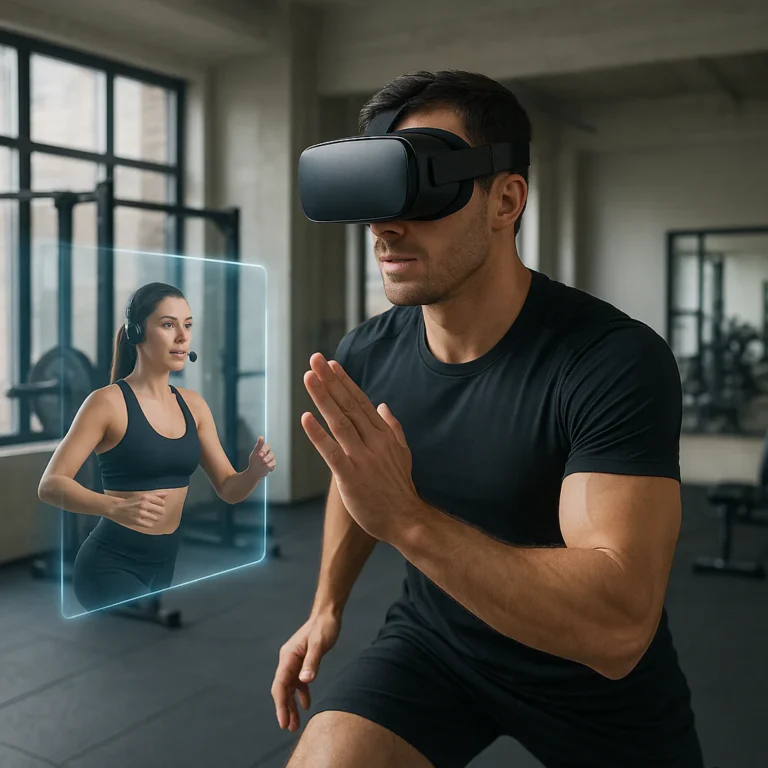
Virtual fitness training programs deliver exercise instruction, workout plans, or coaching through a phone, tablet, computer, or connected fitness device. Depending on the service, you might follow a recorded strength class, receive a weekly plan from a human trainer, join a live cycling session, or use an algorithm that modifies your training based on feedback.
At Virtual Personal Trainers™, we look at how the program helps you train consistently and safely, not just how polished its interface looks. A gorgeous dashboard can’t rescue a plan that ignores your equipment, experience, or recovery.
A Brief History of Online Personal Training and Fitness Apps
Remote training existed long before fitness apps: coaches shared plans by mail, phone, or email. Smartphones, wearable devices, video calls, and streaming classes made it easier to combine exercise tracking with instruction and feedback.
That change created a wide spectrum of services. At one end, you have a video library such as Nike Training Club; at the other, services such as Future pair you with a human coach through an app. Between them sit group classes, AI-driven training, digital strength logs, and hybrid coaching.
Research supports the idea that digital tools can help some people become more active, but the tool itself does not guarantee results. A review in the Journal of Medical Internet Research examined how mobile health interventions can support physical activity. The practical takeaway is simple: use technology to make a sound training habit easier to follow, not as a substitute for sensible programming or medical advice.
Virtual Coaching, On-Demand Classes, and Workout Apps: What’s the Difference?
| Type | Is a human trainer involved? | Typical personalization | Feedback and accountability |
|---|---|---|---|
| Workout library | Usually only in prerecorded instruction | Filters by goal, duration, or equipment | Low unless the app adds community features |
| AI training app | Not necessarily | Algorithm adjusts a plan based on user inputs | App prompts; usually no human movement review |
| Remote personal training | Yes | Coach develops or modifies a plan for you | Messaging, check-ins, and sometimes video feedback |
| Live virtual class | Instructor leads a group | Usually one class plan for many people | Real-time energy; individual corrections may be limited |
| Hybrid service | Yes, in some form | Combines app programming with scheduled coach contact | Varies by provider and coaching frequency |
The label matters less than the service details. Before joining, ask: Who writes the plan? How often is it updated? Can I contact the coach? Will anyone review my exercise technique? What happens when I miss a week?
🏆 Best Virtual Fitness Training Programs in 2026
There is no single best online training program for everybody. Some people want a real person checking in; others would rather press play and get moving. Our comparison weighs coaching model, instruction, workout choice, equipment demands, accessibility, and likely fit.
Ratings below are comparative editorial judgments on a 1–10 scale, not medical evaluations or guarantees of results. Features, availability, and membership terms can change, so confirm current details directly with each provider.
| Program | Best for | Coaching model | Main strength | Main limitation |
|---|---|---|---|---|
| Future | Individualized coaching | Human coach | High-touch programming and check-ins | Requires an ongoing coaching commitment |
| Boostcamp | Strength-plan variety | Program library and logging | Broad selection of lifting plans | Limited personal coaching |
| iFIT | Instructor-led classes | On-demand and connected equipment | Immersive classes across cardio and strength | Best features may depend on compatible equipment or plan |
| SHRED | Guided circuits | Algorithm plus video instruction | Flexible circuit workouts | Less human accountability |
| Caliber | Strength coaching | App plans, group options, and individual coaching | Data-driven strength progression | Coaching experience depends on tier |
| Nike Training Club | Free workouts | On-demand instruction | Strong free library | No individualized coaching |
| JugernautAI | Powerlifting and strength | AI programming | Adjusts training using performance inputs | Narrower focus than an all-around fitness coach |
| Peloton | Live and on-demand classes | Group instruction | Strong class experience and instructor energy | Not equivalent to one-to-one coaching |
| Street Parking | Functional fitness | Daily programming and community | Equipment alternatives and varied conditioning | Workouts are not individually designed |
| Runkeeper | Running | Training plans and activity tracking | Race-distance and running focus | Not a broad strength or mobility coach |
| Trainwell | One-to-one online coaching | Human coach | Ongoing tailored guidance | Coach-contact style and integration can vary |
| Ladder | Coach-led strength plans | Team-based programming | Structured strength sessions | Personalization differs from private coaching |
| Aaptiv | Audio-guided workouts | Audio instruction | Convenient sessions without watching a screen | Limited visual form instruction |
| Apple Fitness+ | Apple ecosystem users | Instructor-led classes | Device integration and broad class selection | Requires compatible Apple devices for its ecosystem features |
1. Future: Best for Personalized Online Personal Training
Future is the clearest fit for people who want an actual coach in their corner rather than a workout menu. After matching with a coach, you discuss your goals, training history, schedule, and available equipment. Your coach then builds a plan and can communicate through the app; the precise level and style of contact should be confirmed with the coach before you commit.
What stands out
- Training can include strength, cardio, and functional fitness.
- A human coach can adapt workouts when equipment or schedule changes.
- Wearable compatibility may help connect activity data to training, but check current supported devices and features.
Potential drawbacks
- It’s a more involved coaching service than an inexpensive workout library.
- You’ll get the most from it if you respond to messages and communicate honestly about fatigue, pain, and schedule changes.
- Remote programming does not mean a coach can physically correct your movement.
Trainer’s take: If your main hurdle is “I know what to do, but I don’t reliably do it,” regular coach contact may matter more than having hundreds of workout videos. If the main hurdle is simply finding a good workout, a library may be enough.
- 👉 CHECK PRICE on: Future Official Website
2. Boostcamp: Best for Workout Variety and Strength Programs
Boostcamp organizes strength programs and lets users log workouts, sets, reps, and performance. It suits lifters who want a structured plan and a convenient record of what they have done, rather than frequent one-to-one coaching.
What stands out
- Strength plans cover different training goals and schedules.
- Workout logging and progression tools help you review previous sessions.
- Exercise swaps can be useful when equipment is unavailable.
Potential drawbacks
- A program library is not the same as a coach observing your technique.
- The app is most useful when you’re willing to follow a plan and record your work.
- It has a narrower emphasis on strength than all-around class platforms.
Trainer’s take: For a self-motivated lifter, a good plan plus consistent logging can be a powerful combination. For someone who needs form feedback or active encouragement, look at a coach-led service instead.
- 👉 Shop Boostcamp on: Boostcamp Official Website
3. iFIT: Best for On-Demand Fitness Classes
iFIT offers instructor-led workouts across connected cardio and other training formats. On compatible equipment, classes may integrate with machine controls; exact functionality depends on the equipment and membership.
What stands out
- A varied class library can make cardio sessions feel less like staring at a wall.
- Instructor-led sessions provide pacing and structure.
- Compatible equipment can offer a more integrated training experience.
Potential drawbacks
- An adaptive or interactive class is not automatically personal coaching. A machine adjusting resistance does not mean a coach has assessed your health history or technique.
- The experience may be less compelling without compatible equipment.
- A large library can be overwhelming unless you choose a clear goal or schedule.
Trainer’s take: This can be a strong fit if you already own compatible equipment and enjoy guided classes. If you need individualized strength programming, ask how much is actually tailored to you.
- 👉 Shop iFIT on: iFIT Official Website
4. SHRED: Best for Beginner-Friendly Guided Workouts
SHRED centers on guided workouts, including strength, circuit training, and bodyweight options. Its app-based guidance may help people who want a workout selected and laid out without planning each exercise themselves.
What stands out
- Guided demonstrations can reduce the guesswork around exercise order.
- Workouts may be adapted to goals, experience, and equipment inputs.
- Suitable for home or gym use, depending on the workout selected.
Potential drawbacks
- An AI-generated plan is not a substitute for a certified professional’s health assessment.
- You still need to stay accountable and report your experience accurately.
- Beginners should start at a manageable level, even if the app suggests a challenging session.
Trainer’s take: The best first workout is one you can complete with good technique and recover from. Don’t treat soreness as a scorecard.
- 👉 Shop SHRED on: SHRED Official Website
5. Caliber: Best for Strength Training and Progress Tracking
Caliber offers strength-focused training options, including a free app experience and paid coaching tiers. The key distinction is whether you use self-guided programming, group coaching, or individualized coaching: those are not interchangeable levels of service.
What stands out
- Strength plans can help organize progressive training.
- Tracking habits and performance can help you spot trends over time.
- Coaching tiers may offer more feedback than a basic workout library.
Potential drawbacks
- Check exactly what coach access is included in the tier you select.
- App-based nutrition tracking or lessons should not be mistaken for individualized medical nutrition care.
- A training plan still needs to be adapted if pain, illness, or recovery issues arise.
Trainer’s take: We like tracking when it answers useful questions: Are you training consistently? Are loads moving gradually? Are you recovering? Tracking everything just because the app can is a fine way to turn exercise into a second job.
- 👉 Shop Caliber on: Caliber Official Website
6. Nike Training Club: Best Free Virtual Workout Program
Nike Training Club is a widely known option for guided workouts across strength, conditioning, mobility, and yoga-style training. It can be an excellent starting point if you want to explore exercise before paying for coaching.
What stands out
- A broad selection of workout formats and durations.
- Guided instruction can make home workouts easier to follow.
- No one-to-one coach is required to try a session.
Potential drawbacks
- Free workouts are not personalized coaching.
- Your progress depends on choosing sessions that fit your ability and building a repeatable schedule.
- Video demonstrations can’t assess your movement in real time.
Trainer’s take: “Free” is valuable when it removes a real barrier. Start with a manageable session, note what felt too easy or too difficult, and use that information to choose the next one.
- 👉 Shop Nike Training Club on: Nike Training Club Official Website
7. JugernautAI: Best AI-Powered Strength Coaching
JugernautAI is aimed primarily at strength and powerlifting training. Its programming uses user inputs and training feedback to prescribe and adjust workouts. It is better understood as an algorithm-guided strength program than as a remote human coach.
What stands out
- Strength-focused structure for lifters pursuing performance goals.
- User feedback can inform adjustments to training.
- A focused plan may be appealing to people who enjoy tracking lifts and following progression.
Potential drawbacks
- A strength-specialist app may not provide balanced conditioning, mobility, or broad fitness instruction.
- An algorithm cannot visually inspect every repetition.
- New lifters may need help learning barbell technique before pursuing heavy training.
Trainer’s take: If you’re training for strength, the right plan should balance hard work with recovery. Don’t turn every session into a test of your one-rep maximum.
- 👉 Shop JugernautAI on: JugernautAI Official Website
8. Peloton: Best for Live and On-Demand Fitness Classes
Peloton is built around energetic instructor-led classes, with options across cardio, strength, yoga, mobility, and other formats. You do not necessarily need a Peloton-branded bike to use the app, but device and membership features differ.
What stands out
- Strong instructor presence and a class-based routine.
- Live and recorded formats provide options for different schedules.
- Broad training categories can help users vary their exercise.
Potential drawbacks
- Group instruction is not individualized personal training.
- Barbell-focused lifters may find class programming less tailored to their strength progression.
- Confirm which features are included in the membership and equipment setup you have.
Trainer’s take: Some people genuinely enjoy exercising with an instructor’s energy in their ear. That matters. A workout you look forward to is often easier to repeat than a theoretically perfect session you keep avoiding.
- 👉 Shop Peloton on: Peloton App Official Website
9. Street Parking: Best for Functional Fitness and Cross-Training
Street Parking provides functional-fitness programming with workout variations for different equipment setups. Options may include strength, conditioning, skills, and mobility, depending on the program.
What stands out
- Equipment alternatives can make workouts more practical at home.
- Daily programming can remove the “what should I do today?” problem.
- Community features may help some members stay engaged.
Potential drawbacks
- A daily workout does not automatically account for your personal recovery or training history.
- High-intensity circuits can be scaled, and they should be scaled when needed.
- Cross-training is not a replacement for a specific rehab plan or individualized coaching.
Trainer’s take: A hard workout is not inherently better than a moderate one. If a workout asks for speed and complex movements, keep technique in charge of the clock.
- 👉 Shop Street Parking on: Street Parking Official Website
10. Runkeeper: Best Virtual Training Program for Running
Runkeeper by ASICS focuses on running and activity tracking, with tools for recording routes, pace, and training. It’s more of a running companion than a broad virtual personal-training service.
What stands out
- Running-specific tracking can help you see distance and pace trends.
- Plans may support preparation for common race distances.
- Walks and hikes can also fit into an active routine.
Potential drawbacks
- Limited relevance if your main goal is strength, mobility, or total-body coaching.
- A training plan cannot diagnose a running injury.
- New runners should increase training gradually and pay attention to pain, not just pace.
Trainer’s take: Your pace is data, not a judgment. Consistency and recovery are better long-term guides than trying to race every run.
- 👉 Shop Runkeeper on: Runkeeper Official Website
11. Trainwell: Best for One-to-One Online Personal Training
Trainwell connects users with a human coach for tailored training support. Coach qualifications, communication methods, and available features should be confirmed directly before enrolling.
What stands out
- A real coach can consider context that a template may miss.
- Ongoing communication may help you troubleshoot consistency and exercise modifications.
- Some coaches may offer guidance beyond the workout itself, within their qualifications.
Potential drawbacks
- “One-to-one” can mean different contact frequencies; ask what regular check-ins look like.
- A remote coach cannot physically spot a heavy lift or examine an injury.
- Coaching quality and communication style are personal-match issues.
Trainer’s take: Ask whether the trainer holds a recognized credential, how they handle pain or health concerns, and how often they review your progress. A good fit is not just someone with an impressive bio; it’s someone who listens.
- 👉 Shop Trainwell on: Trainwell Official Website
12. Ladder: Best for Coach-Led Strength Training Plans
Ladder offers structured strength programming delivered through an app, often organized around coaches or training teams. It may appeal to users who like a clear weekly plan with a coach-led tone.
What stands out
- Structured sessions can reduce planning friction.
- Strength-focused programs can be easier to follow than a random workout feed.
- App-based delivery suits home and gym training, depending on the plan.
Potential drawbacks
- Coach-led programming is not necessarily private coaching.
- Confirm whether the plan can be adjusted to your equipment, injury history, and current ability.
- A team atmosphere may motivate some people more than others.
Trainer’s take: A program can be excellent without being personal. Know which service you’re buying.
- 👉 Shop Ladder on: Ladder Official Website
13. Aaptiv: Best for Audio-Guided Workouts
Aaptiv uses audio instruction for workouts including running, strength, and other fitness formats. Audio coaching is handy when watching a screen would get in the way—though it makes clear exercise demonstrations especially important.
What stands out
- You can follow guidance without staring at your phone.
- Audio may work well for outdoor walks, runs, and familiar movements.
- A large workout library can add variety.
Potential drawbacks
- Audio alone may not teach an unfamiliar exercise as clearly as a video demo.
- Without seeing your form, an instructor cannot correct your technique.
- Make sure your surroundings are safe if you’re listening outdoors.
Trainer’s take: Use audio workouts for movements you know. For a new exercise, learn the setup and technique first, then decide whether audio cues are enough.
- 👉 Shop Aaptiv on: Aaptiv Official Website
14. Apple Fitness+: Best for Apple Device Integration
Apple Fitness+ offers guided workouts and meditation sessions, with integration across Apple devices. Check current compatibility requirements and the features available with your devices.
What stands out
- Multiple exercise formats in a single service.
- Apple ecosystem integration may make activity tracking convenient.
- Guided classes can make at-home training feel less solitary.
Potential drawbacks
- Device integration is most useful if you already use compatible Apple products.
- A class library is not individualized coaching.
- Metrics can support awareness, but they do not replace attention to your body and recovery.
Trainer’s take: Wearable data is most useful as a trend, not a boss. If your watch says you’re ready but you feel unwell, trust your symptoms and adjust.
- 👉 Shop Apple Fitness+ on: Apple Fitness+ Official Website
🎥 Virtual Fitness Training Programs: Video Review and Comparison
The included featured video presents an alternative to app subscriptions: Planet Fitness describes pe@pf as complimentary fitness training for its members, with group instruction and a “Design Your Own Program” appointment. The program’s details and availability can vary by club, so contact your local location to confirm current offerings and how to reserve a session.
| Video perspective | What it may offer | What to verify |
|---|---|---|
| Complimentary member training | Instructor-led group support and help creating a plan | Local club schedule, eligibility, booking, and class size |
| App-based training | Flexible access and large workout selection | Coach access, trial terms, equipment needs, and cancellation |
| Private remote coaching | Individual programming and communication | Trainer credentials, review frequency, and what “personalized” means |
Our perspective: Free in-person member instruction may be a terrific starting point, especially if you’re already a Planet Fitness member and want help getting comfortable with machines. It is not necessarily equivalent to ongoing one-to-one coaching. The distinction is the amount of individual attention, follow-up, and program adjustment you receive.
Before booking any fitness instruction, tell the trainer about relevant injuries, symptoms, medications that affect exercise, and your experience level. If you have medical concerns, consult a qualified health professional first.
📊 Virtual Training Program Comparison: Coaching, Classes, and Features
Ratings are broad editorial comparisons based on the service model and information described above. They are not laboratory scores or endorsements of medical outcomes.
Ratings at a glance
| Program | Coaching | Instruction | Variety | Flexibility | Best use |
|---|---|---|---|---|---|
| Future | 9/10 | 8/10 | 8/10 | 9/10 | Human coach and accountability |
| Boostcamp | 4/10 | 7/10 | 8/10 | 8/10 | Strength programming and logging |
| iFIT | 4/10 | 9/10 | 9/10 | 8/10 | Guided cardio and classes |
| SHRED | 5/10 | 8/10 | 8/10 | 8/10 | App-guided circuit training |
| Caliber | 7/10 | 8/10 | 8/10 | 8/10 | Strength training and tracking |
| Nike Training Club | 2/10 | 8/10 | 8/10 | 9/10 | Free guided workouts |
| JugernautAI | 5/10 | 8/10 | 6/10 | 8/10 | Strength-focused programming |
| Peloton | 4/10 | 9/10 | 9/10 | 8/10 | Instructor-led classes |
| Street Parking | 4/10 | 7/10 | 8/10 | 8/10 | Functional fitness workouts |
| Runkeeper | 3/10 | 7/10 | 5/10 | 9/10 | Running and activity tracking |
| Trainwell | 8/10 | 8/10 | 7/10 | 8/10 | Human online coach |
| Ladder | 5/10 | 8/10 | 8/10 | 8/10 | Coach-led strength plans |
| Aaptiv | 3/10 | 7/10 | 8/10 | 9/10 | Audio-guided sessions |
| Apple Fitness+ | 3/10 | 8/10 | 9/10 | 8/10 | Apple-connected workout classes |
How to interpret the ratings
- Coaching reflects how much individual human guidance the service appears to provide, not the quality of every coach.
- Instruction considers how workouts are taught and cued. It does not mean the app can correct your form in real time.
- Variety reflects the range of training formats, not necessarily the depth of programming for a specific sport.
- Flexibility considers schedule and equipment options. It does not mean every service works for every device or location.
A high class-variety score does not make a platform the best choice for powerlifting. A strong personal-training score does not mean you’ll enjoy frequent coach messages. Pick for the problem you need solved.
🔍 Other Virtual Workout Programs We Tested and Researched
The options below serve more specific needs. Their inclusion is not a claim that every program suits every user; review training content, coach credentials, terms, and equipment requirements directly.
| Program | Specialty | Potentialy good fit for |
|---|---|---|
| GMB Fitness | Bodyweight strength, mobility, control, and movement skills | People prioritizing movement quality and mobility |
| Power Athlete | Strength, athleticism, and conditioning | Sport-minded trainees seeking structured programming |
| CompTrain | Functional fitness and CrossFit-style programming | Experienced exercisers who enjoy mixed-modal workouts |
| Misfit Athletics | Competitive functional fitness | CrossFit athletes wanting specialized tracks |
| HWPO Training | Strength and conditioning plans | Users seeking structured, coach-branded programming |
| Obé Fitness | Live and recorded classes | People who like class variety at home |
| Wendler 5/3/1 | Barbell strength progression | Lifters seeking a well-known strength framework |
| Starting Strength | Beginner barbell training and coaching | People learning foundational barbell lifts |
| RP Strength | Strength templates and coaching | Experienced lifters seeking structured plans |
| Mountain Tactical Institute | Tactical and mountain-sport preparation | Occupations or activities with specific physical demands |
A note on GMB’s movement-first approach
GMB Fitness emphasizes progressive bodyweight movement, strength, mobility, and control. That approach can be useful if your goal is not just lifting heavier but becoming more comfortable moving through a range of positions. The company reports serving trainees across a wide range of ages and experience levels; that is a company-reported figure, not an independent measure of effectiveness.
Our coaching perspective: Movement training and barbell strength training are not rivals. They solve different problems. If you’re stiff, deconditioned, or looking for bodyweight skills, a movement-first program may feel more relevant. If your goal is to build a stronger squat or deadlift, choose a program designed for that outcome.
💬 Online Fitness Programs Our Community Loves
Community recommendations are useful for learning what people enjoy, but personal testimonials are not proof that a program will work the same way for you. Before joining based on a glowing review, check whether the reviewer’s goal, experience, schedule, and equipment match yours.
Commonly praised features include:
- Plans that remove decision fatigue: Users appreciate knowing what to do when they open the app.
- Visible progress: Workout history, running pace, or strength logs can make consistency easier to recognize.
- Instructor personality: A class instructor can make training feel less like a chore.
- Coach contact: A real person may help users stay engaged and adjust a plan.
- Workout flexibility: Short sessions and equipment alternatives can fit busy weeks.
Read reviews with a useful filter
- Look for specific details rather than broad claims such as “changed my life.”
- Check the date; apps can change features, devices, and membership terms.
- Compare several sources, including app-store feedback and independent testing.
- Notice repeated complaints about technical problems, billing, or cancellation.
- Ask whether the reviewer had coaching access or used a self-guided plan.
Explore our broader fitness motivation resources for practical ways to build consistency without relying on a motivational speech every Monday morning.
🧪 How We Evaluated the Best Virtual Fitness Training Programs
At Virtual Personal Trainers™, we evaluate a program by asking a plain question: Does it help a real person train consistently, appropriately, and with the guidance the service promises? We consider professional experience, user feedback, program descriptions, and publicly available features. We do not claim hands-on testing of every service unless specifically stated.
Trainer Credentials, Workout Quality, and Personalization
A trainer’s background should match the kind of help they provide. Common fitness credentials include certifications from ACE, NASM, and NSCA. For clinical nutrition advice or medical needs, a general personal-training credential is not a substitute for a licensed healthcare professional or registered dietitian.
We look for:
- A clear intake process covering goals, experience, equipment, schedule, and relevant health concerns.
- Sound progression rather than random hard workouts.
- Exercise demonstrations and alternatives.
- Reasonable rest and recovery guidance.
- Clear boundaries about injuries and medical conditions.
- Transparency about whether a human coach or algorithm creates the plan.
App Usability, Accessibility, and Equipment Needs
A useful program should work with your actual life, not an imaginary home gym.
We consider whether a platform:
- Identifies required equipment before the workout begins.
- Offers sensible bodyweight or equipment alternatives.
- Lets users adjust session length or training days.
- Presents exercise instructions clearly.
- Supports devices and accessibility needs relevant to the user.
- Makes membership, cancellation, and account requirements understandable.
Progress Tracking, Support, and Overall Value
We consider whether the app gives users meaningful information without drowning them in metrics.
Useful support may include:
- A record of workouts, loads, pace, or completed sessions.
- Progress checks and appropriate plan revisions.
- Coach messaging, calls, or form-review options when offered.
- Clear customer support and cancellation instructions.
- A service level that matches its promises.
An app can be inexpensive and still be poor value if it doesn’t fit your needs. Conversely, higher-touch coaching may be worth considering if you value individualized attention and will use it. Look at service, not just the billing screen.
✅ Benefits of Virtual Personal Training and Online Workout Programs
Flexibility that lowers the “getting started” hurdle
You can train at home, at a gym, while traveling, or outdoors, depending on the program. Cutting the commute can make a short workout easier to fit into a busy day.
Structure without doing all the programming yourself
A plan can tell you which exercises to do, in what order, and how often. This can help reduce guesswork—especially for someone who has a goal but is unsure how to organize training.
A choice of coaching intensity
You can choose between prerecorded classes, automated plans, group coaching, and individual coaching. This range lets you pay attention to the type of support you’ll actually use.
More options for different interests
From running and cycling to strength, yoga, mobility, and functional fitness, the online format offers many kinds of programming. Our health and wellness tips also cover habits that support training beyond the workout itself.
A record of what you’ve done
Apps can store workout history and help you observe patterns. That record can be helpful when discussing progress with a trainer or healthcare professional, provided you don’t mistake one data point for the whole story.
⚠️ Potential Drawbacks and Safety Considerations
Remote instruction has limits
A coach can explain movement and review video, when the service offers it, but cannot physically stabilize a lift or conduct an in-person assessment. For complex or heavy exercises, learn technique progressively and train in a safe environment.
Personalization can be marketing language
A questionnaire may select a preset workout plan. That can still be useful, but it is not the same as a coach adjusting training after reviewing your performance and recovery.
Too much intensity can backfire
A challenging workout is not a test of character. If you are new to exercise, return after a long break, or have a health concern, build gradually. The CDC’s physical activity guidance offers general targets, but individual needs differ.
Know when to seek professional care
Stop exercising and seek appropriate medical guidance for concerning symptoms such as chest pain, fainting, unusual shortness of breath, or severe dizziness. If pain changes how you move or worsens with exercise, talk with a qualified healthcare professional rather than asking an app to diagnose it.
Protect your information
Review what health, location, wearable, and payment data an app collects. Check its privacy policy and device permissions, and use strong account security. For broader updates about the fitness sector, see our fitness industry news.
🧭 How to Choose the Right Virtual Fitness Training Program
The most helpful question is not “Which app is number one?” It’s what kind of support will help you keep showing up? Use this step-by-step process to narrow the field before starting a trial.
Choose a Program for Your Goals, Experience, and Schedule
- Write down one primary goal. Examples: build strength, prepare for a 5K, increase general activity, or improve mobility.
- Set a realistic weekly schedule. Decide how many sessions you can honestly fit in, including travel and rest.
- Be truthful about your experience. A beginner plan should teach fundamentals and provide scaling, not assume years of training.
- Identify what you enjoy. Classes, quiet solo sessions, coach messages, and data tracking motivate different people.
- Check for a clear progression. Your program should have a reason for what it asks you to do next.
Decide Between a Human Coach, AI Plan, and On-Demand Classes
| If you want… | Consider… | Ask before joining… |
|---|---|---|
| Personal interaction and changes based on your situation | Human-coach service | How often will my coach review my plan? |
| A structured plan without regular live contact | AI or template-based app | What data changes my workouts, and can I override the plan? |
| Freedom to choose a session each day | On-demand library | Are exercise demos and beginner modifications included? |
| Shared energy and scheduled classes | Live or group classes | Can I scale the class, and how much instructor feedback is possible? |
| A hybrid of coaching and self-guided training | Hybrid service | Which parts are one-to-one and which are self-directed? |
Check Equipment, Internet, Device, and Space Requirements
- Make a list of your equipment: perhaps a chair, mat, resistance bands, or dumbells.
- Check each program’s equipment filter before starting.
- Ensure you have enough space to move safely.
- Confirm the app works on your device and operating system.
- If you’ll train live, test your camera, sound, and connection before your session.
A good program should offer alternatives when you lack a particular tool. Don’t buy equipment just because an app puts it in a workout. Ask whether a safe substitute exists first.
Understand Program Features, Membership Terms, and Privacy
Before enrolling, verify:
- Whether a trial renews automatically.
- How to cancel and whether cancellation is handled in-app, online, or another way.
- Whether you get a live coach, messaging, form review, or just recorded instruction.
- What personal and wearable data is collected.
- Whether the program supports your training location and schedule.
- Whether the advertised nutrition or health support falls within the provider’s qualifications.
A free trial is useful only if you know how it ends. Set a reminder before the renewal date if you are still deciding.
🎯 Virtual Fitness Training for Different Goals and Lifestyles
Strength Training and Muscle Building
Look for a plan that includes gradual progression, adequate rest, and exercises suitable for your equipment. A strength app can track loads and repetitions, but you still need sound technique and appropriate training choices.
Useful features include:
- Workout logging and a clear training history.
- Exercise demonstrations and substitutions.
- A progression method you can understand.
- Recovery guidance and planned rest.
Weight Loss and General Fitness
Exercise can support health and fitness, but weight change involves multiple factors, including food intake, sleep, health conditions, and daily activity. Be cautious of programs that promise rapid results or sell extreme restrictions as coaching.
For general activity, choose something you can repeat. The CDC’s adult activity guidance can help you understand broad aerobic and strength-training recommendations.
Running, Cycling, and Endurance Training
Endurance programs can help organize distance, intensity, and recovery. Choose a plan appropriate for your current ability and goal rather than skipping ahead to a race-ready schedule.
- For running, consider a dedicated tracker such as Runkeeper.
- For indoor cycling or treadmill sessions, instructor-led platforms such as iFIT or Peloton may fit.
- Watch for persistent pain, unusual fatigue, or worsening performance; those are signs to adjust, not push blindly.
Mobility, Yoga, and Recovery
Mobility and yoga apps can provide guided practice, but “recovery” does not mean every session must feel like a stretch. Use a range of motion that feels controlled and comfortable. For persistent stiffness or pain, seek an appropriate clinician rather than relying on a general wellness app.
Home Workouts, Travel, and Busy Schedules
Choose plans with short sessions, minimal-equipment options, and flexible scheduling. During a busy week, a shorter session can preserve your routine better than waiting for the perfect hour that never arrives.
Anecdote from our coaching work: We’ve seen people spend more time comparing programs than completing their first workout. The fix is wonderfully unglamorous: select one reasonable session, try it, and then judge whether it fits your real week.
📱 What You Need to Start Online Personal Training
Most people need less equipment than they expect.
Basic setup checklist
- A smartphone, tablet, or computer compatible with the service.
- A reliable connection for streaming or live sessions.
- Enough clear floor space to move safely.
- Comfortable clothes and appropriate footwear for the workout.
- Water and a way to keep your device visible or audible.
- Any equipment required by your selected program.
Optional equipment
| Equipment | Useful for | Beginner-friendly alternative |
|---|---|---|
| Exercise mat | Floor work, yoga, and mobility | Carpeted floor, if safe and comfortable |
| Resistance bands | Pulling, assistance, and light resistance | Bodyweight variations, when appropriate |
| Dumbells | Strength workouts | Filled water bottles for some light movements |
| Kettlebell | Hinges, carries, and certain strength drills | A suitable dumbell alternative, if instructed |
| Stationary bike or treadmill | Indoor cardio classes | Walking outdoors or a bodyweight cardio session |
Substitutions are not always interchangeable. Ask your trainer or follow a qualified program’s modification rather than improvising with unstable furniture or objects that could slip.
📈 How to Get Better Results From a Virtual Workout Program
Use this simple weekly routine-building process
- Choose your training days. Put them on your calendar like appointments.
- Set a starting level you can recover from. You should finish feeling challenged, not wrecked.
- Record what matters. Log sessions, loads, distance, or effort—whichever supports your goal.
- Review once a week. Did the schedule work? Were sessions too easy, too hard, or too long?
- Adjust gradually. Change one variable at a time when possible: duration, frequency, load, or intensity.
- Communicate early. Tell your coach when a workout hurts, doesn’t fit your equipment, or conflicts with your schedule.
- Keep recovery in the plan. Sleep, rest days, and easier sessions are part of training, not a failure to train.
Make technology useful, not bossy
- Turn on reminders only if they help rather than annoy you into disabling the app.
- Review trends instead of reacting to every daily fluctuation.
- Use video form checks if offered, but don’t assume a camera angle catches everything.
- Keep a backup session for travel or busy days.
- Reassess the program if you stop using it; paying for a library you never open does not count as training.
If motivation is the sticking point, explore our fitness motivation articles. If your goal is better health habits overall, browse health and wellness tips.