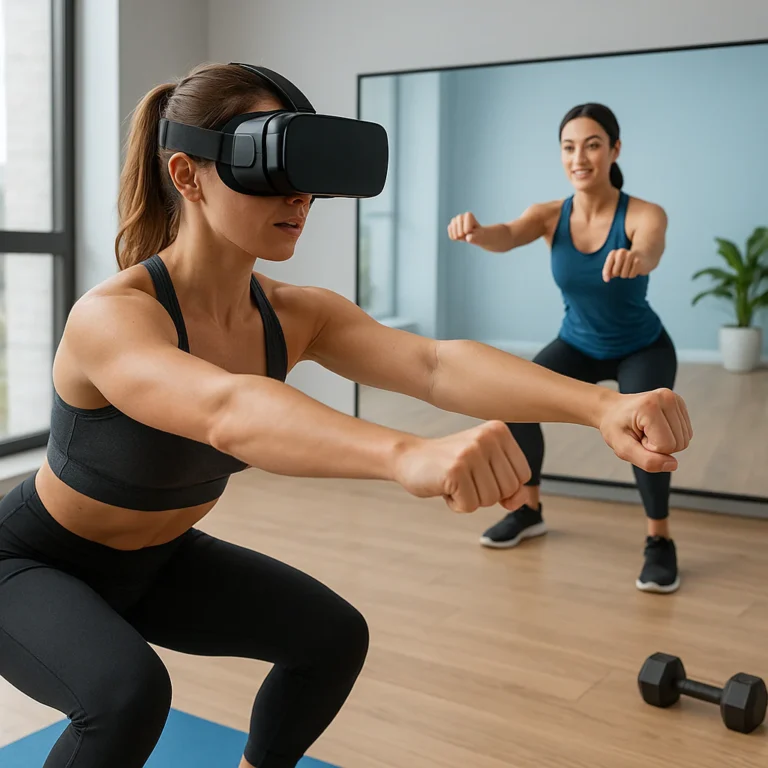
Support our educational content for free when you purchase through links on our site. Learn more
12 Ways to Stay Motivated With a Virtual Trainer 💪

How can I stay motivated and accountable with a virtual personal trainer, and what kind of support can I expect from them? Start by choosing a coach who builds a plan around your real schedule, checks in consistently, and treats missed workouts as a problem to solve—not a reason to shame you. Expect support such as personalized programming, progress tracking, exercise feedback, and help adjusting your routine when life gets in the way.
One of our trainers recalls a client who kept missing evening workouts after long workdays. Instead of adding more reminders, they shortened the sessions and moved them to lunchtime. The client started showing up—not because they suddenly became more motivated, but because the plan finally fit.
That’s the heart of effective virtual coaching: clear goals, regular communication, practical accountability, and a program you can adapt. The right trainer won’t just cheer you on through a screen; they’ll help you build habits and confidence you can keep using on your own.
Key Takeaways
- Agree on accountability up front: Decide how often your trainer checks in and what happens when you miss a session.
- Choose a plan that fits your life: Your schedule, experience, equipment, goals, and preferences should shape your workouts.
- Expect support beyond exercise plans: Coaching may include progress reviews, technique feedback, habit guidance, and help adapting workouts.
- Track more than body weight: Strength, stamina, consistency, energy, and everyday function can all show progress.
- Treat setbacks as useful information: Tell your trainer what’s getting in the way so you can adjust the plan instead of giving up.
- Check credentials and boundaries: A personal trainer can coach fitness, but medical concerns and clinical nutrition needs belong with qualified healthcare professionals.
Table of Contents
- ⚡️ Quick Tips and Facts
- 🏋️ How Virtual Personal Training Builds Motivation and Accountability
- What a Virtual Personal Trainer Does—and What They Don’t
- Online Coaching Formats: Live Sessions, App-Based Plans, and Hybrid Support
- 🎯 12 Ways a Virtual Trainer Can Keep You Motivated and Accountable
- 1. Set Meaningful, Realistic Fitness Goals
- 2. Build a Personalized Workout Plan
- 3. Create a Consistent Training Schedule
- 4. Check In Regularly and Follow Up
- 5. Track Workouts and Progress
- 6. Celebrate Milestones Beyond the Scale
- 7. Adapt Training to Your Energy, Schedule, and Equipment
- 8. Keep Workouts Fresh With Exercise Variety
- 9. Get Support When Motivation Slips
- 10. Build Confidence Through Coaching and Feedback
- 11. Develop Habits That Last Beyond Coaching
- 12. Make Accountability Encouraging, Not Punitive
- 🧠 Fitness Education: The Skills and Knowledge Your Trainer Can Teach
- Exercise Technique, Form Cues, and Safety
- Training Principles, Recovery, and Rest Days
- Nutrition Guidance: What’s In Scope for a Personal Trainer
- 📲 What Support Can You Expect From an Online Personal Trainer?
- Workout Programming and Plan Updates
- Video Form Checks and Technique Feedback
- Messaging, Progress Reviews, and Response Times
- Support for Setbacks, Injuries, and Life Changes
- Community, Group Coaching, and Extra Resources
- 🔍 Choosing the Right Virtual Personal Trainer for Your Needs
- Match the Coach’s Expertise to Your Goals
- Compare Coaching Styles and Communication Preferences
- Check Credentials, Experience, and Professional Boundaries
- Questions to Ask Before You Sign Up
- Red Flags in Online Fitness Coaching
- 🛠️ Set Yourself Up for Success With Virtual Training
- Create a Home Workout Space With the Equipment You Have
- Choose Apps, Wearables, and Progress-Tracking Tools
- Protect Your Privacy and Share Health Information Safely
- 😮 💨 When You Lose Motivation: A Practical Reset Plan
- Tell Your Trainer What’s Getting in the Way
- Scale Back Without Giving Up
- Know When to Pause, Change Coaches, or Seek Clinical Help
- 📊 How to Measure Progress and Know If Coaching Is Working
- Strength, Fitness, Energy, and Consistency Metrics
- Review Your Plan and Agree on Next Steps
- ✅ Quick Checklist: Is Virtual Personal Training a Good Fit?
- Conclusion
- Recommended Links
- FAQ
- How does a virtual personal trainer keep you accountable?
- How often should an online trainer check in?
- Can a virtual personal trainer correct my exercise form?
- What if I miss workouts or stop feeling motivated?
- Can an online personal trainer create a plan for home workouts?
- How do I know whether my virtual trainer is qualified?
- Can virtual personal training help beginners or people returning to exercise?
- Reference Links
Table of Contents
- ⚡️ Quick Tips and Facts
- 🏋️ How Virtual Personal Training Builds Motivation and Accountability
- What a Virtual Personal Trainer Does—and What They Don’t
- Online Coaching Formats: Live Sessions, App-Based Plans, and Hybrid Support
- 🎯 12 Ways a Virtual Trainer Can Keep You Motivated and Accountable
- 1. Set Meaningful, Realistic Fitness Goals
- 2. Build a Personalized Workout Plan
- 3. Create a Consistent Training Schedule
- 4. Check In Regularly and Follow Up
- 5. Track Workouts and Progress
- 6. Celebrate Milestones Beyond the Scale
- 7. Adapt Training to Your Energy, Schedule, and Equipment
- 8. Keep Workouts Fresh With Exercise Variety
- 9. Get Support When Motivation Slips
- 10. Build Confidence Through Coaching and Feedback
- 11. Develop Habits That Last Beyond Coaching
- 12. Make Accountability Encouraging, Not Punitive
- 🧠 Fitness Education: The Skills and Knowledge Your Trainer Can Teach
- Exercise Technique, Form Cues, and Safety
- Training Principles, Recovery, and Rest Days
- Nutrition Guidance: What’s In Scope for a Personal Trainer
- 📲 What Support Can You Expect From an Online Personal Trainer?
- Workout Programming and Plan Updates
- Video Form Checks and Technique Feedback
- Messaging, Progress Reviews, and Response Times
- Support for Setbacks, Injuries, and Life Changes
- Community, Group Coaching, and Extra Resources
- 🔍 Choosing the Right Virtual Personal Trainer for Your Needs
- Match the Coach’s Expertise to Your Goals
- Compare Coaching Styles and Communication Preferences
- Check Credentials, Experience, and Professional Boundaries
- Questions to Ask Before You Sign Up
- Red Flags in Online Fitness Coaching
- 🛠️ Set Yourself Up for Success With Virtual Training
- Create a Home Workout Space With the Equipment You Have
- Choose Apps, Wearables, and Progress-Tracking Tools
- Protect Your Privacy and Share Health Information Safely
- 😮 💨 When You Lose Motivation: A Practical Reset Plan
- Tell Your Trainer What’s Getting in the Way
- Scale Back Without Giving Up
- Know When to Pause, Change Coaches, or Seek Clinical Help
- 📊 How to Measure Progress and Know If Coaching Is Working
- Strength, Fitness, Energy, and Consistency Metrics
- Review Your Plan and Agree on Next Steps
- ✅ Quick Checklist: Is Virtual Personal Training a Good Fit?
- Conclusion
- Recommended Links
- FAQ
- How can I overcome common challenges when training with a virtual personal trainer?
- What tools and apps do virtual personal trainers use to track progress and stay connected?
- How often should I communicate with my virtual personal trainer for optimal results?
- Can virtual personal trainers customize programs to keep me engaged and motivated?
- What types of support do virtual personal trainers provide outside of workouts?
- How do virtual personal trainers keep clients accountable remotely?
- What are the best strategies to stay motivated during virtual personal training sessions?
- How do virtual personal trainers keep clients motivated between workouts?
- What accountability tools do online personal trainers use?
- How often will a virtual personal trainer check in with me?
- What support can I expect from an online personal trainer outside of workout sessions?
- Can a virtual personal trainer help me stay consistent when my schedule changes?
- How do online personal trainers track progress and adjust workout plans?
- What should I look for in a virtual personal trainer who offers ongoing support?
- Reference Links
⚡️ Quick Tips and Facts
If you’re wondering how to stay motivated with a virtual personal trainer, the short answer is: make the support specific, regular, and suited to how you actually behave. We’ve seen clients thrive with weekly live sessions, app-based check-ins, or a hybrid plan. The right choice depends on what helps you follow through. Start with our guide to a virtual personal trainer for a closer look at how online coaching works.
| Quick fact | What it means for you |
|---|---|
| Accountability should be agreed on, not assumed | Ask what the coach checks, how often, and how they respond if you miss a session. |
| A plan should fit your real life | Shift work, family demands, travel, equipment, and recovery all belong in the plan. |
| Progress is bigger than body weight | Strength, stamina, mobility, energy, confidence, and workout consistency can all count. |
| Online form coaching has limits | Good camera placement and clear communication help; remote feedback is not hands-on correction. |
| Your trainer is not your medical team | For pain, medical conditions, or clinical nutrition needs, involve an appropriate healthcare professional. |
Quick wins to try this week:
- Put workouts in your calendar as appointments.
- Tell your trainer which kind of reminder actually works: a friendly nudge, a direct check-in, or a scheduled call.
- Agree on a “minimum workout” for hectic days, such as a 10-minute walk or a short mobility circuit.
- Share honest feedback about energy, soreness, and enjoyment. Your trainer can’t adjust what they don’t know.
- Track one behavior goal and one performance goal, not just the number on a scale.
For practical ideas on building consistency, browse our fitness motivation resources and health and wellness tips.
🏋️ How Virtual Personal Training Builds Motivation and Accountability
Virtual personal training gives you a plan, instruction, and a human being who knows whether you showed up. That last part can be surprisingly powerful. The YMCA’s overview of personal training describes accountability as knowing someone is expecting you, which can make skipping a workout less tempting. A coach can also help you turn a vague “I should exercise more” into a realistic, scheduled action.
But accountability is not the same as pressure. Good coaching helps you understand the reason behind the plan, adapt when life gets messy, and get back to it without shame. Gold’s Gym similarly describes overlap between personal training and coaching: instruction and programming can be paired with broader support for habits and consistency (Gold’s Gym).
The main question is not whether virtual training can motivate you. It’s which kind of support will still work on a busy Wednesday when your couch is making persuasive arguments.
What a Virtual Personal Trainer Does—and What They Don’t
A virtual trainer may:
- Assess your goals, training background, schedule, equipment, and preferences.
- Create and update a strength, cardio, mobility, or mixed training plan.
- Lead live sessions by video or provide workouts for you to complete independently.
- Give technique cues and review exercise videos, depending on the service.
- Check in on attendance, effort, recovery, and progress.
- Help you set realistic goals and troubleshoot barriers.
A trainer is not automatically a physician, physical therapist, or registered dietitian. They should not diagnose injuries or promise to treat a medical condition. Ask about credentials, scope of practice, and referral procedures. Organizations such as ACE, NASM, ACSM, and NSCA provide information about professional education and certifications.
The YMCA article sums up the value of a trainer as “support, accountability, education, and a personalized routine.” That’s a useful checklist—but the service should explain exactly what each item means in practice.
Online Coaching Formats: Live Sessions, App-Based Plans, and Hybrid Support
| Format | Typical support | Best suited to | Potential drawback |
|---|---|---|---|
| Live video training | Scheduled, real-time coaching and verbal cues | People who benefit from appointments and immediate feedback | Internet, space, and camera setup can affect the session |
| App-based programming | Workouts, logging, exercise demos, and asynchronous check-ins | Independent exercisers who want structure and flexibility | Easy to ignore if you don’t regularly open the app |
| Messaging-based coaching | Questions, reminders, feedback, and habit check-ins | People who want ongoing contact without live calls | Response times and boundaries vary by coach |
| Hybrid coaching | Live calls plus app plans, video reviews, or messaging | People who want both flexibility and regular face time | You need to clarify which support is included |
Online coaching can be convenient for travel, home workouts, and unpredictable schedules. Yet remote coaching is less hands-on than in-home training: your coach may rely on your camera angle, lighting, available space, and ability to describe what you feel. Svetness’s online-versus-in-home comparison discusses these trade-offs and makes a practical point: the better format is the one that matches how you behave when life gets busy.
🎯 12 Ways a Virtual Trainer Can Keep You Motivated and Accountable
A useful coaching relationship is more than a calendar full of workouts. It gives you a repeatable system: agree on a goal, decide what counts as progress, check in, adjust the plan, and keep going. Here are 12 ways to make that system work.
1. Set Meaningful, Realistic Fitness Goals
Start with a goal that matters to you, then define a behavior you can control. “Get fitter” is a direction; “complete two strength sessions and one brisk walk each week for the next month” is a plan.
A trainer can help make goals specific, measurable, realistic, and reviewable. The CDC’s physical activity guidance offers population-level activity recommendations, but your personal starting point should reflect your health, experience, and clinician’s advice where relevant.
Try agreeing on:
- Outcome goal: What you hope to improve, such as strength or endurance.
- Process goal: What you’ll do, such as scheduled workouts.
- Review date: When you’ll evaluate whether the goal is still appropriate.
- Fallback plan: What happens during a difficult week.
The fallback is the quiet hero. It helps keep one missed workout from turning into a month-long disappearing act.
2. Build a Personalized Workout Plan
A personalized plan should account for your goals, exercise history, schedule, equipment, preferences, and any limitations you disclose. A good coach asks questions before prescribing a routine rather than sending everyone the same “30-day shred” PDF.
Ask how your coach will individualize:
- Training days and session duration.
- Exercise choices and difficulty.
- Sets, repetitions, rest, and progression.
- Home or gym equipment.
- Modifications for discomfort or movement limitations.
- Activities you enjoy—and exercises you’d rather not meet again.
The YMCA describes personal training as a way to tailor routines to an individual’s strengths, weaknesses, and aims. Gold’s Gym also emphasizes asking about experience, goals, time, and past barriers before building the program. If a coach cannot explain why a plan fits you, ask for the reasoning.
3. Create a Consistent Training Schedule
Motivation often arrives after you start, not before. Scheduling reduces the number of daily negotiations you have to hold with yourself.
Work with your trainer to:
- Choose realistic training days and times.
- Put live sessions and independent workouts in your calendar.
- Decide what you’ll do if a session gets bumped.
- Pick a backup time or shorter option.
- Review the schedule after a couple of weeks.
A rotating-shift worker might use a weekly plan rather than fixed weekdays. A frequent traveler might keep a hotel-room version ready. The U.S. Department of Health and Human Services physical activity guidelines support regular activity while recognizing that routines can be accumulated in manageable amounts.
4. Check In Regularly and Follow Up
A check-in should be a useful conversation, not a digital attendance bell. Ask what you completed, what got in the way, how the workouts felt, and what needs adjusting.
A simple weekly check-in could cover:
- Sessions completed and missed.
- Effort, energy, and soreness.
- Exercises you liked or disliked.
- Schedule barriers coming up.
- One specific change for next week.
Some clients prefer a quick app message; others need a scheduled call to stay engaged. Neither is inherently superior. As Svetness notes in its format comparison, reminders work only if they match your habits. If you routinely swipe notifications away, request a live appointment instead of another notification you’ll meet with your thumb.
5. Track Workouts and Progress
Progress tracking helps you and your trainer make decisions based on more than memory. You might record workout completion, exercise load, repetitions, walking duration, sleep quality, or a personal energy rating.
Keep tracking simple enough to maintain. A useful log answers:
- What did I do?
- How did it feel?
- What changed since last time?
- What should we repeat or adjust?
Wearables and apps can help, but they’re optional. A paper notebook is a perfectly respectable fitness technology. If you use a smartwatch or training app, discuss which measurements matter; daily fluctuations can be noisy and should not become a verdict on your worth.
6. Celebrate Milestones Beyond the Scale
Body weight is only one measurement—and for many goals, not the most useful one. You may celebrate:
- Carrying groceries more comfortably.
- Doing more repetitions with good technique.
- Walking farther without stopping.
- Feeling steadier on stairs.
- Returning to exercise after a long break.
- Keeping a routine through a busy month.
Celebrate with your trainer in a way that feels meaningful rather than performative. The goal is to notice evidence that your effort is paying off, not to turn every workout into a medal ceremony.
7. Adapt Training to Your Energy, Schedule, and Equipment
A plan should bend without breaking. If you slept poorly, have limited time, or are travelling, ask for an appropriate alternative rather than forcing a full session or abandoning the day.
Useful adaptations include:
- A shorter workout with the most important exercises.
- Body-weight alternatives to machine or dumbell movements.
- A walk or mobility session on a lower-energy day.
- A different training day during an unusually busy week.
- A pause and professional referral if symptoms or pain raise concern.
Share changes early. Your trainer can’t adjust to a schedule shift they don’t know about. And if pain is sharp, worsening, or associated with other concerning symptoms, stop the exercise and seek qualified medical guidance.
8. Keep Workouts Fresh With Exercise Variety
Repeating the same routine forever can become dull. Variety can make training more engaging, but random novelty is not the same as effective programming. A coach should balance new exercises with enough repetition to learn technique and measure progress.
Good reasons to vary a program:
- You’re ready for a different challenge.
- Your goals or equipment have changed.
- A movement is uncomfortable or impractical.
- Your motivation is flaging and a sensible change could help.
The YMCA’s article notes that new exercises can challenge body and mind. We agree—with one caveat: don’t swap every exercise every week and then wonder why nothing feels familiar. Keep the structure; refresh the details.
9. Get Support When Motivation Slips
Low motivation is information, not a character flaw. Your trainer can help identify whether the problem is an overloaded schedule, a plan that feels too hard, low enjoyment, unclear goals, or a lack of feedback.
Try saying: “I’m avoiding the workouts because they feel too long after work. Can we create a shorter version?” That gives your coach something practical to solve.
For more ideas, explore our fitness motivation articles. If the struggle is persistent or connected to mental or physical health concerns, a fitness coach may not be the right sole source of support; consider speaking with a licensed professional.
10. Build Confidence Through Coaching and Feedback
A thoughtful coach helps you understand what you’re doing and why. That can make exercise feel less like a test you might fail and more like a skill you can practice.
Useful feedback is:
- Specific: “Keep your ribs stacked over your hips.”
- Actionable: It tells you what to try next.
- Respectful: It doesn’t shame you for being new.
- Balanced: It recognizes what is improving as well as what needs work.
During remote coaching, ask questions freely. A good trainer would rather pause to explain than watch you guess your way through a movement.
11. Develop Habits That Last Beyond Coaching
Accountability can help you start, but the long-term win is learning how to guide yourself. Ask your trainer to explain how to choose an appropriate workout, scale an exercise, warm up, and track effort.
Over time, you should become more able to:
- Recognize when to progress or hold steady.
- Plan a week of activity around your life.
- Modify a workout when equipment is unavailable.
- Notice when rest or professional advice is needed.
- Continue healthy routines without constant reminders.
This is where a coach becomes less like a remote drill sergeant and more like a teacher who eventually lets you take the wheel.
12. Make Accountability Encouraging, Not Punitive
You deserve support that respects your autonomy. Accountability might involve clear commitments, supportive reminders, and honest reviews—not guilt, humiliation, or threats.
Before starting, agree on:
- How the trainer will respond if you miss a session.
- How often you’ll communicate.
- What information is private.
- What happens if you need a break.
- How success will be defined.
If a coach treats missed workouts as proof that you’re lazy, that’s not accountability; it’s poor coaching. Gold’s Gym describes trainers as helping clients stay in their corner with a plan, while the YMCA emphasizes support alongside accountability. Both perspectives point to the same standard: the relationship should help you take the next step, not dread the next check-in.
🧠 Fitness Education: The Skills and Knowledge Your Trainer Can Teach
Exercise instruction is one of the most valuable forms of support, especially if you’re new or returning after time away. A trainer should teach you how to move, how to progress, and when to stop—not simply count repetitions with the enthusiasm of a microwave.
Exercise Technique, Form Cues, and Safety
During live video sessions, your trainer can observe your movement and offer verbal cues. For recorded form checks, they may ask you to film an exercise from a particular angle. Remote feedback works best when you have:
- Enough space to move safely.
- Clear lighting.
- A stable camera placed far enough away to show your full movement.
- A reliable connection.
- A willingness to pause and ask questions.
There is a limitation: remote coaching cannot provide hands-on correction, and a camera may not reveal every detail. Svetness’s comparison of online and in-home training highlights that the quality of remote form feedback depends on camera positioning, lighting, and communication. If you need close supervision or are concerned about safely learning a movement, consider in-person instruction or ask your healthcare professional what’s appropriate.
Training Principles, Recovery, and Rest Days
A well-designed plan balances effort with recovery. Your trainer can explain how workout frequency, exercise difficulty, rest periods, and gradual progression fit together. They should also take your reports of soreness, fatigue, and discomfort seriously.
Ask your coach:
- How will we progress this exercise?
- What should I do if I miss a session?
- How can I tell ordinary effort from a warning sign?
- Where do rest days fit?
- How will we adjust if recovery feels poor?
The American College of Sports Medicine and HS physical activity guidelines provide broader activity guidance. Your trainer should apply general recommendations thoughtfully, not pretend that one schedule suits every body.
Nutrition Guidance: What’s In Scope for a Personal Trainer
Some trainers offer general healthy-habit education, such as planning consistent meals or discussing hydration and routines. However, credentials and local regulations matter. A personal trainer should not claim to diagnose a nutrition-related condition or provide medical nutrition therapy unless they hold the appropriate qualifications.
For personalized clinical nutrition support, consult a registered dietitian through the Academy of Nutrition and Dietics. For medical concerns, talk with your healthcare provider. A good trainer will recognize when another professional’s expertise is needed.
📲 What Support Can You Expect From an Online Personal Trainer?
The phrase “online personal training” can mean anything from weekly live sessions to an app with a workout plan and little human contact. Before you sign up, pin down what support is included, how often it happens, and who responds when you have a question.
| Support type | Ask the trainer |
|---|---|
| Programming | How often are plans reviewed or updated? |
| Live sessions | How long are sessions, and what happens if I need to reschedule? |
| Messaging | Which channel should I use, and what response time should I expect? |
| Form feedback | Can I send videos, and how will feedback be delivered? |
| Progress review | Which measures do we track, and how frequently do we review them? |
| Lifestyle support | What can you advise on, and when do you refer to another professional? |
Workout Programming and Plan Updates
Expect a plan built around your goals and starting point, plus some process for changing it as your needs shift. That does not mean rebuilding every workout each week. Good programming gives you enough consistency to practice and enough flexibility to stay appropriate.
Gold’s Gym suggests asking how progress is tracked and how workouts are adjusted; the advice is useful for online coaching too. Ask whether plan updates are scheduled, triggered by your feedback, or handled only at certain review points.
Video Form Checks and Technique Feedback
Some coaches offer live exercise observation; others accept recorded videos. Clarify:
- How many exercises can you submit?
- What camera angle should you use?
- How soon will the coach reply?
- Will feedback be written, recorded, or discussed live?
- What should you do if you still don’t understand a cue?
A video cannot replace every form of supervision. For complex movements or concerns about injury, discuss safer options with your trainer and, when needed, a qualified clinician.
Messaging, Progress Reviews, and Response Times
“Message your trainer anytime” sounds appealing, but it can mean very different things. Ask about business hours, response expectations, emergency boundaries, and whether messages are included in your service.
A healthy arrangement protects both sides. Your trainer can provide reliable communication without being expected to answer at midnight, and you can know when to expect a response.
Support for Setbacks, Injuries, and Life Changes
A supportive trainer can adjust your plan around a busy period, a change in equipment, or a temporary dip in energy. If you report injury or ongoing pain, the trainer should avoid diagnosing you and recommend appropriate medical guidance.
For travel, rotating schedules, or a hectic season, discuss a temporary maintenance plan. Sometimes the best adaptation is a shorter session or a week focused on movement rather than chasing personal records.
Community, Group Coaching, and Extra Resources
Some programs include a group chat, live classes, exercise libraries, or educational materials. These can add encouragement, but they should not replace the individual attention you need for your goals or limitations.
If you enjoy group energy, ask about class size and whether the coach can still observe your technique. If you prefer privacy, ask whether participation is optional.
🔍 Choosing the Right Virtual Personal Trainer for Your Needs
The best trainer is not simply the one with the flashiest app or the most dramatic transformation photos. It’s someone whose expertise, communication style, and accountability system fit your needs. Here’s how we’d compare options.
Match the Coach’s Expertise to Your Goals
Look for relevant experience in the area you care about: strength training, general fitness, returning to exercise, mobility, or sport-specific conditioning. Ask what a typical first few weeks would involve and how they’ll judge whether the plan is working.
If your needs involve chronic illness, pregnancy, rehabilitation, or other clinical considerations, ask whether the trainer has appropriate experience and whether collaboration with your healthcare team is warranted. A trainer should be comfortable referring out rather than bluffing.
Compare Coaching Styles and Communication Preferences
You may prefer warm encouragement, direct feedback, detailed explanations, or minimal messaging. Tell prospective coaches what helps you stay engaged.
| If you tend to… | Consider asking for… |
|---|---|
| Miss workouts without an appointment | Scheduled live sessions |
| Ignore app notifications | Calls or direct check-ins |
| Feel overwhelmed by messages | A predictable weekly review |
| Want to train independently | A clear app-based plan with periodic feedback |
| Need help with technique | Live coaching or video form review |
Svetness makes a helpful distinction: virtual coaching suits some people’s routines, while others benefit more from a trainer physically present. Choose based on your actual habits, not the version of yourself who is always going to answer every notification.
Check Credentials, Experience, and Professional Boundaries
Ask where the trainer earned their certification, whether it is current, and what experience they have with your goal. Commonly recognized organizations include ACE, NASM, ACSM, and NSCA.
Credentials are one part of the picture. Also look for clear communication, respectful behavior, appropriate screening, and a willingness to refer you to a physician, physical therapist, or registered dietitian when needed.
Questions to Ask Before You Sign Up
Bring these questions to a consultation:
- What happens during the initial assessment?
- How will you tailor workouts to my goals, schedule, equipment, and experience?
- How often will we check in?
- How do you handle missed workouts or motivation dips?
- Can I get live form coaching or submit video for review?
- How quickly do you usually respond to messages?
- How do you track progress, and when do we review the plan?
- What are your credentials and relevant experience?
- What do you do if I report pain or an injury?
- What support is included between sessions—and what is not?
The answers should be specific. “We keep you accountable” is a nice slogan; “we review your log each week and message if you miss two planned sessions” is an actual process.
Red Flags in Online Fitness Coaching
Be cautious if a trainer:
- Promises guaranteed results or a specific body transformation.
- Ignores your health history, limitations, or stated goals.
- Uses shame, threats, or punishment as motivation.
- Claims to diagnose or treat injuries without the appropriate professional scope.
- Offers no clear communication or cancellation expectations.
- Refuses to explain how progress is measured.
- Treats more exercise as the answer to every concern.
You are hiring support, not auditioning for approval. A healthy coaching relationship should be honest, respectful, and clear about its limits.
🛠️ Set Yourself Up for Success With Virtual Training
A little preparation makes online coaching smoother. No need to build a boutique gym in your spare room; safe space, basic setup, and a clear plan will usually do.
Create a Home Workout Space With the Equipment You Have
Before a live session, clear a stable area and check that the trainer can see your full body during the movements they’ll coach. Follow the trainer’s equipment guidance; many programs can begin with body-weight exercises or simple household alternatives, while others may use bands, dumbells, or a mat.
The CDC’s physical activity guidance supports regular movement, but equipment is not what makes a habit sustainable. A clear patch of floor beats a costly set of dumbells that doubles as a coat rack.
Choose Apps, Wearables, and Progress-Tracking Tools
Your trainer may use a coaching platform, a shared spreadsheet, video calls, or messaging. Some clients also use wearables or apps to log activity. Check our fitness app reviews for more on digital tools.
Before sharing data, ask:
- What information do you want me to record?
- Who can see it?
- Can I export or delete my records?
- Do I need a wearable, or is the coaching app enough?
Tools should make training easier to understand—not turn every step and heartbeat into a new source of pressure.
Protect Your Privacy and Share Health Information Safely
Share the information your trainer needs to coach safely, but ask how your data is stored and who can access it. Use secure accounts, review privacy policies, and avoid sending sensitive health details through channels you don’t trust.
A trainer may ask about your medical history, exercise restrictions, or emergency contact details. It is reasonable to ask why that information is needed and how it will be handled.
😮 💨 When You Lose Motivation: A Practical Reset Plan
Everyone has weeks when a workout plan slides down the priority list. The goal isn’t to prevent every lapse; it’s to shorten the distance between “I’ve fallen off” and “I’m back.”
The featured video, “How to Become an Online Personal Trainer and Motivate Your Clients,” from PT Distinction discusses five ways online trainers can encourage accountability without letting it consume the entire coaching relationship. It is aimed at trainers, but clients may find its focus on practical, repeatable support useful too.
Tell Your Trainer What’s Getting in the Way
Be specific. “I’m lazy” doesn’t help your coach solve the problem. “My meetings run late, and I’m too tired for a 45-minute workout at night” does.
Try describing:
- What you planned to do.
- What happened instead.
- What made it difficult.
- What kind of alternative might feel doable.
A skilled coach can then adjust the schedule, duration, exercise choices, or check-in method. If you keep missing sessions, the answer may be a better fit—not a louder reminder.
Scale Back Without Giving Up
Ask your trainer for a minimum version of your workout. It might be one short circuit, a walk, or a few mobility exercises—depending on your plan and health needs. The point is not to claim that a tiny session replaces every training goal. It’s to preserve the routine while your capacity is temporarily limited.
A scaled-down workout is a modification, not a moral defeat. Agree on when you’ll return to your usual plan and what signs mean you need more recovery.
Know When to Pause, Change Coaches, or Seek Clinical Help
Pause exercise and seek medical advice if you experience concerning symptoms, new or worsening pain, or a health issue that makes training unsafe. A trainer can support your routine but should not diagnose the cause or replace clinical care.
You can also change coaches if communication is unreliable, the plan feels generic, or you don’t feel respected. Fitness coaching should challenge you appropriately, not leave you dreading every interaction.
📊 How to Measure Progress and Know If Coaching Is Working
Progress should show up in your training experience, your consistency, and the outcomes you care about. Your trainer should be able to explain what you are tracking and why.
Strength, Fitness, Energy, and Consistency Metrics
| Measure | Example | Why it can help |
|---|---|---|
| Consistency | Planned versus completed sessions | Shows whether the schedule is realistic |
| Strength | Repetitions, resistance, or exercise variation | Helps guide gradual progression |
| Endurance | Walking time, distance, or perceived effort | Shows changes in work capacity |
| Mobility and function | Comfort or ease with everyday movements | Connects training to daily life |
| Recovery | Energy, sleep, soreness, or readiness | Helps inform appropriate adjustments |
| Personal outcome | Confidence, enjoyment, or a goal-specific test | Keeps progress tied to what matters to you |
Measurements should be used thoughtfully. Body composition scans, photos, and weigh-ins are not necessary for everyone, and they should never be imposed without discussion. For general activity recommendations, see the HS physical activity guidelines.
Review Your Plan and Agree on Next Steps
Every few weeks, ask your trainer to review what’s working and what isn’t. A useful review includes:
- Which goals are on track?
- Which workouts feel effective or enjoyable?
- What barriers keep showing up?
- Does the plan need a change in schedule, difficulty, or format?
- What is the next small step?
If you’ve been consistent but feel stuck, the coach should look at the program and your recovery—not automatically tell you to work harder. If the plan no longer fits your life, update it. That’s not failure; that’s coaching doing its job.
✅ Quick Checklist: Is Virtual Personal Training a Good Fit?

Virtual personal training may suit you if you:
- Want expert structure but prefer training at home or while travelling.
- Can follow instructions by video, app, or written plan.
- Will communicate honestly about missed workouts and barriers.
- Have a space and connection that allow safe coaching.
- Prefer flexible scheduling or less travel time.
- Know what type of accountability helps you follow through.
You may prefer in-home or in-person coaching if you need close, hands-on supervision, have difficulty learning movements remotely, or find that digital reminders are easy to ignore. A hybrid arrangement may work too. For a more detailed format comparison, see Online vs. In-Home Personal Trainer: Which Is Better for Your Goals?.
The deciding question is simple: When your schedule gets messy, which format makes it more likely that you’ll actually do the workout?