Support our educational content for free when you purchase through links on our site. Learn more
Virtual Gym Trainer: Find Coaching That Fits 🏋️


A virtual gym trainer can give you personalized workouts, expert guidance, and accountability from wherever you exercise—but the right choice depends on how much coaching and feedback you actually need. Look for a qualified trainer who adapts your plan to your goals, equipment, schedule, and health needs, rather than choosing an app based on flashy features alone.
Remote coaching can mean live video sessions, customized workouts in an app, or a combination of both. One client’s experience with Trainwell, for example, included completing 256 workouts over 611 days while valuing flexible programming and the option to change coaches. That’s one person’s story, not a guaranteed result—but it shows how a plan that fits real life can make consistency feel less like a chore and more like a routine.
Key Takeaways
- A virtual gym trainer provides remote fitness coaching through live sessions, app-based programs, check-ins, or a mix.
- The best service offers real personalization: workouts should reflect your experience, goals, available equipment, and feedback.
- Choose coaching format deliberately. One-to-one video sessions offer direct guidance; on-demand apps are more self-directed; hybrid coaching combines remote and in-person support.
- Check qualifications, safety practices, communication, privacy, and cancellation terms before signing up.
- You may not need much equipment, but tell your trainer what you have so your plan fits your space.
- Progress is more than a number on a scale. Consistency, strength, confidence, and how well your routine fits your life can all matter.
Table of Contents
- ⚡️ Quick Tips and Facts About Virtual Gym Trainers
- 🏋️ What Is a Virtual Gym Trainer?
- Online personal trainer, fitness app, or coaching platform?
- How virtual gym training works
- 📜 How Virtual Personal Training Became a Modern Fitness Option
- 🎯 Who Benefits Most From a Virtual Gym Trainer?
- 💻 Types of Virtual Gym Training and Coaching
- One-to-one online personal training
- Live virtual workouts and group classes
- On-demand training and fitness apps
- Hybrid coaching: in-person and online training
- ✅ Benefits of Hiring a Virtual Personal Trainer
- ⚠️ Limitations and Safety Considerations
- 🔍 How to Choose the Right Virtual Gym Trainer
- Credentials, experience, and coaching style
- Workout customization and accountability
- Technology, communication, and accessibility
- Questions to ask before signing up
- 📱 Virtual Personal Training Apps and Platforms
- Features to look for in a virtual gym trainer app
- Online coaching software for personal trainers
- Branded fitness apps and client experience
- 🧰 Essential Tools for Online Fitness Coaching Video calls, workout libraries, and messaging
- Wearables, fitness trackers, and app integrations
- Home gym equipment for virtual workouts
- 📋 What to Expect During Virtual Personal Training
- Fitness assessment and goal setting
- Workout planning and exercise demonstrations
- Nutrition guidance and healthy habits
- Progress tracking and plan adjustments
- 📈 How to Get Better Results From a Virtual Gym Trainer
- 🛡️ Online Training Safety, Privacy, and Data Protection
- 💼 Growing a Virtual Personal Training Business
- Build a clear online coaching brand
- Create training packages and memberships
- Manage clients, scheduling, and payments
- Automate admin without losing the personal touch
- Use client feedback and business insights to improve
- 💰 Virtual Gym Trainer Costs and What Affects Them
- ⚖️ Virtual Gym Trainer vs. In-Person Personal Trainer
- 🙋 Frequently Asked Questions About Virtual Gym Trainers
- Can a virtual personal trainer customize my workouts?
- Do I need gym equipment for online personal training?
- Can a virtual trainer check my exercise form?
- Is virtual personal training effective for beginners?
- Can I lose weight with an online fitness coach?
- How often should I meet or check in with my trainer?
- Can I use a virtual gym trainer while traveling?
- What should I do if I have an injury or health condition?
- How can personal trainers manage online clients and payments?
- 🏁 Conclusion
- 🔗 Recommended Links
- 📚 Reference Links
⚡️ Quick Tips and Facts About Virtual Gym Trainers
A virtual gym trainer coaches you remotely through live video sessions, a training app, or a mix of scheduled check-ins and self-guided workouts. It can feel surprisingly personal: a good coach learns your goals, equipment, schedule, preferences, and what tends to knock your routine sideways.
If you’re comparing online coaching with gym-based sessions, start with our guide to virtual personal training. For broader ideas on building a routine you’ll actually repeat, browse our fitness motivation and health and wellness tips.
| Quick fact | What it means for you |
|---|---|
| Training can be live or asynchronous | You might meet a trainer on video, receive workouts in an app, or combine both. |
| You may not need gym equipment | A coach can adapt many workouts to body weight, resistance bands, or what you already have, though your goals and chosen exercises matter. |
| Personalization is the key distinction | A human coach can adjust your plan to your experience, limitations, preferences, and feedback. A generic workout library usually cannot do that by itself. |
| Progress takes more than an app | Training consistency, sleep, nutrition, recovery, and realistic goals all contribute. |
| Safety still matters online | Clear camera positioning, appropriate exercise selection, and honest communication about pain or health conditions help reduce avoidable risks. |
| The best setup is the one you’ll use | A feature-rich platform is no help if it makes your routine harder to follow. |
Trainer’s quick take: Before you sign up, find out who writes your plan, how often they check in, how they adapt workouts, and what happens if an exercise causes discomfort. The app is the delivery vehicle; the coaching is the driver. 🚗
🏋️ What Is a Virtual Gym Trainer?
A virtual gym trainer is a fitness professional who coaches you remotely. Depending on the service, you may get live video instruction, customized workout programming, progress reviews, messaging, exercise demonstrations, and habit support.
The term can describe very different services, so look past the label. One offering may be weekly one-to-one coaching; another may be a fitness app with prerecorded workouts and little or no trainer contact. Both can help you exercise, but they are not the same service.
Online personal trainer, fitness app, or coaching platform?
| Option | Human coach? | Typical format | Best fit |
|---|---|---|---|
| Virtual personal trainer | Yes | Live sessions, tailored programs, check-ins, or a combination | People who want individualized guidance and accountability |
| On-demand fitness app | Usually not during workouts | Recorded classes, workout plans, tracking tools | People who like choosing their own sessions |
| Online coaching platform | It depends | Software that trainers use to deliver plans, track clients, communicate, and manage a business | Trainers and clients who want coaching organized in one place |
| Hybrid personal training | Yes | A mix of in-person appointments and remote support | People who value face-to-face coaching but want flexibility between sessions |
An app can support great coaching, but it doesn’t automatically provide it. Platforms such as Trainerize, TrueCoach, and Virtuagym offer tools for trainers and clients; the trainer’s qualifications, communication, and judgment remain central.
How virtual gym training works
A typical online coaching arrangement follows a clear sequence:
- You discuss goals, experience, schedule, and equipment. Be candid about what you enjoy, what you avoid, and any pain or health concerns.
- The trainer assesses your starting point. This might include a questionnaire, movement review, fitness tests, or a conversation about your activity and training history.
- You receive a workout plan. It may be delivered through an app, shared document, or live appointment.
- You train and communicate feedback. Tell your coach what felt too easy, too difficult, uncomfortable, or inconvenient.
- The plan gets adjusted. A good coach uses your feedback and progress to guide changes rather than keeping you stuck on autopilot.
Some providers, including Fitness Together’s virtual training service, describe a process involving a virtual fitness assessment, goal setting, and customized workouts. That model is useful to look for, but providers differ in session format, follow-up, and the amount of individual attention included.
📜 How Virtual Personal Training Became a Modern Fitness Option
Remote personal training grew from a simple idea: coaching does not have to happen in the same room as the workout. Email plans and phone check-ins came first; video calls, smartphones, wearable devices, and coaching apps made the experience more interactive.
Today, a remote trainer may review exercise videos, send a tailored workout through an app, message you after a session, and monitor trends such as training consistency or strength progress. The technology is more convenient than a spreadsheet buried in your inbox—but the useful part is still good coaching, not the number of buttons.
The digital fitness market also includes free resources, automated plans, AI tools, and paid human coaching. For example, Virtual Personal Trainer offers online fitness and health information and digital tools, while also inviting visitors to explore trainer-related services. Its site emphasizes habit-building and a balanced approach to nutrition. That’s a different proposition from hiring a named coach for ongoing, individualized supervision, so check exactly what a service provides before relying on it.
For context on how digital fitness services are changing, visit our fitness industry news and fitness app reviews categories.
🎯 Who Benefits Most From a Virtual Gym Trainer?
Remote coaching can work especially well if you want professional guidance without commuting to a gym—or if a busy calendar regularly wins the battle against your workout plans.
It may suit you if you:
- Have an unpredictable schedule and need sessions from home or while traveling.
- Feel uncomfortable in a busy gym and prefer to learn in a familiar space.
- Want a plan adapted to your equipment, whether that means a full home gym or a sturdy chair and a pair of dumbells.
- Need accountability but don’t necessarily need a trainer standing beside you every session.
- Already exercise independently and want program design, technique feedback, or periodic adjustments.
- Prefer written or app-based instructions you can revisit rather than trying to remember a whole workout after one demonstration.
It may be less suitable if you need continuous, hands-on supervision, have a complex medical or mobility concern requiring in-person assessment, or find remote communication frustrating. You can still ask about a hybrid option. The right format is the one that meets your needs safely—not the one with the trendiest app.
💻 Types of Virtual Gym Training and Coaching
Online fitness coaching is an umbrella, not a single workout format. Here are the main options and what each one delivers.
One-to-one online personal training
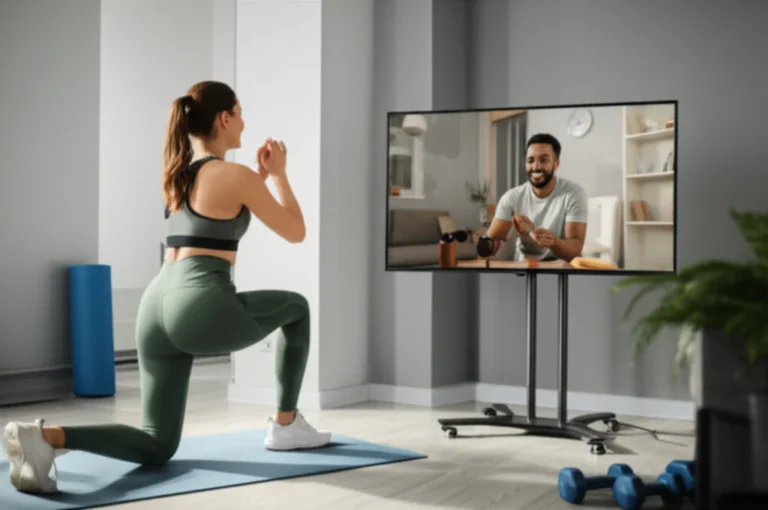
You meet a coach individually, often over video. The trainer can demonstrate exercises, watch your movement, offer real-time cues, and adapt the session as you go.
Consider it if: You value live guidance, are new to exercise, or want a trainer to observe technique during sessions.
Ask about: Session length, trainer credentials, how video feedback works, and whether the program includes support between appointments.
Live virtual workouts and group classes
A trainer leads a scheduled class over video, often with multiple participants. The group can provide energy and routine, though the instructor may have less time to tailor every movement to each person.
Consider it if: You enjoy exercising with others and like having a set appointment.
Ask about: Class size, modifications, whether instructors can see and coach participants, and how to request an adaptation.
On-demand training and fitness apps
An app gives you access to recorded classes or programmed workouts you can do at your own pace. Some apps pair workouts with a human coach; others are primarily self-guided.
For instance, Apple Fitness+ offers on-demand fitness content, while coaching services such as Trainwell focus on connecting users with personalized remote training. Don’t assume “personalized” means the same thing across providers: ask whether a real coach reviews your activity and modifies your program.
Hybrid coaching: in-person and online training
Hybrid coaching combines face-to-face sessions with virtual workouts, messaging, or remote program updates. It can give you hands-on help with new exercises while allowing you to train independently between appointments.
A practical example: You meet in person to learn several strength movements, then follow a customized app-based program at home and check in online the next week.
✅ Benefits of Hiring a Virtual Personal Trainer
The biggest advantage is flexibility, but it’s not the only one.
- Train where you are. Home, a hotel gym, or a local fitness center may all work, depending on your program and equipment.
- Get a plan built around you. A coach can adjust exercises, training volume, and scheduling to suit your situation.
- Make accountability easier. Check-ins can give you a reason to report back instead of letting a skipped workout quietly become a skipped month.
- Revisit demonstrations. App-based exercise videos and written cues can help you remember what to do.
- Stay connected between sessions. Messaging may let you ask questions without waiting for your next appointment.
- Choose a more comfortable environment. Training at home can reduce the social pressure some people feel in a gym.
- Keep coaching consistent during travel. A remote plan can follow you, provided you tell your trainer about changing equipment and surroundings.
There’s a human side to this, too. The summarized experience in the featured Trainwell review video describes a user who sought remote coaching partly because in-person training felt intimidating. Over 611 days, she reported completing 256 workouts and valuing flexible, supportive programming, the ability to change coaches, and workouts adapted to available equipment. She also noted app limitations, including workout rescheduling constraints and occasional connection trouble. Her account is one person’s experience—not a clinical trial—but it illustrates a useful point: a coaching relationship should support your life, not bully you into a routine that doesn’t fit it.
⚠️ Limitations and Safety Considerations
Virtual training has real advantages, but a screen can’t replace every part of in-person supervision.
| Possible limitation | What to do about it |
|---|---|
| The trainer may not see your full movement clearly | Position your camera so your whole body and movement are visible; ask for a different angle when needed. |
| Internet or app interruptions can disrupt a session | Agree on a backup plan, such as a phone call or written workout. |
| Your coach may not be available immediately | Clarify response times and what support is included between sessions. |
| Some programs may be generic despite personalized marketing | Ask who writes your plan and how often it is reviewed. |
| Remote observation may miss details | Communicate honestly about discomfort, fatigue, and exercise confidence. |
| A complex condition may require in-person care | Discuss exercise with your healthcare professional and ask whether remote coaching is appropriate. |
Stop an exercise that causes sharp, unusual, or worsening pain. Muscle effort is not the same as pain that signals a problem. If you have a chronic condition, recent injury, or specific medical restriction, ask an appropriately qualified healthcare professional for guidance before changing your activity. The U.S. Centers for Disease Control and Prevention’s physical activity guidance provides general recommendations, not a personalized medical prescription.
A trainer should stay within their professional scope. A fitness coach can help with exercise programming and general healthy habits, but should not diagnose an injury or replace a doctor, physical therapist, or registered dietitian when those services are needed.
🔍 How to Choose the Right Virtual Gym Trainer
A polished app cannot make up for poor communication or an unsuitable program. Evaluate the coach and the service together.
Credentials, experience, and coaching style
Ask about relevant qualifications, experience with people who share your goals, and how the trainer handles adaptations. Credentials are one piece of the picture; a trainer should also explain their approach clearly and recognize when a concern belongs with a healthcare professional.
Coaching style matters. Some people want gentle encouragement; others prefer direct prompts. The Trainwell user in the featured video appreciated being able to choose a coach whose communication style suited her and to switch when her needs changed. That flexibility is worth asking about.
Workout customization and accountability
A personalized plan should reflect more than your goal. It may account for:
- Your training history and current ability
- Available equipment and workout space
- Time constraints and preferred workout days
- Exercises you enjoy or need to modify
- Feedback, recovery, and changes in your circumstances
Ask how progress gets reviewed and what happens when you miss a session. A good trainer adjusts the plan; a good system helps you stick with it without treating a missed workout like a moral failure.
Technology, communication, and accessibility
Before committing, confirm that the technology works for you. Find out whether workouts are delivered through an app, video calls, email, or a combination. Check device compatibility, accessibility features, messaging expectations, and how you can export or retain your training records.
If a platform collects personal information or health-related data, review its privacy policy and ask what information is stored, who can access it, and whether you can request deletion.
Questions to ask before signing up
Use these questions during an introductory call:
- Who will write and update my program?
- How often will we meet, and what support is included between sessions?
- How do you adapt workouts for injuries, health limitations, or equipment changes?
- How do you review exercise technique remotely?
- What happens if I need to reschedule or change coaches?
- What app or equipment do I need?
- How do you track progress beyond body weight?
- What is included, and what would require an additional service?
- How do you protect client information?
- Can I try a sample session or see a demonstration before I decide?
📱 Virtual Personal Training Apps and Platforms
Training software can bring workouts, progress records, communication, and scheduling into one place. But some tools are designed for an individual exercising alone, while others are built for professionals managing a coaching business.
Features to look for in a virtual gym trainer app
| Feature | Why it matters |
|---|---|
| Custom workout plans | Lets a trainer adapt exercises to your goals, equipment, and experience. |
| Exercise demos and instructions | Helps you review setup and movement cues between sessions. |
| Progress tracking | Can record completed workouts, exercise performance, and relevant measurements. |
| Coach-client messaging | Creates a channel for questions and feedback. |
| Scheduling and reminders | Helps keep training appointments visible and organized. |
| Wearable integrations | May bring activity data into a coaching workflow, depending on the app and device. |
| Privacy and data controls | Helps you understand how personal information is handled. |
| Accessible, easy-to-use design | Makes the plan more likely to become part of your routine. |
Browse independent opinions and app comparisons in our fitness app reviews. App-store ratings can offer clues about usability and support, but they’re not proof that a particular training plan is safe or effective for you.
Online coaching software for personal trainers
Trainer-facing software can help professionals build workouts, communicate with clients, track progress, and handle parts of their business. Virtuagym’s personal trainer software describes a platform combining training, nutrition, client communication, payments, and business management. Its page states that more than 50,000 personal trainers worldwide use its tools; that is a company-reported figure, not an independent audit.
Other platforms, including Trainerize and TrueCoach, also provide coaching tools. Compare what each service actually offers rather than assuming every trainer uses the same features.
The summarized Virtuagym customer stories describe trainers using the platform to centralize online coaching and client tracking. One coach, Patrick Jansen of DAG EN, called the app “the foundation for coaching and tracking people online”; another business owner, Markus Wagner of JB Athletics, highlighted the difficulty of managing a much larger client base with spreadsheets alone. These are customer testimonials, not guarantees of business growth. Still, the underlying lesson is sensible: a trainer who is spending hours chasing forms and updating spreadsheets has less time for coaching.
Branded fitness apps and client experience
Some coaching platforms let a business offer clients an app with its own branding. A branded app can make workouts, messages, and progress records easier to find, but it does not automatically mean the coaching is better.
Before choosing a service, ask:
- Is the app included in your coaching arrangement?
- Can you message your actual trainer through it?
- Will your workouts remain available if you stop coaching?
- Are reminders useful or overwhelming?
- Can you access the service on your device?
- Who can see your data?
🧰 Essential Tools for Online Fitness Coaching
You do not need a professional video studio. You do need a setup that lets you hear your trainer, see the demonstrations, and move safely.
Video calls, workout libraries, and messaging
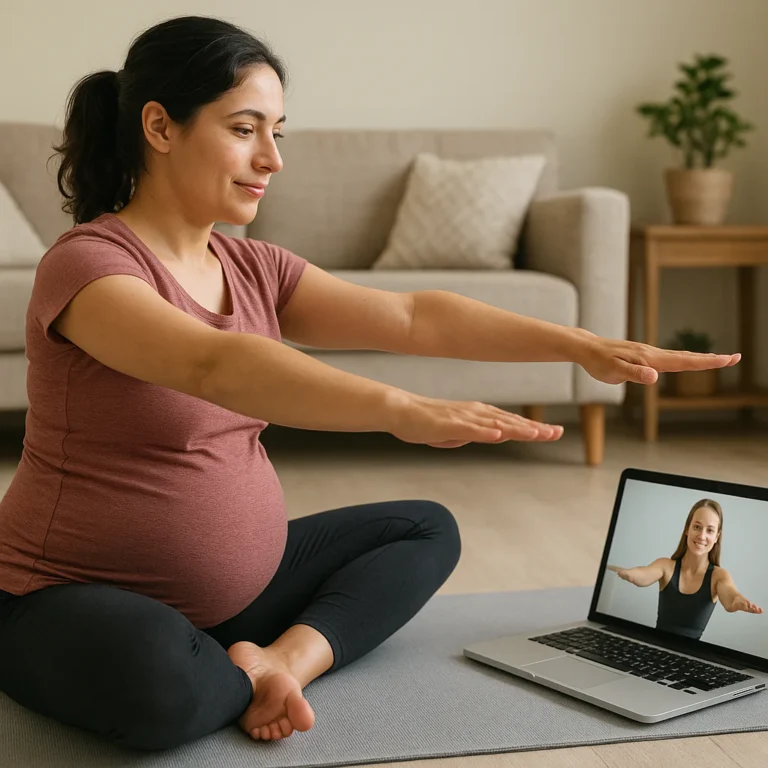
For live sessions, use a stable internet connection, a screen large enough to follow instructions, and enough camera distance for your trainer to see the movements being coached. A phone can work, but a tablet or laptop may make demonstrations easier to view.
Before the first appointment:
- Clear a safe training area.
- Test your camera, microphone, and internet connection.
- Place the camera at a useful angle.
- Keep water and any equipment within reach.
- Tell the trainer if the view is awkward or if you cannot hear a cue.
For asynchronous coaching, check whether the workout library includes clear demonstrations and written instructions. Messaging should make it easy to clarify a movement or report how a session went.
Wearables, fitness trackers, and app integrations
Wearables can record activity and provide useful context, but their estimates are not perfect measurements of health or workout quality. A step count or heart-rate reading may help reveal patterns; it should not be treated as a verdict on your effort.
The National Institutes of Health’s overview of wearable activity trackers discusses how such devices can support activity tracking. Ask your coach whether wearable information will actually inform your program—and which data are useful for your goals.
Home gym equipment for virtual workouts
No special equipment is required for many types of online training. Fitness Together, for example, says its virtual trainers can help clients work with what they have. Your actual equipment needs depend on the exercises and goals in your plan.
Useful basics may include:
- A stable chair or bench
- A clear, nonslip floor space
- A resistance band, if appropriate
- Dumbells or other weights, if your program calls for them
- A mat for floor-based movements
Don’t buy gear just because an app suggests it. First ask your trainer what you can safely do with what you already own.
📋 What to Expect During Virtual Personal Training
A strong coaching process starts with conversation, not a punishment workout. Your trainer should understand your starting point and build from there.
Fitness assessment and goal setting
Expect questions about your activity history, goals, schedule, preferences, equipment, and relevant health considerations. Depending on the service, the trainer may also review basic movements or discuss how you feel during everyday tasks.
Make goals specific enough to guide action. Instead of “get fit,” you might work toward completing two weekly strength sessions, improving a particular movement, or building consistency with walking. Your coach should help you choose goals that are realistic and appropriate—not promise a dramatic result by a deadline.
Workout planning and exercise demonstrations
Your plan should explain what to do, how to do it, and how the trainer expects you to progress. When a movement is unfamiliar, ask for a demonstration and a simpler variation. If your camera view makes it hard to assess your form, say so rather than assuming your coach can see everything.
A useful plan gives you enough structure to act and enough flexibility to adapt when life changes. A missed workout is information about the plan and your schedule—not evidence that you’ve failed.
Nutrition guidance and healthy habits
Some virtual trainers provide general nutrition education or habit coaching; others focus on exercise alone. Confirm the scope of the service. For individualized medical nutrition therapy or condition-specific advice, a registered dietitian or healthcare professional may be more appropriate.
The featured Trainwell user described pairing exercise with nutrition changes as part of her personal weight-loss experience. That is an individual account, not a promise that the same result will occur for everyone. More broadly, sustainable habits matter more than extreme short-term rules. The CDC’s healthy weight guidance recommends considering nutrition, physical activity, sleep, and other health factors together.
Progress tracking and plan adjustments
Progress can include much more than weight. Depending on your goals, you and your trainer might track:
- Workout consistency
- Exercise technique or confidence
- Repetitions, resistance, or movement range
- Energy, recovery, or daily activity
- Strength, balance, or fitness assessments
- How well the routine fits your schedule
A good coach reviews the information with you and explains why a change is being made. If an app presents a graph without context, ask what it means—and whether it changes your next workout.
📈 How to Get Better Results From a Virtual Gym Trainer
Your trainer can design the plan. You help make it workable.
- Set a schedule you can repeat. A consistent, manageable routine is more useful than an ambitious plan you abandon.
- Give honest feedback. Tell your coach when an exercise hurts, feels confusing, or does not fit your space.
- Track what matters to your goal. Use a small number of useful measures rather than trying to record every detail.
- Ask questions early. A quick clarification can prevent a week of doing an exercise incorrectly.
- Prepare your space and equipment. Remove trip hazards and check that equipment is stable before you begin.
- Discuss missed sessions without shame. Work with your trainer to adjust the plan instead of trying to “make up” everything at once.
- Review progress periodically. Ask what has improved, what has not, and what the next adjustment should be.
- Protect recovery. Rest, sleep, and appropriate exercise variation are part of training, not interruptions to it.
For motivation that doesn’t rely on guilt, explore our fitness motivation resources. Movement should help you build a healthier relationship with exercise—not turn every missed workout into a courtroom drama. ⚖️
🛡️ Online Training Safety, Privacy, and Data Protection
Remote coaching requires clear boundaries and sensible data habits.
Training safely on video
- Clear your workout area of clutter, pets, and loose items.
- Use stable furniture and equipment; do not improvise with anything that could tip or break.
- Tell your coach about pain, dizziness, or unusual symptoms.
- Ask for alternatives if a movement does not feel right.
- Follow health-professional guidance when you have an injury or medical restriction.
- Pause if your coach cannot see an exercise that requires technique feedback.
Protecting your personal information
Before entering health details into an app, review the provider’s privacy policy. Understand what information is collected, how it is used, whether it is shared, and how you can request access or deletion. Use strong, unique passwords and avoid sharing sensitive information through unsecured channels.
A credible provider should be able to explain its data practices in plain language. If you cannot tell who has access to your records, ask before uploading them.
💼 Growing a Virtual Personal Training Business
For trainers, virtual coaching can extend a service beyond the gym floor. But more clients also mean more communication, programming, scheduling, and record-keeping. A business needs systems that preserve personal attention instead of burying it under admin.
Build a clear online coaching brand
Tell potential clients who you coach, what support you provide, and how your service works. Use plain language to explain whether you offer live video sessions, customized programming, messaging, nutrition support, or hybrid training.
A brand should set accurate expectations. Avoid implying that an app itself guarantees results or that you can treat conditions outside your qualifications.
Create training packages and memberships
Make each offer easy to understand. For example, distinguish between:
- Live one-to-one training
- App-based programming with scheduled check-ins
- Small-group online classes
- Hybrid coaching
- A short-term skills or habit program
Explain what’s included, how clients communicate with you, how rescheduling works, and how a client can pause or end service. Clear expectations reduce confusion for both sides.
Manage clients, scheduling, and payments
A growing coaching practice may need a reliable way to manage appointments, client records, program delivery, and payments. Virtuagym presents its platform as an all-in-one system for training, nutrition, communication, payments, and business management. It also promotes package and membership options. Those are vendor claims about its own software; trainers should test whether the workflow fits their actual business before migrating.
Automate admin without losing the personal touch
Automation can handle reminders, forms, and routine tasks. It should not replace thoughtful communication when a client reports pain, loses motivation, or needs a plan change.
A sensible workflow might look like this:
- Use an intake form to gather basic information.
- Review the client’s goals and relevant concerns yourself.
- Deliver a plan through a coaching app.
- Schedule regular check-ins.
- Review progress and feedback before changing the program.
- Use automated reminders for logistics, not as a substitute for coaching.
The test is simple: does the system give you more time to coach, or just more notifications to manage?
Use client feedback and business insights to improve
Business dashboards can help trainers see attendance, engagement, or retention patterns. But numbers need interpretation. A missed workout may reflect a confusing program, a work schedule change, a health issue, or an app problem—not simply a lack of motivation.
Virtuagym describes reporting and analytics tools intended to support business decisions. As with any platform, trainers should verify what data are available, how they are calculated, and whether collecting them is appropriate for their clients.
💰 Virtual Gym Trainer Costs and What Affects Them
The cost of virtual personal training varies by provider and service structure. Because providers change their plans and availability, compare the current offer directly rather than relying on an old review or a social-media promotion.
Common factors include:
| Factor | How it may affect the service |
|---|---|
| Live one-to-one sessions | Scheduled individual coaching generally involves more direct trainer time. |
| Program design and check-ins | The amount of individualized review and feedback can vary. |
| Group coaching | Shared sessions may offer a different level of individual attention. |
| App access and features | Some services include an app; others use third-party tools or separate software. |
| Coach experience and specialization | A trainer’s background and focus may affect the service offered. |
| Contract and cancellation terms | Read the renewal, pause, and cancellation policies before enrolling. |
Ask for a clear description of what is included: number of live sessions, program updates, messaging, nutrition guidance, and support when you travel or need to reschedule. Don’t compare a self-guided workout library with weekly one-to-one coaching as if they were interchangeable products.
⚖️ Virtual Gym Trainer vs. In-Person Personal Trainer
Neither format is automatically better. Your goals, learning style, budget, health needs, schedule, and comfort level should guide the choice.
| Feature | Virtual trainer | In-person trainer |
|---|---|---|
| Location | Train from home or another suitable space | Train at a gym, studio, or agreed location |
| Scheduling flexibility | May be easier to fit around travel and busy days | Depends on the trainer’s location and appointment availability |
| Technique feedback | Video-based observation; camera setup matters | Direct, in-room observation, with closer physical context |
| Equipment | Can be tailored to home equipment or body weight | May provide access to a broader gym setup |
| Accountability | Check-ins, scheduled calls, and app reminders | Face-to-face appointments and live presence |
| Personal preference | Works for people comfortable with remote coaching | Works for people who prefer being coached in person |
If you’re learning complex movements or need close supervision, in-person sessions—or a hybrid approach—may be a better starting point. If travel, convenience, or gym discomfort is the main barrier, online coaching may help you build a routine that feels more accessible. Choose the format you can use consistently and safely.
🙋 Frequently Asked Questions About Virtual Gym Trainers
Are virtual gym trainers more affordable than in-person trainers?
They can be, but there is no universal rule. A one-to-one video session, app-based program with coach check-ins, and self-guided subscription deliver different levels of support. Compare what you receive—not just the format. Check current terms directly with the provider, since plans can change.
How do virtual trainers track progress and results?
Depending on the service, they may review workout completion, exercise performance, training consistency, feedback, or measurements relevant to your goal. Wearables may add activity data, but those readings are estimates and should be interpreted in context. Ask your coach which measures they use and how those measures affect your plan.
Can virtual gym trainers help with weight loss goals?
A trainer can help you build an exercise routine, set practical goals, and stay accountable. Some also offer general nutrition coaching within their scope. Weight change depends on multiple factors, and no responsible coach should guarantee a particular result. For medical or condition-specific nutrition advice, consult a registered dietitian or healthcare professional.
What are the benefits of using a virtual gym trainer?
Common benefits include flexible scheduling, training from home, workouts adapted to your available equipment, remote accountability, and continued support while traveling. The benefits depend on the actual service: a library of recorded classes does not provide the same personal feedback as one-to-one coaching.
How does a virtual gym trainer work?
You share your goals, experience, schedule, and equipment with a coach. The coach assesses your needs, creates or selects a suitable plan, and supports you through live sessions, app-based workouts, or check-ins. You report how training feels, and the plan is adjusted when appropriate.
Are virtual personal trainers effective for beginners?
They can be, especially when the trainer explains exercises clearly, starts at an appropriate level, and provides a way to ask questions. Beginners should confirm how technique is reviewed and whether the coach offers modifications. If you need hands-on instruction, consider starting in person or choosing a hybrid service.
What equipment do I need to train with a virtual gym trainer?
It depends on your program. Many workouts can be adapted to body weight or basic home equipment, while some goals may require weights or gym access. Tell your trainer what you have before the plan is written; you do not need to buy equipment until you know it is appropriate and useful.
Can a virtual trainer create a personalized workout plan?
Yes, if the service includes individualized programming. Ask how the trainer assesses your starting point, adapts exercises, and updates the plan. “Personalized” should mean the program responds to your circumstances and feedback—not just that your name appears at the top of a template.
How often should I meet with a virtual personal trainer?
There is no single schedule that suits everyone. Some clients meet live regularly; others receive a program and check in periodically. Your training frequency and coach contact should fit your goals, experience, recovery, and budget. Ask how often your program will be reviewed and how to reach your trainer between sessions.
What should I look for when choosing a virtual gym trainer?
Look for relevant qualifications, clear communication, appropriate customization, transparent service terms, a practical approach to safety, and a format you can use. Ask who writes your program, how progress is reviewed, what support is included, and how the provider protects personal information.
Can I use a virtual trainer if I travel or have little equipment?
Often, yes. Tell your trainer where you will be, what equipment you can access, and how much space you have. A good coach can discuss suitable alternatives, though not every exercise or goal can be replicated in every location.
What if an exercise causes pain or I have an injury?
Stop the movement and tell your trainer what happened. Do not try to push through sharp or worsening pain. Your trainer can help modify exercise within their professional scope, but diagnosis and treatment should come from an appropriate healthcare professional.
Do virtual gym trainers use AI instead of human coaches?
Some services offer automated plans or AI-based tools, while others provide coaching from a human trainer. They are not equivalent. AI can help organize information or suggest general guidance, but it may misunderstand context. Virtual Personal Trainer itself cautions that machine-learning and AI systems should have human oversight. Check whether a real coach reviews your program and how you can get help when the automated advice does not fit your situation.